Depressurization of Process Vessels
Why a fire needs more than a relief valve, the scenarios that call for depressuring (fire, leak, reactor runaway, planned shutdown), how the system works from detector to flare, how to size the restriction orifice, how fast to blow down, how cold the metal gets, how to avoid overloading the flare, and the rules of thumb used in industry. Six interactive animations.
Sumit Mathur
24 min read
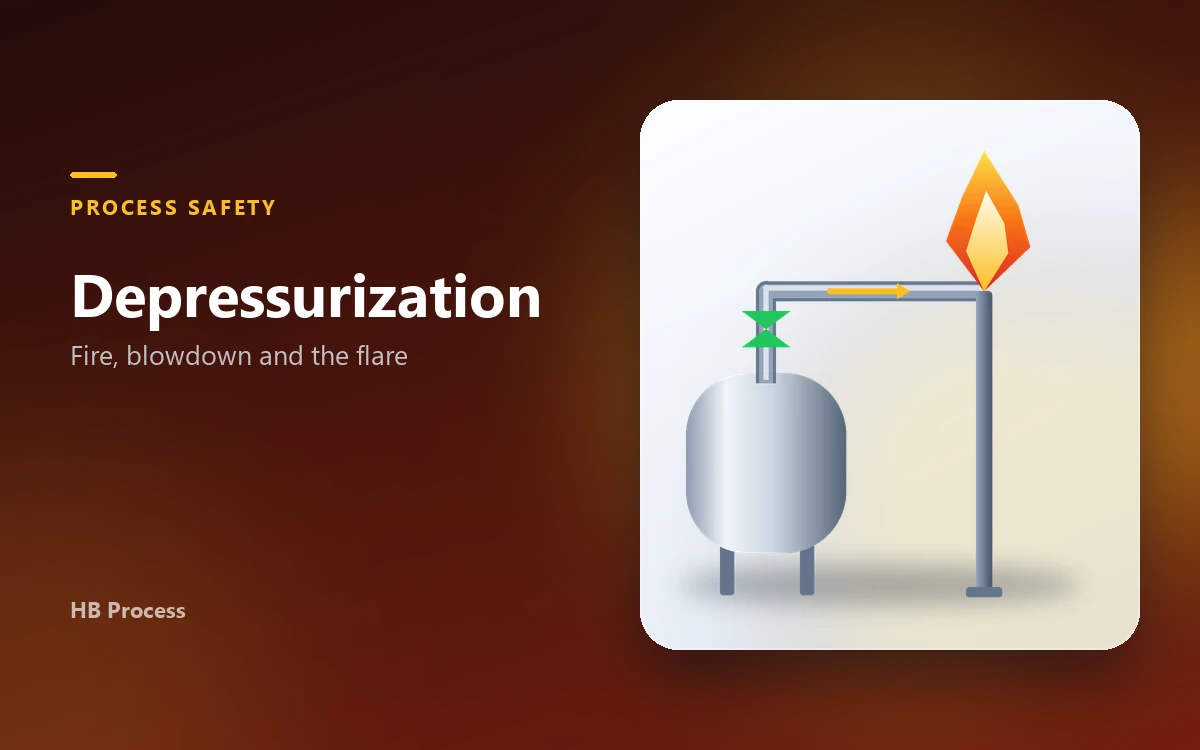
A plant is full of vessels holding gas at high pressure. If a fire starts under one of them, the vessel does not wait for the pressure to rise. The steel gets hot, loses strength, and can burst at a pressure it carries every day. The best protection is to let the gas out fast, to a safe place, before the steel gives up. This is depressurization, also called blowdown or emergency depressuring (EDP).
It sounds simple: open a valve. But the details decide whether it works: how fast the gas should leave, how big the opening must be, how cold the metal gets, and whether the flare can take the flow. This article walks through all of it with animations you can play with, and ends with the rules of thumb that engineers use. The numbers are typical values for teaching. Always follow your own project standard, such as API 521 / ISO 23251, and your company rules.
Sign in to keep reading
This article is free, but you need an account to read it in full. It takes a minute and costs nothing.
← All articles