Loading…
Fluid Flow & Hydraulics
Line sizing, pressure drop, pumps, and column hydraulics.
14 articles
14 articles
Heat Transfer & ExchangersFluid Flow & Hydraulics
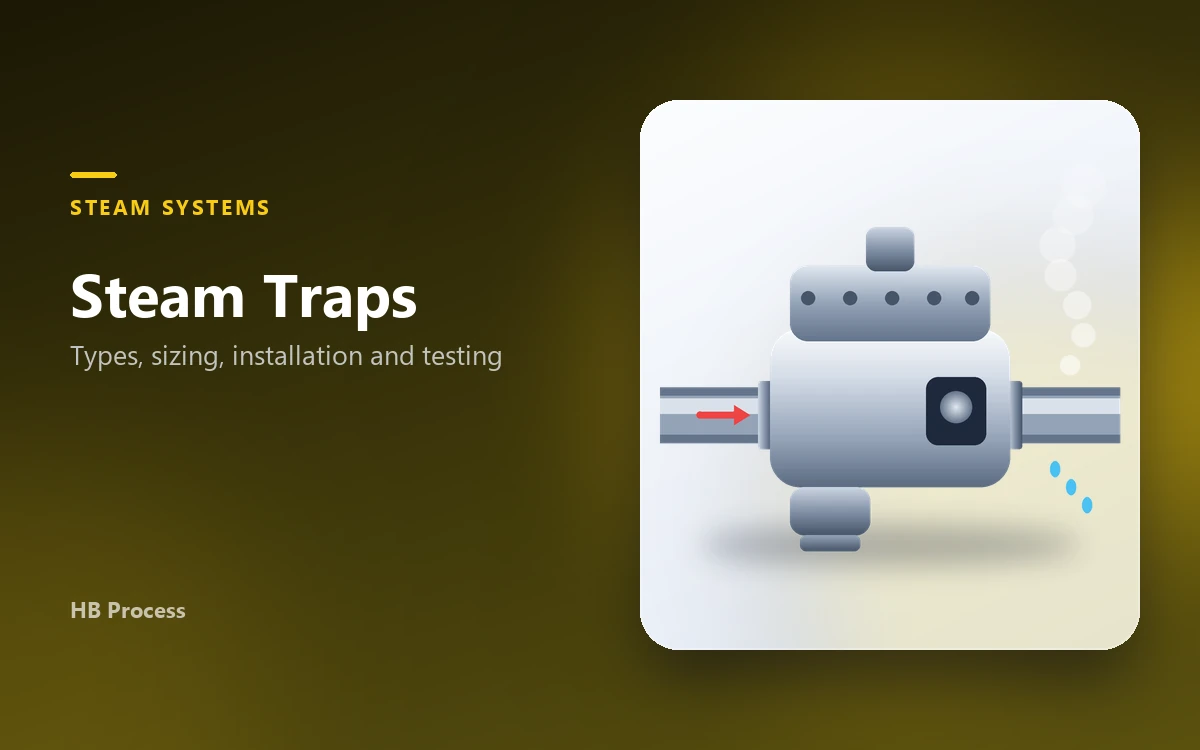
Steam Traps
Everything about steam traps in simple language: why steam condenses and why the water, air and carbon dioxide must be removed, the three ways a trap tells steam from water, the main types (float and thermostatic, inverted bucket, thermodynamic disc, bimetallic, balanced pressure), how to select and size one, stall, drip legs and warm-up loads, installation rules, flash steam and condensate return, air in steam, how to test a trap, what a leak costs, and the rules of thumb. Ten interactive animations.
Sumit MathurFree · no sign-in· 24 min
Fluid Flow & HydraulicsProcess Safety
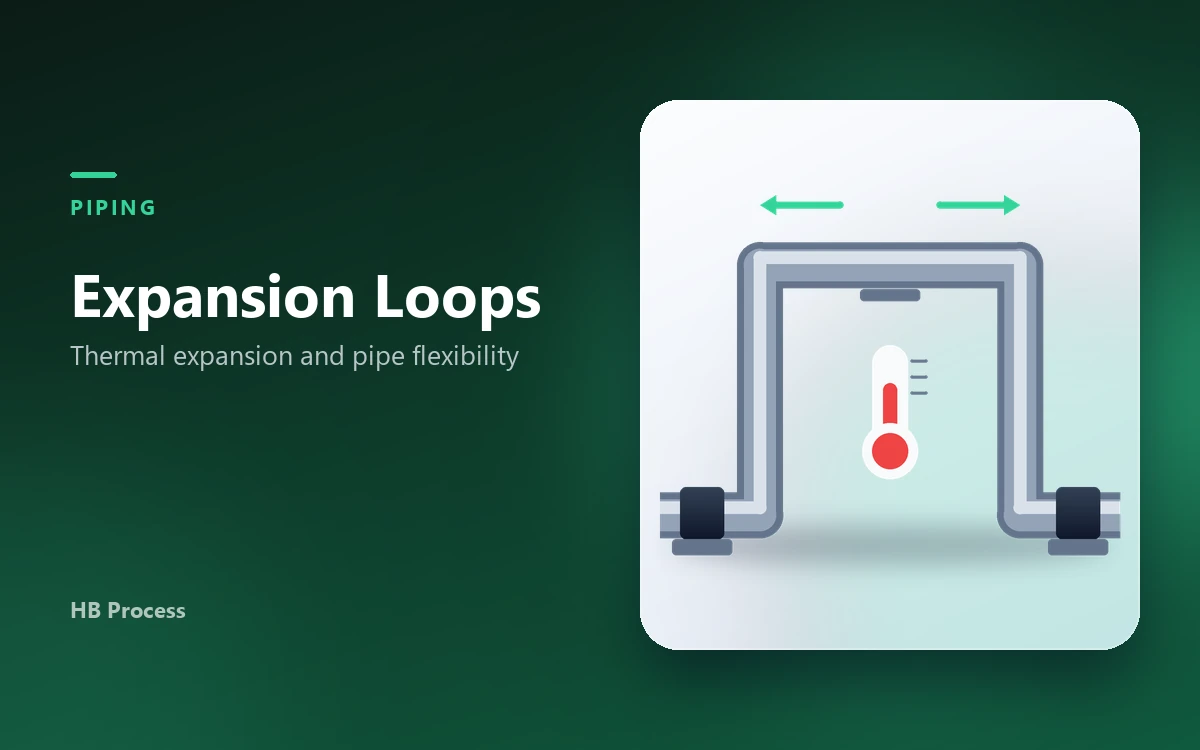
Why Hot Pipes Need Expansion Loops: Thermal Expansion, U-Loops, Anchors and Guides in Industrial Piping
How much a hot pipe grows, what happens if it cannot, the stress and force it creates, and how plants deal with it: natural flexibility, U-loops, bellows, anchors, guides and spring supports. A U-loop designer you can drive, four animations, pipe-rack drawings and a worked steam-header example.
Sumit MathurFree · no sign-in· 22 min
Fluid Flow & Hydraulics
Process Hydraulics · Part 3 of 10
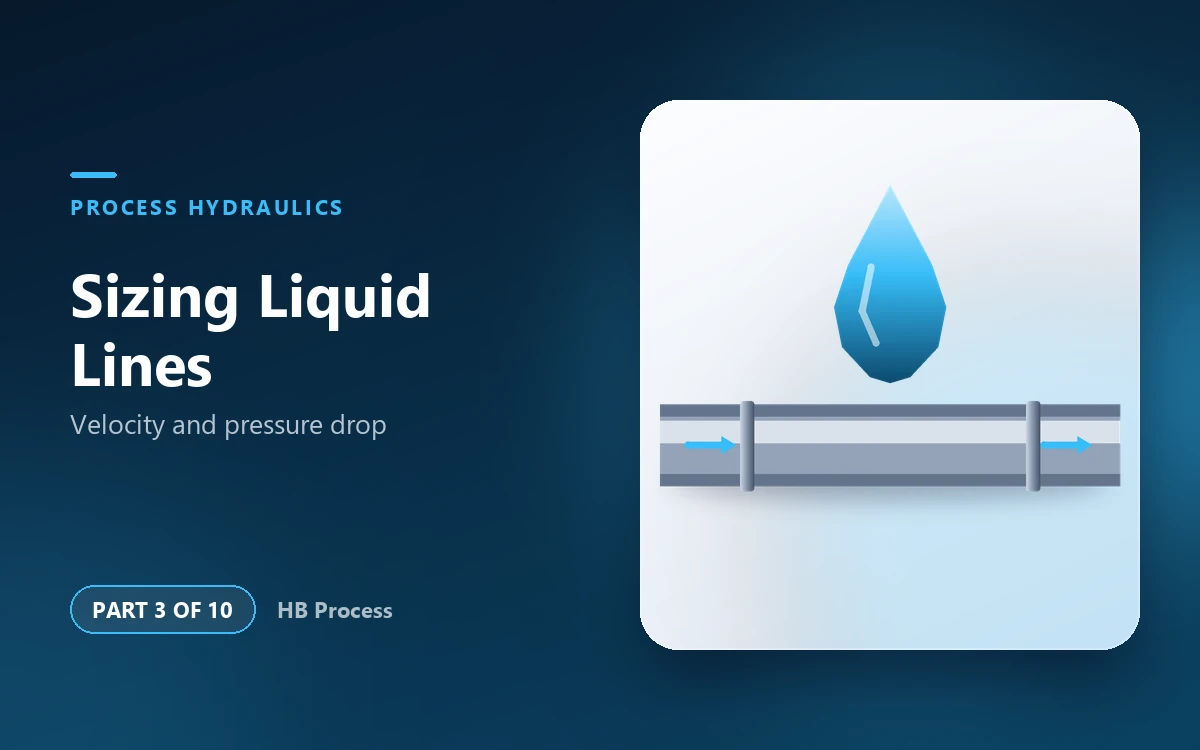
Process Hydraulics, Part 3: Sizing Liquid Lines, Velocity and Pressure-Drop Criteria by Service
Pump suction vs discharge limits, boiling and non-boiling liquids, reciprocating pump lines, cooling water, condensate, fire water, amine and caustic, gravity lines and slurries. An interactive liquid line sizer that checks every standard size against the limits.
Sumit MathurFree · no sign-in· 17 min
Fluid Flow & Hydraulics
Process Hydraulics · Part 4 of 10
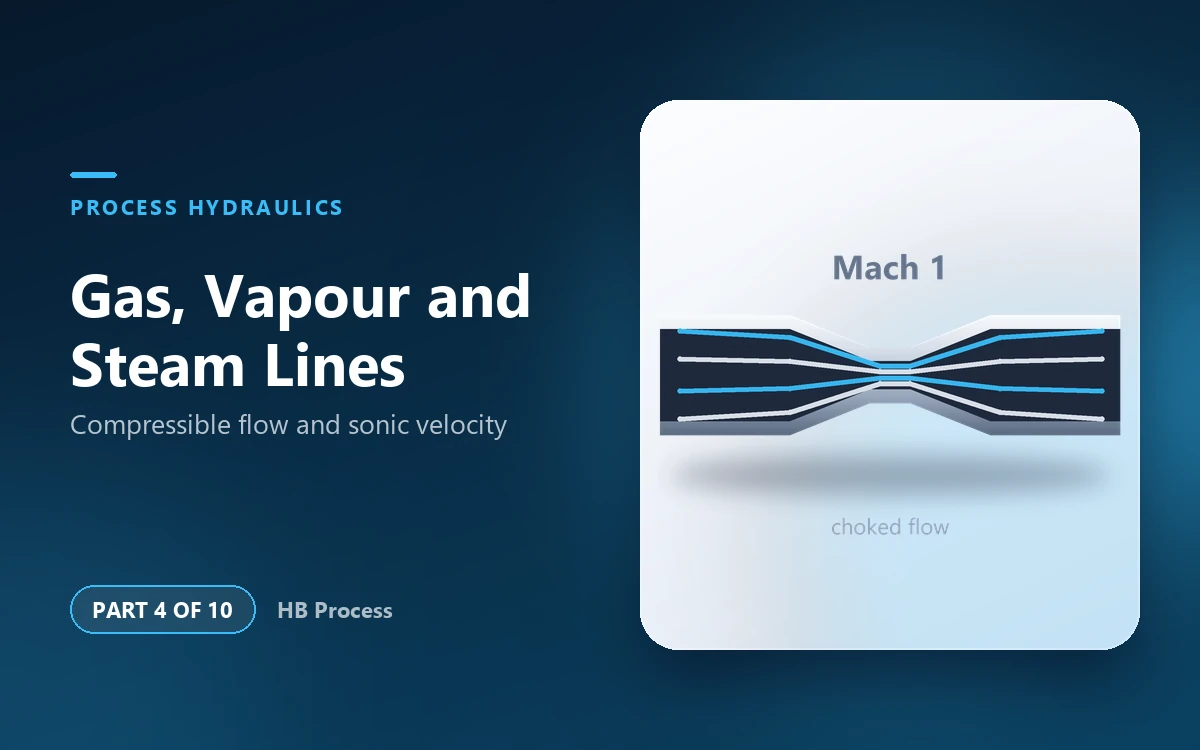
Process Hydraulics, Part 4: Gas, Vapour and Steam Lines, Compressible Flow and Sonic Velocity
Why gas lines are different, sonic (critical) velocity and choking, the 10 % / 40 % rule for density change, isothermal flow equations, steam and vapour velocity guidelines by pressure and size, compressor and vacuum lines. An animated gas-line simulator with Mach number.
Sumit MathurFree · no sign-in· 16 min
Fluid Flow & Hydraulics
Process Hydraulics · Part 5 of 10
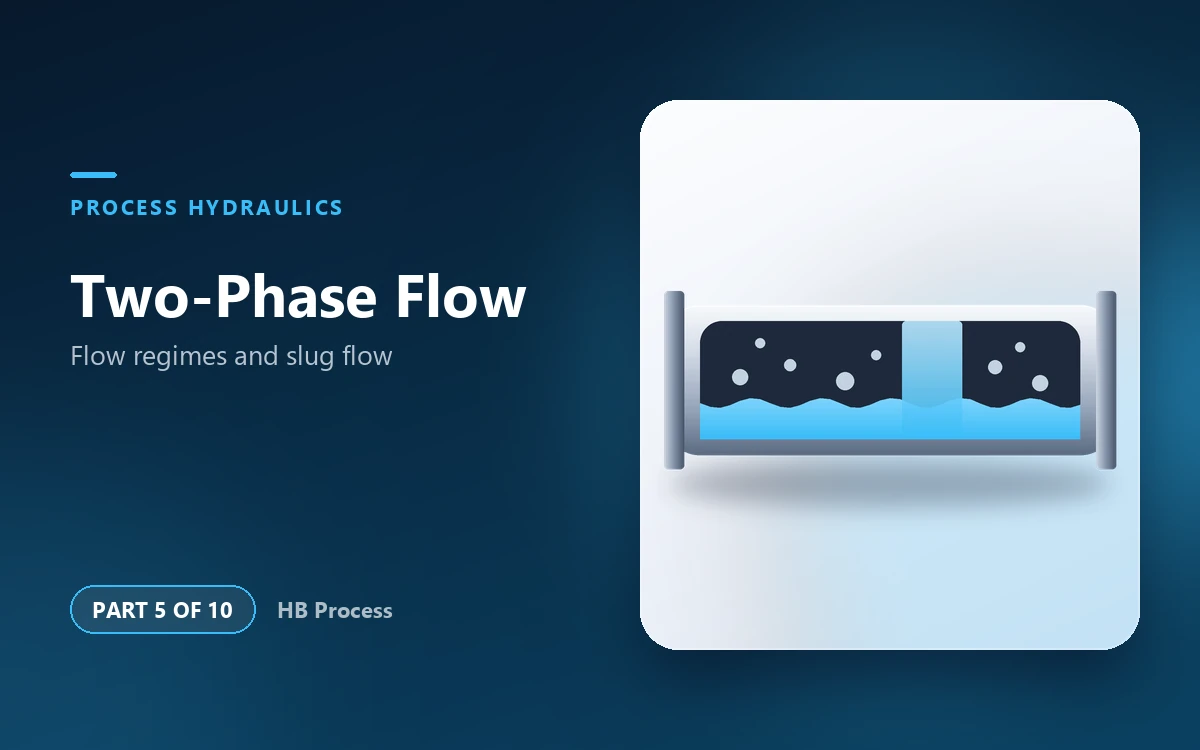
Process Hydraulics, Part 5: Two-Phase Flow, Flow Regimes, Pressure Drop and Avoiding Slug Flow
Why two-phase lines are the hardest to size, horizontal and vertical flow patterns, the Baker map and superficial velocities, Lockhart–Martinelli pressure drop, erosional velocity (API RP 14E), and the design rules that keep slugs out of your piping. An interactive regime map with live pipe animation.
Sumit MathurFree · no sign-in· 19 min
Fluid Flow & Hydraulics
Process Hydraulics · Part 6 of 10
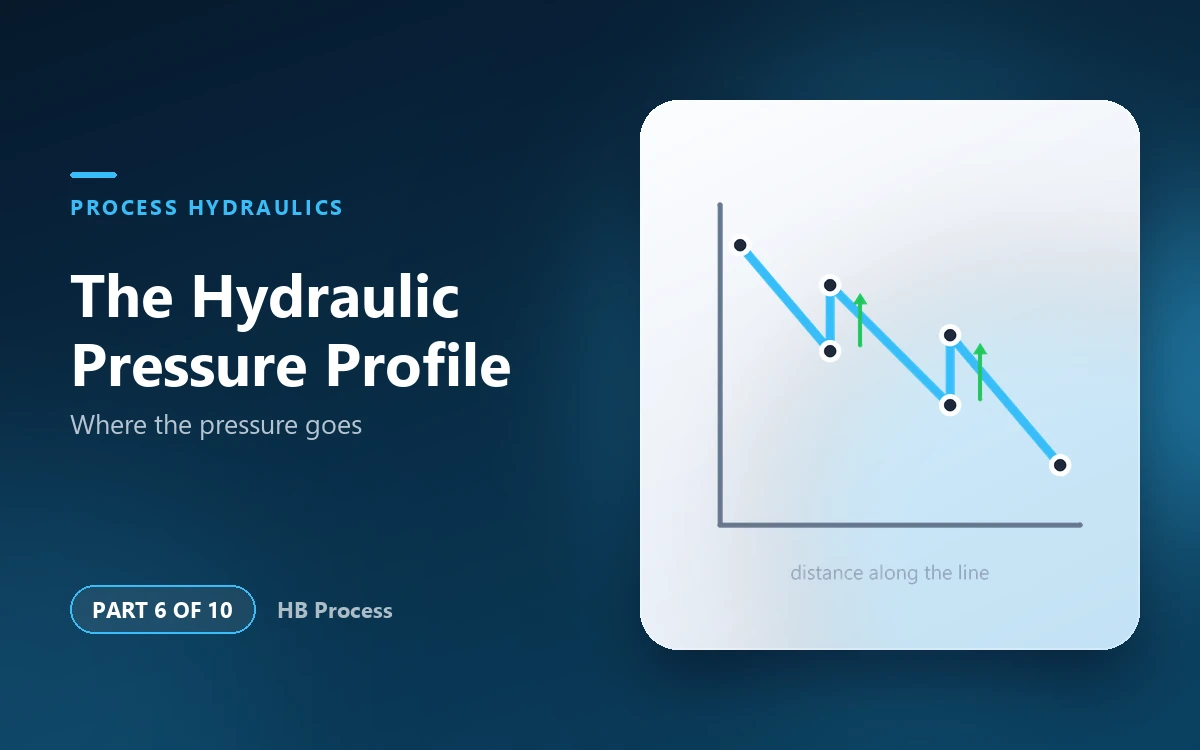
Process Hydraulics, Part 6: The Hydraulic Pressure Profile, Equipment Elevation and Control-Valve Pressure Drop
How to build a hydraulic calculation for a whole circuit: fixed pressure points, hydraulic flow diagrams, normal, design and turndown cases, setting column and receiver elevations from NPSH, equipment pressure drops, control-valve rules, and pro-rating friction. An animated pressure waterfall.
Sumit MathurFree · no sign-in· 21 min
Fluid Flow & Hydraulics
Process Hydraulics · Part 7 of 10
Process Hydraulics, Part 7: Centrifugal Pumps, Curves, NPSH, Cavitation and Flow Control
Pump classification and selection, head, power and efficiency, head–capacity and NPSH curves, cavitation, affinity laws and impeller trimming, system curves and operating points, throttling vs variable speed, and minimum flow. Two animations: curves with the operating point, and NPSH with live cavitation.
Sumit MathurFree · no sign-in· 23 min
Fluid Flow & Hydraulics
Process Hydraulics · Part 8 of 10
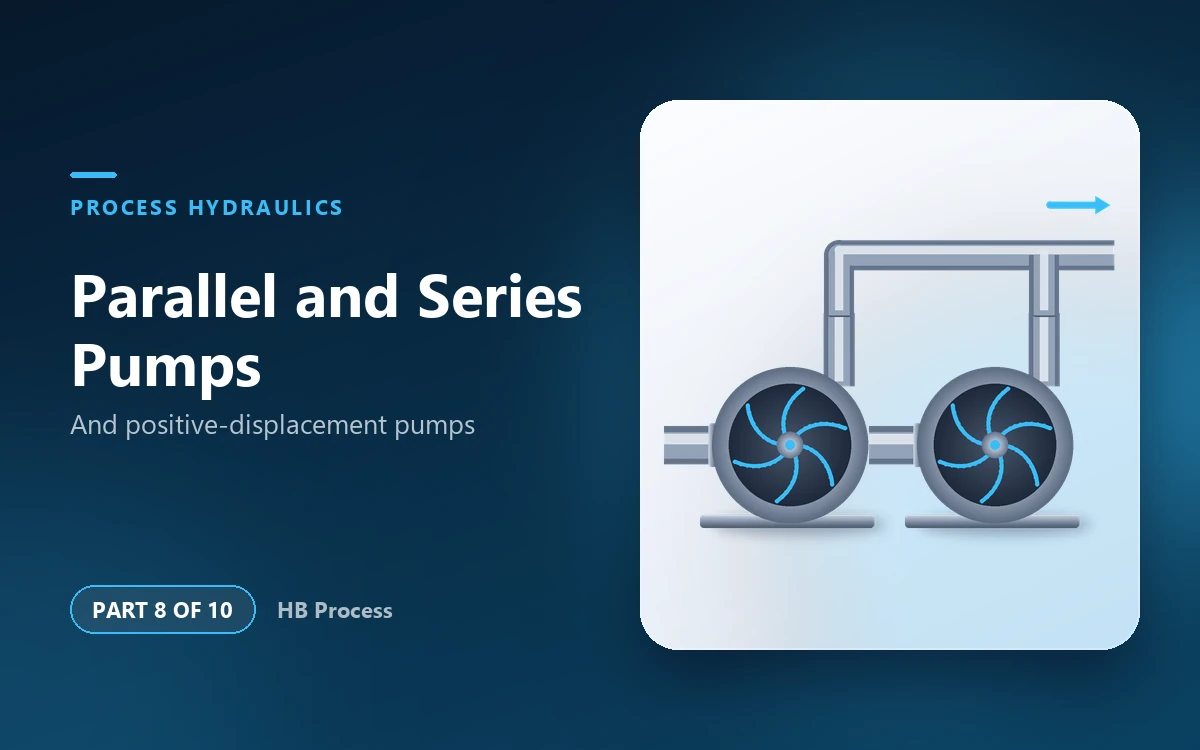
Process Hydraulics, Part 8: Parallel and Series Pumps, Displacement Pumps, Energy Cost and the Pump Datasheet
Running pumps in parallel and in series (and why unstable curves hunt), reciprocating and rotary pumps with their pulsation, power and slip, the energy cost of oversizing in rupees per year, and a complete walk through the process datasheet: flows and margins, pressures, design pressure, driver and materials.
Sumit MathurFree · no sign-in· 22 min
Heat Transfer & ExchangersFluid Flow & Hydraulics
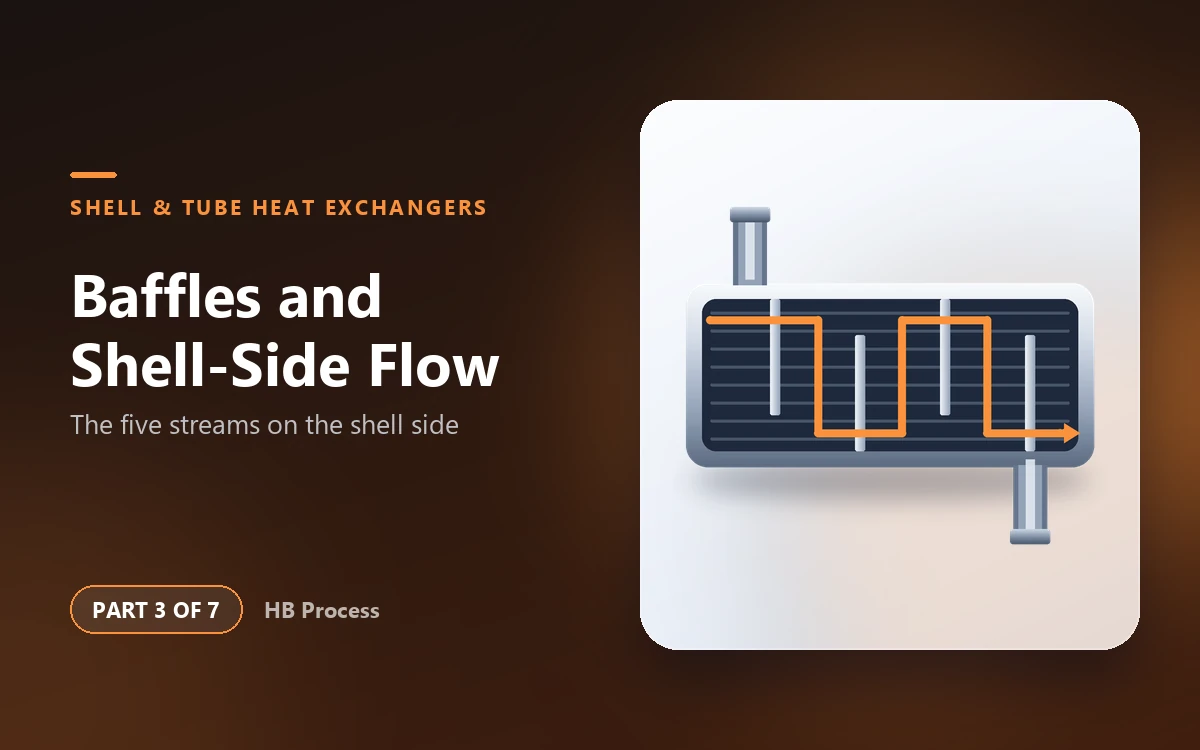
Shell & Tube Heat Exchangers · Part 3 of 7
Shell & Tube Heat Exchangers, Part 3: Baffles and the Five Shell-Side Streams
Baffle types, cut, orientation and spacing; why window and cross-flow velocity must match; impingement plates; tie rods; and the A, B, C, E, F leakage streams that quietly steal your heat transfer. Two interactive animations.
Sumit MathurFree · no sign-in· 17 min
Fluid Flow & HydraulicsProcess Safety
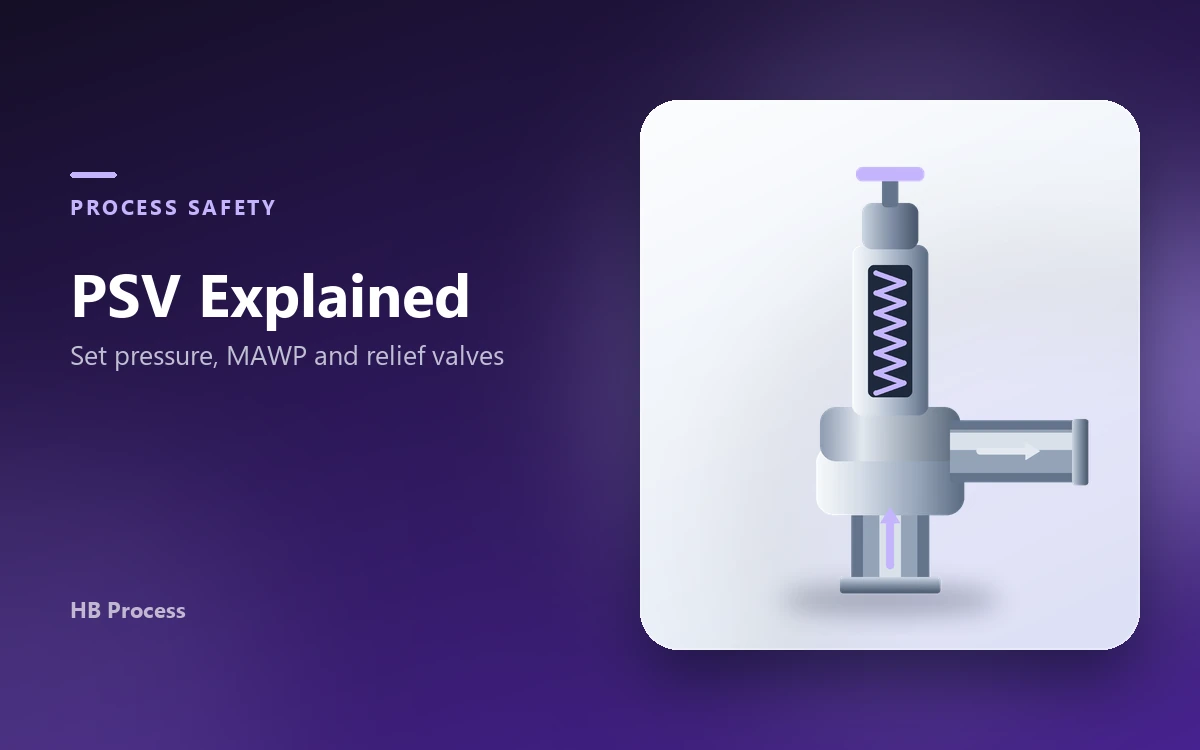
PSV Explained: Pressure Terms, Set Pressure, and Safety vs Relief Valves
Set pressure, MAWP, overpressure, accumulation, blowdown, back pressure. Every PSV term made visual with six animations, the sizing theory behind it, plus the real difference between a safety valve and a relief valve.
Sumit MathurFree · no sign-in· 22 min
Fluid Flow & HydraulicsProcess Safety
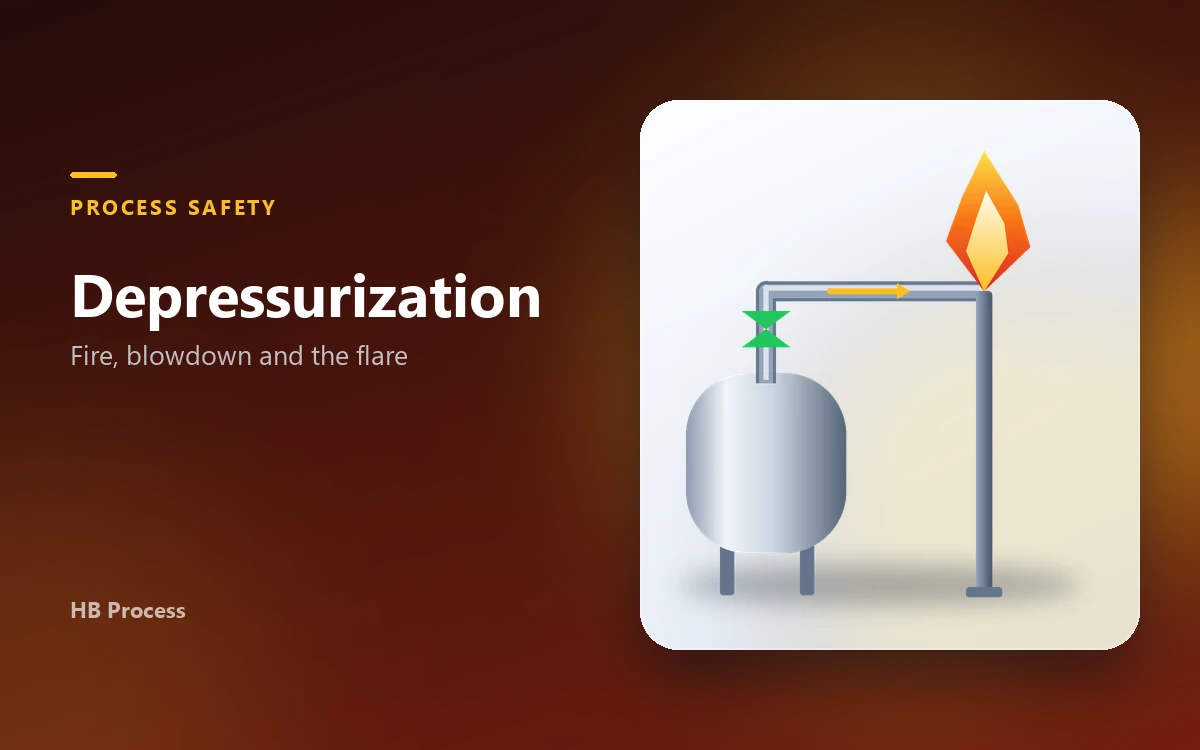
Depressurization of Process Vessels
Why a fire needs more than a relief valve, the scenarios that call for depressuring (fire, leak, reactor runaway, planned shutdown), how the system works from detector to flare, how to size the restriction orifice, how fast to blow down, how cold the metal gets, how to avoid overloading the flare, and the rules of thumb used in industry. Six interactive animations.
Sumit MathurSign in· 24 min
Fluid Flow & Hydraulics
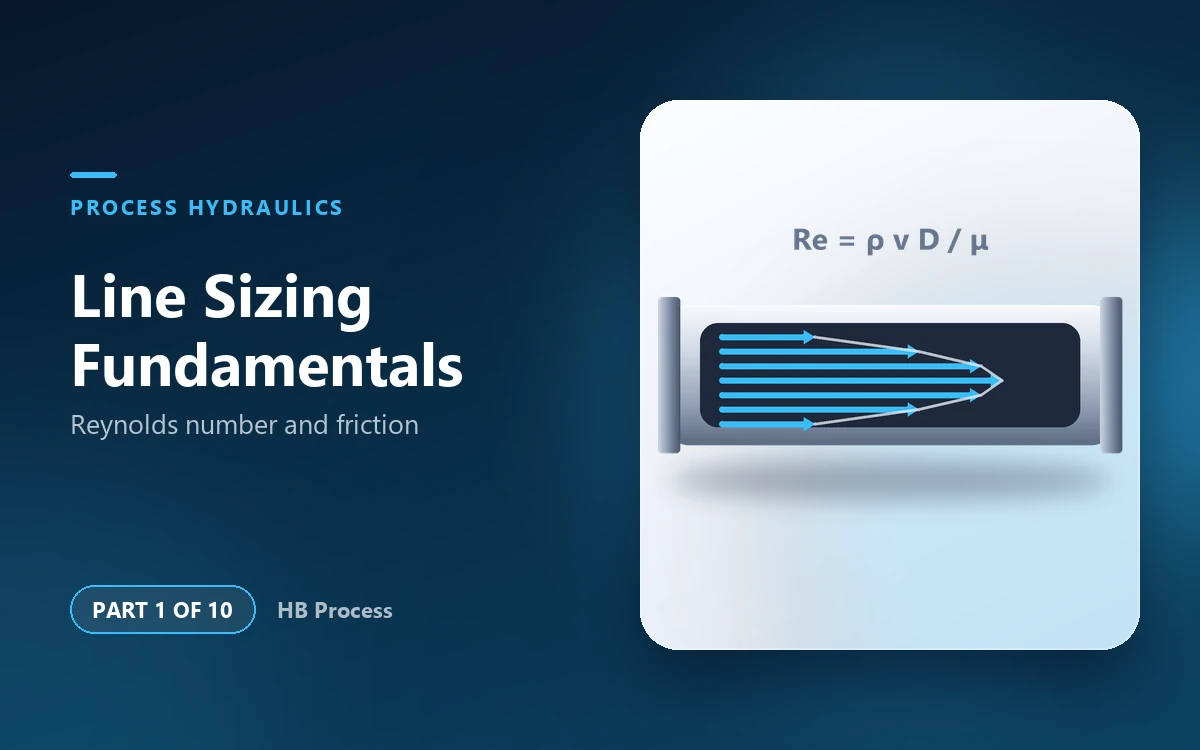
Process Hydraulics · Part 1 of 10
Process Hydraulics, Part 1: Line Sizing Fundamentals, Reynolds Number and the Friction Factor
Why we size lines, what the design basis and margins are, pipe schedules and standards, continuity and Bernoulli, Darcy–Weisbach, laminar vs turbulent flow, and how to get the friction factor from Moody, Colebrook or Swamee–Jain. Two animations.
Sumit Mathur Premium· 20 min
Fluid Flow & Hydraulics
Process Hydraulics · Part 2 of 10
Process Hydraulics, Part 2: Fittings, Valves, Minor Losses and Equivalent Length
The K method, the equivalent-length (L/D) method and the Cv/Kv method, with loss coefficients for entrances, exits, enlargements, contractions and bends; early-stage equivalent length estimates; and a fully worked pump-head example. An interactive fittings explorer.
Sumit Mathur Premium· 19 min
Heat Transfer & ExchangersFluid Flow & Hydraulics
Shell & Tube Heat Exchangers · Part 5 of 7
Shell & Tube Heat Exchangers, Part 5: Optimising Heat Transfer, Pressure Drop and Vibration
Shells in series and in parallel, which knobs raise h on each side, the ladder for cutting shell-side pressure drop, and why a tube that is fine at one baffle spacing wrecks itself at another. Two animations: shells in series and tube vibration.
Sumit Mathur Premium· 15 min