Process SafetyProcess SafetySafety in DesignRiskHazardLoss PreventionRisk MatrixCase StudyAnimatedTechnical Safety Engineering Series
Technical Safety Engineering, Part 1: Safety in Design, Hazard, Risk and Loss
What safety in design means and why it is cheap compared with an incident: process safety versus occupational safety, how every engineering discipline protects the same tank, hazard, exposure, risk and loss in simple terms, a risk matrix you can play with, and a real incident chain that design measures could have broken.
SM
Sumit Mathur
14 min read
Most accidents in a plant are not surprises. The hazard was there on the first day, in the drawings. The only question is whether anyone dealt with it during design, when it costs very little, or after the incident, when it costs a great deal.
That is the idea behind : find the hazards early and design them out, or put barriers in front of them, before the plant is built. This is . It sets the language and the way of thinking. The later parts are , , , , , and .
A safety-in-design effort aims to prevent two kinds of incident:
Major process incidents: explosions, big fires, toxic releases, collapses. Many people can be hurt and the plant can be lost.
Occupational safety incidents: a worker is hurt by a fall, a burn, a dropped object or noise.
Over the whole life of the asset (design, construction, operation), SID looks at:
the ergonomics of tasks (can the job be done safely?),
containment of process fluids,
the effects of hazardous substances,
energy, including electricity,
the effect on the environment.
2. Process safety and occupational safety
Process safety is a disciplined approach to keeping the integrity of the systems and processes that handle hazardous substances and energy. It is done by good design principles and good operating practice. Its job is the prevention and control of incidents that could release hazardous material or energy.
Occupational safety is about people being exposed to ordinary workplace hazards.
Process safety
Occupational safety
Typical events
Explosion, fire, toxic release, collapse
Slips, trips, falls, burns, dropped objects, noise
Size of harm
Can be catastrophic, many people, damage to the community and environment
Usually one person, local
Where it applies
High-hazard industries
Every workplace
Tools and words
HAZOP, HAZID, LOPA, QRA, management of change, hazardous area classification, escape and layout
Between the two is human factors: how people deal with equipment and the process (displays, alarms, noise, light, fatigue). It affects both kinds of incident.
A low injury rate does not prove that process safety is good. A plant can go years without a lost-time injury and still be one leak away from a disaster. The two must be measured and managed separately.
3. Every discipline protects the same tank
Safety is not one person's job. Look at a single storage tank. It can lose its contents in at least seven ways, and a different discipline closes each one.
Every discipline protects the same tank
1. Process
Chooses safe operating conditions in the tank and sizes the pressure relief.
Closes this way out: Overpressure and overfilling.
Disciplines applied
0 of 7
Ways out still open
7
A storage tank can lose its contents in seven different ways. Each discipline closes one of them. Click a numbered marker to read what that discipline does, and switch it on. A red drip means a way for the contents to escape is still open. Safety in design means no discipline is skipped.
Process chooses the operating conditions and sizes the pressure relief.
Instrumentation provides the controls and trips that keep the process out of hazardous conditions.
Electrical makes sure safety systems have power, including backup, for shutdown and heat tracing.
Civil and structural designs the footing and the dike.
Mechanical makes sure the steel is strong enough for the pressures.
Piping designs and tests inlet and outlet lines, so they do not leak.
Safety engineering runs the hazard studies and the quantitative analysis, and supports the others.
The customer matters too. A client with a strong safety culture and clear standards makes safe design easier. A client new to a technology (hydrogen, cryogenic liquids) may not yet understand its hazards, and the design team has the chance to help. The effort should be in proportion to the risk.
4. A culture where hazards are found
Studies such as HAZOP only work if people feel free to speak. Research at a large technology company found that the best teams shared one thing: psychological safety, the belief that you will not be punished or blamed for a mistake or for raising a concern.
To build it:
treat conflict as a shared problem, not a fight,
respect other people's competence and autonomy,
be curious about why something happened, not who to blame,
ask for feedback on how you communicate.
A team that is afraid to say “I think this is unsafe” will not find the hazard before it finds you.
5. Hazard, exposure, loss and risk
Four words are used again and again. Learn them in this order.
Hazard: a property of a material, a piece of equipment or an activity that could cause harm. A tank of gasoline is a hazard. So is a crane lifting a load.
Exposure: how close people or the environment are to the hazard, how often and for how long.
Loss: the unintended harm or damage that happens when a hazard and exposure meet. Loss can be small or catastrophic.
Risk: how likely a loss is and how bad it would be.
Hazard+Exposure=Loss
Risk=Frequency×Consequence
A shark in the sea is a hazard. It becomes a risk only when someone swims there. Many safety decisions are about exposure: keep the people away, or the hazard away from the people.
Risk is often mixed up with consequence. A very severe consequence can still be a low risk if it is extremely unlikely. And a mild consequence that happens every week can be a high risk. Always ask both questions.
There are two kinds of risk:
risks that can be eliminated (inherently safer design: remove the hazard),
risks that can only be reduced as far as is reasonable (the ALARP idea, see Part 6).
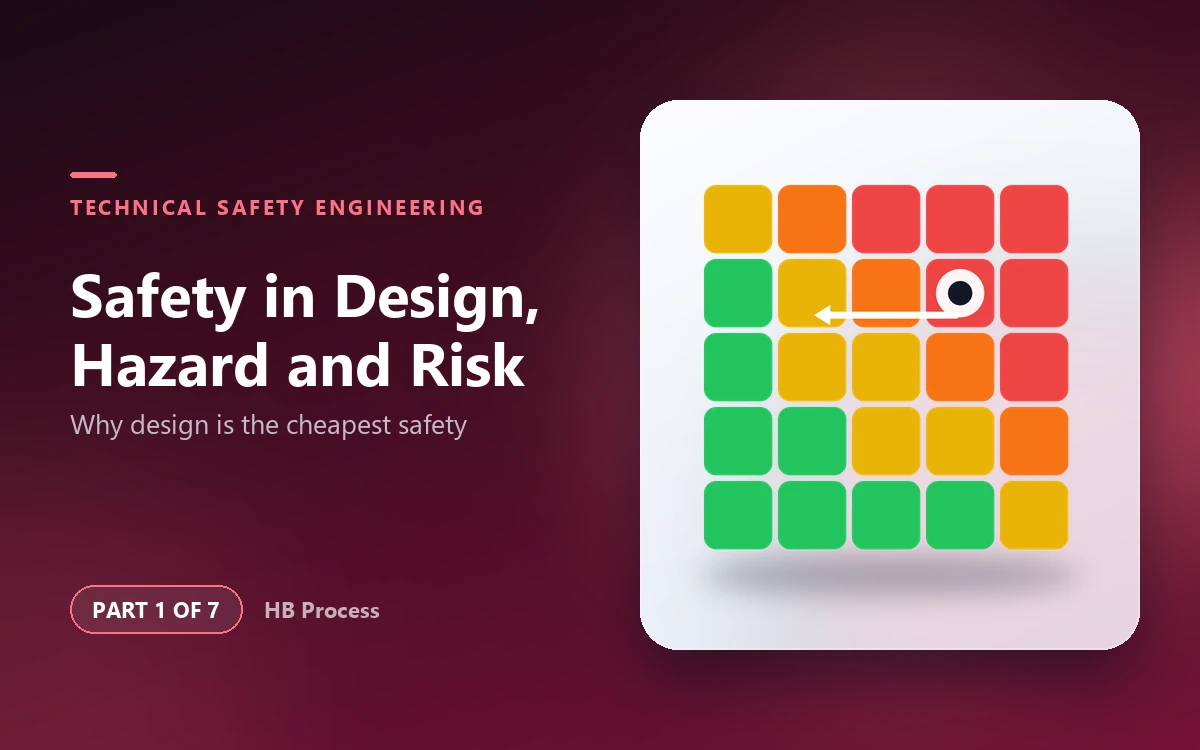
Play with the risk matrix
Risk = how likely × how bad
Risk as it stands
Very high (16)
After safeguards
Very high (16)
Worst case
Several fatalities
Chance of it happening
1 in 1 000 to 1 in 100 years
Very high risk: stop and redesign. Safeguards on top of a bad design are not enough.
Try it: set “How bad” to 5 and “People in the area” to 0. The worst case drops, because no one is exposed. This is why unmanned design and good layout are strong safety measures.
Every cell of the matrix is a frequency and a consequence. The hollow ring is the risk of the hazard as it stands. The solid dot is the risk after the safeguards you pick: each safeguard lowers the chance, not the consequence. The number of people in the area changes how bad the worst case is, because loss comes from hazard plus exposure. The scales are typical examples. Every company sets its own.
Things to try:
Raise “how likely” with “how bad” fixed. The risk climbs across the matrix.
Switch on safeguards. They move the dot left (less likely), never down.
Set “People in the area” to 0. The worst case drops, because no one is exposed.
Set “How bad” to 5 and use “Trip and relief valve”. Notice that a catastrophic consequence stays at least a medium risk: that is why we try to remove the hazard, not just to guard it.
6. Incidents that show what is at stake
Some well-known events (the numbers are as commonly quoted, and counts for several are uncertain):
Bhopal, 1984: a toxic release, with thousands of deaths.
Chernobyl, 1986: a nuclear accident, with about 30 immediate deaths and many more later.
Piper Alpha, 1988: an offshore platform fire, with 167 deaths.
Deepwater Horizon, 2010: a well blowout and explosion, with 11 deaths and a very large oil spill.
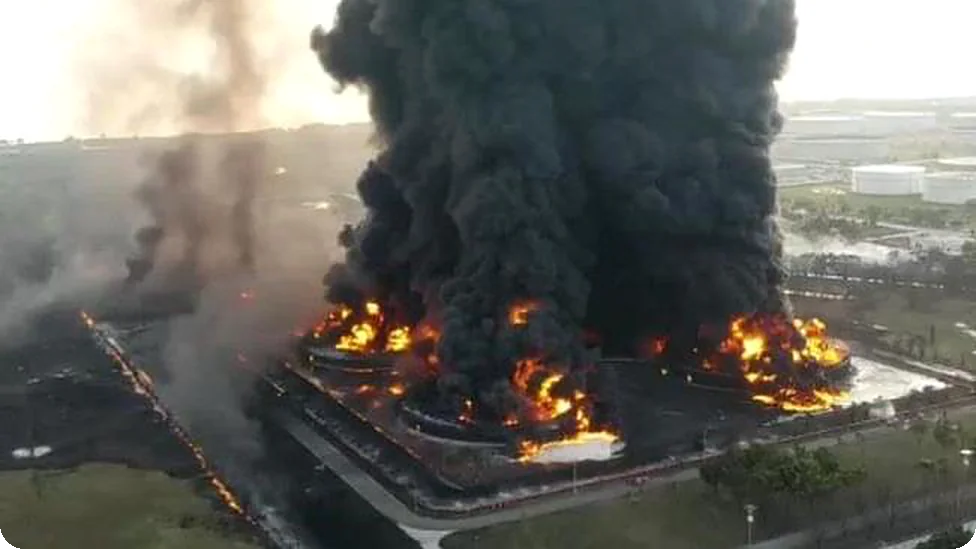
Process safety is the prevention of unplanned and uncontrolled loss of containment that can harm people or the environment. All of these started as a loss of containment.
A modern case: wind turbines
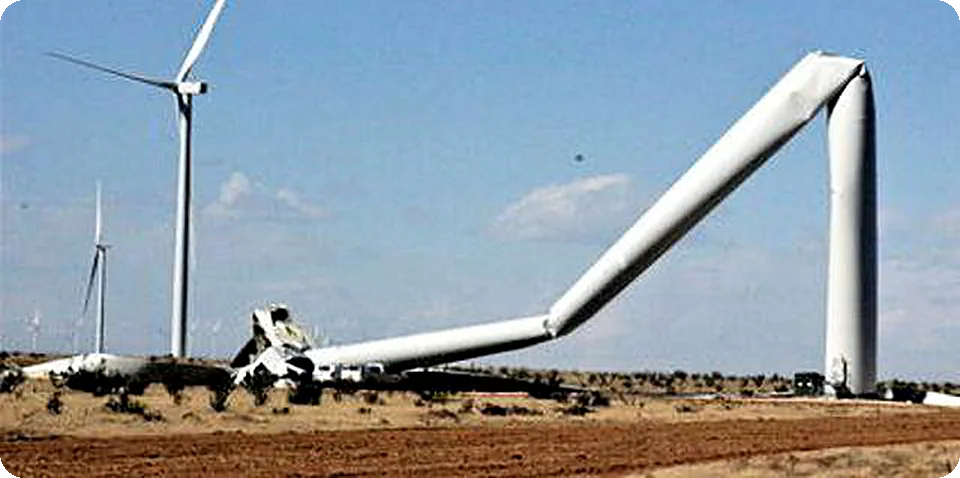
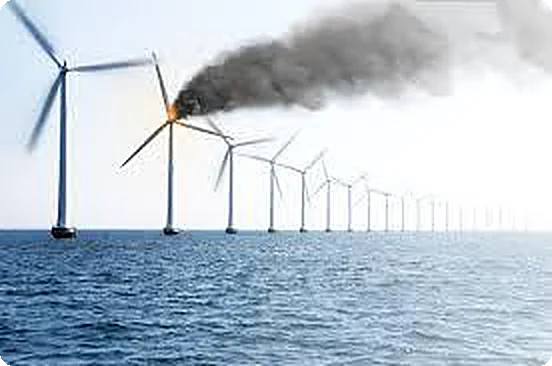
In 2019, five turbines from one maker failed in North and South America. Investigators found different causes in each case, but high wind came before every failure. High wind means high energy, and high energy raises the chance of a problem. One estimate puts the rate of fire in a wind turbine at about 1 in 2 000 per year.
Real equipment failures and fires. In each case, a design measure or a protective layer would have limited the damage.
Changes made afterwards were blade inspections, supplier checks, software changes and better monitoring. Every discipline has a part: civil (wind loading), instrumentation (shutdown controls and failure detection), electrical (overload protection), mechanical (specifications, welding, lubricant, fire suppression design), and safety engineering (consequence assessment, fire detection and suppression).
A process-plant case
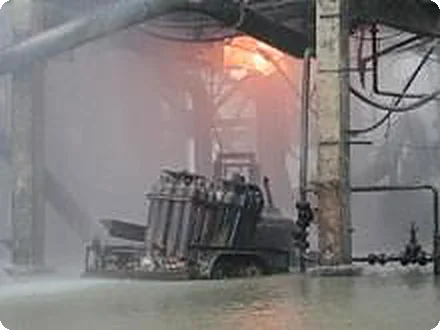
In 2005, at a polypropylene plant, a forklift reversed a trailer carrying compressed-air cylinders into a strainer on a drain valve. Liquid and vapour were released and ignited. The fire burned for five days and a pipe rack collapsed.
Switch on the design measures below and see how the chain breaks.
One incident, six steps, five design measures
Step 1A forklift reverses a trailer of compressed-air cylinders
Step 2The trailer hits a strainer on a drain valve
Step 3Liquid and vapour are released
Step 4The release ignites
Step 5The fire burns for 5 days
Step 6A pipe rack collapses
Outcome
Nothing stops the chain: a 5-day fire and a collapsed pipe rack.
Measures switched on
0 of 5
Notice that the first three measures remove the cause. Remote valves and fireproofing are the second line of defence: they do not stop the release, they stop it from growing.
This is a real incident from 2005 at a polypropylene plant. A forklift backed a trailer of air cylinders into a strainer on a drain valve. Switch on the design measures and see where the chain breaks. Measures that act early prevent the incident. Measures that act late only limit the damage. Safety in design costs little compared with the incident.
The lesson: safety in design is always cheap compared with the incident. A bollard, a better route for the piping, low-pressure air in pipes, a remote isolation valve and fireproofing of the structure each cost little at the design stage.
7. Summary
Safety in design means finding hazards early and dealing with them while changes are cheap.
Process safety (rare, huge events) and occupational safety (frequent, small events) need different tools and different measures.
Every discipline has a part. A hazard missed by one is a way out for the loss.
Hazard plus exposure gives loss. Risk is frequency times consequence.
Safeguards lower the chance. Only removing the hazard or the exposure lowers the consequence.
A team that is not afraid to speak finds more hazards.
Part 2 studies fire and explosion: how they start, the different kinds of fire, and how areas are classified by the chance of a flammable atmosphere.