Loading…
Process Safety
Relief systems, HAZOP, and safe operating limits.
12 articles
12 articles
Process Safety
Technical Safety Engineering · Part 1 of 7
Technical Safety Engineering, Part 1: Safety in Design, Hazard, Risk and Loss
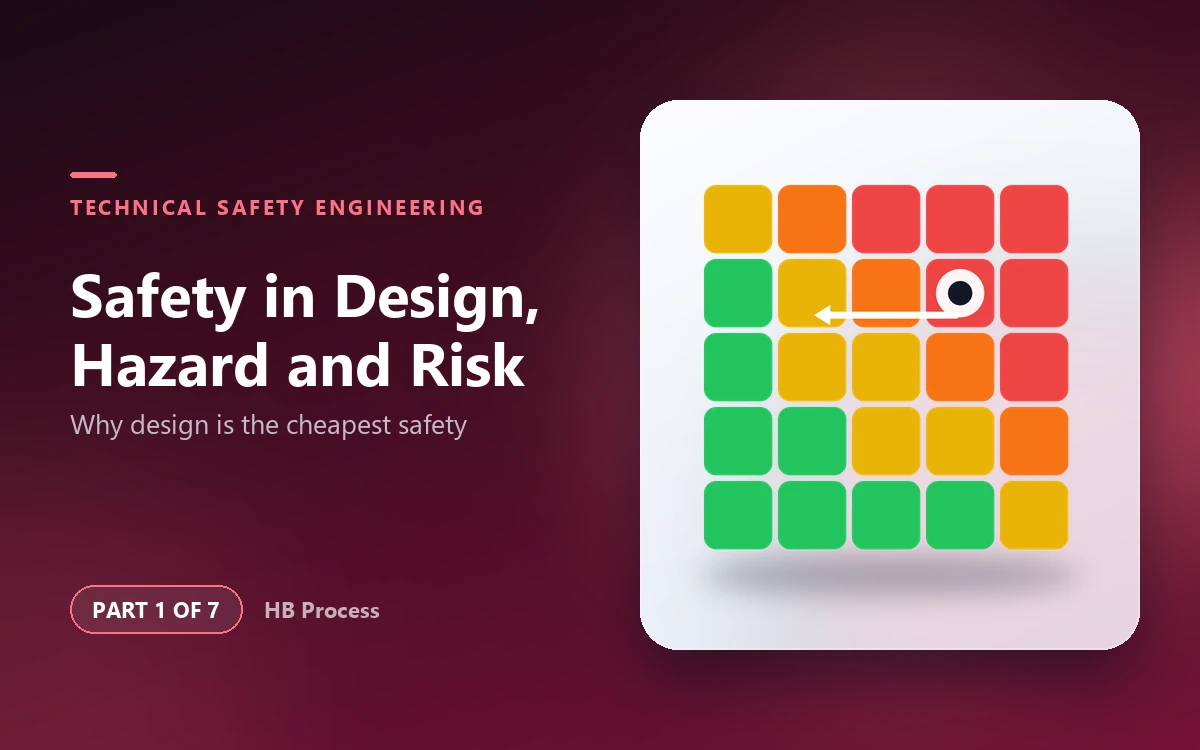
What safety in design means and why it is cheap compared with an incident: process safety versus occupational safety, how every engineering discipline protects the same tank, hazard, exposure, risk and loss in simple terms, a risk matrix you can play with, and a real incident chain that design measures could have broken.
Sumit MathurFree · no sign-in· 14 min
Process Safety
Technical Safety Engineering · Part 2 of 7
Technical Safety Engineering, Part 2: Fire, Explosion and Hazardous Area Classification
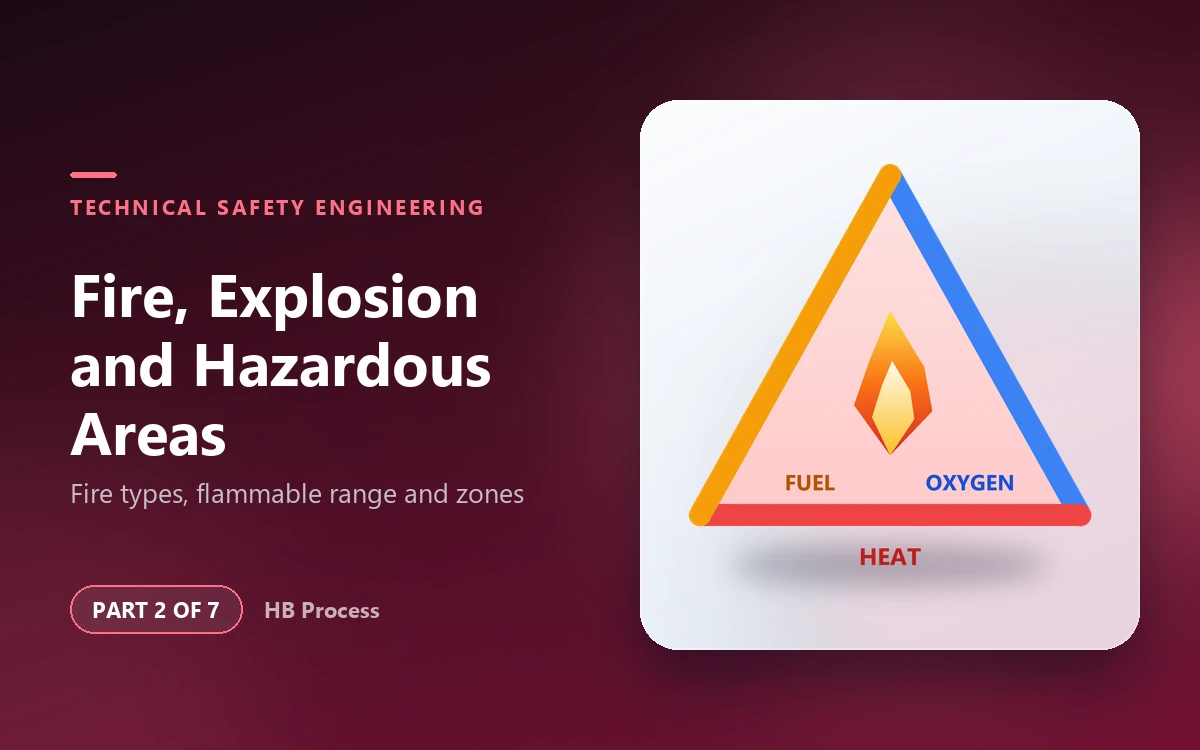
The fire triangle, the five kinds of fire (flash, pool, jet, fireball and solid), the classes of fire, the flammable range with oxygen and spark, flash point and the classes of petroleum liquids, and how hazardous areas are divided into Zone 0, 1 and 2 with gas groups and temperature classes. Five interactive animations and real photographs.
Sumit MathurFree · no sign-in· 15 min
Process Safety
Technical Safety Engineering · Part 3 of 7
Technical Safety Engineering, Part 3: Active Fire Protection, Fire Water, Sprinklers, Spray, Foam and Gas Systems
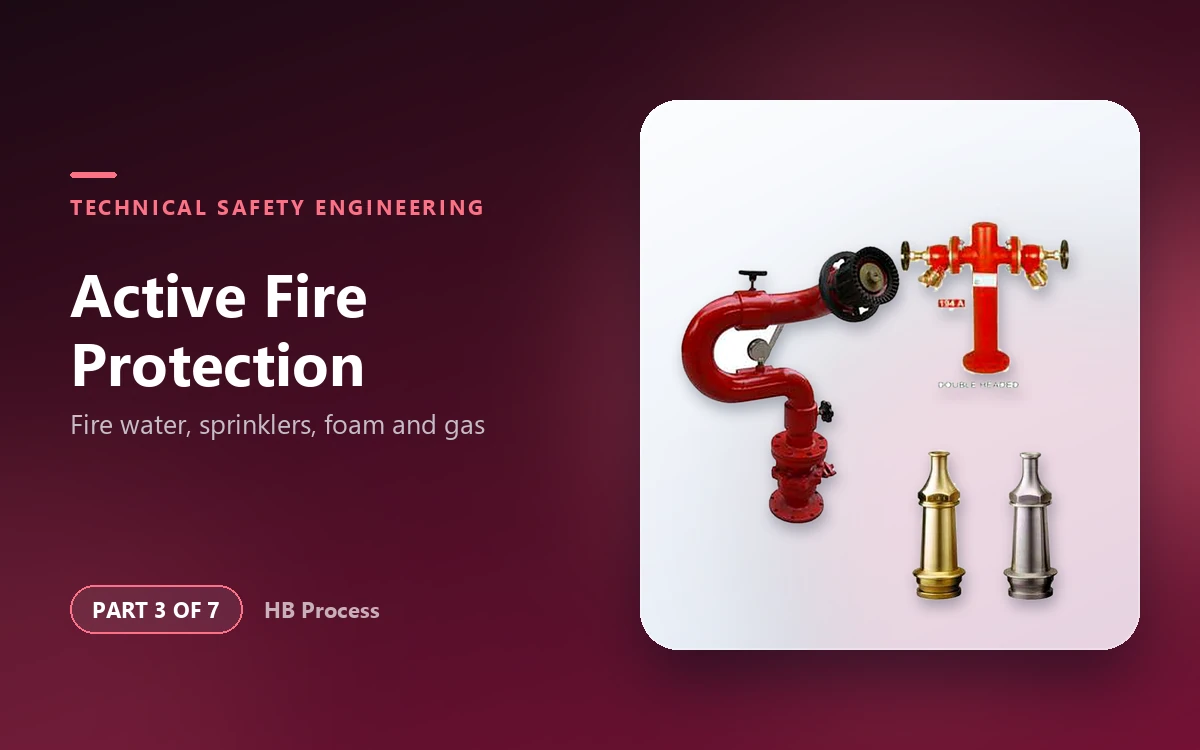
How fire fighting systems are designed for a plant: active versus passive protection, the standards, the fire water network and its layout rules, how fire water demand and storage are calculated (with a calculator), hydrants and monitors, wet, dry and pre-action sprinklers, water spray, foam, extinguishing agents for each class of fire, and clean-agent gas flooding. Four interactive animations.
Sumit MathurFree · no sign-in· 17 min
Process Safety
Technical Safety Engineering · Part 4 of 7
Technical Safety Engineering, Part 4: Fire and Gas Detection and Passive Fire Protection
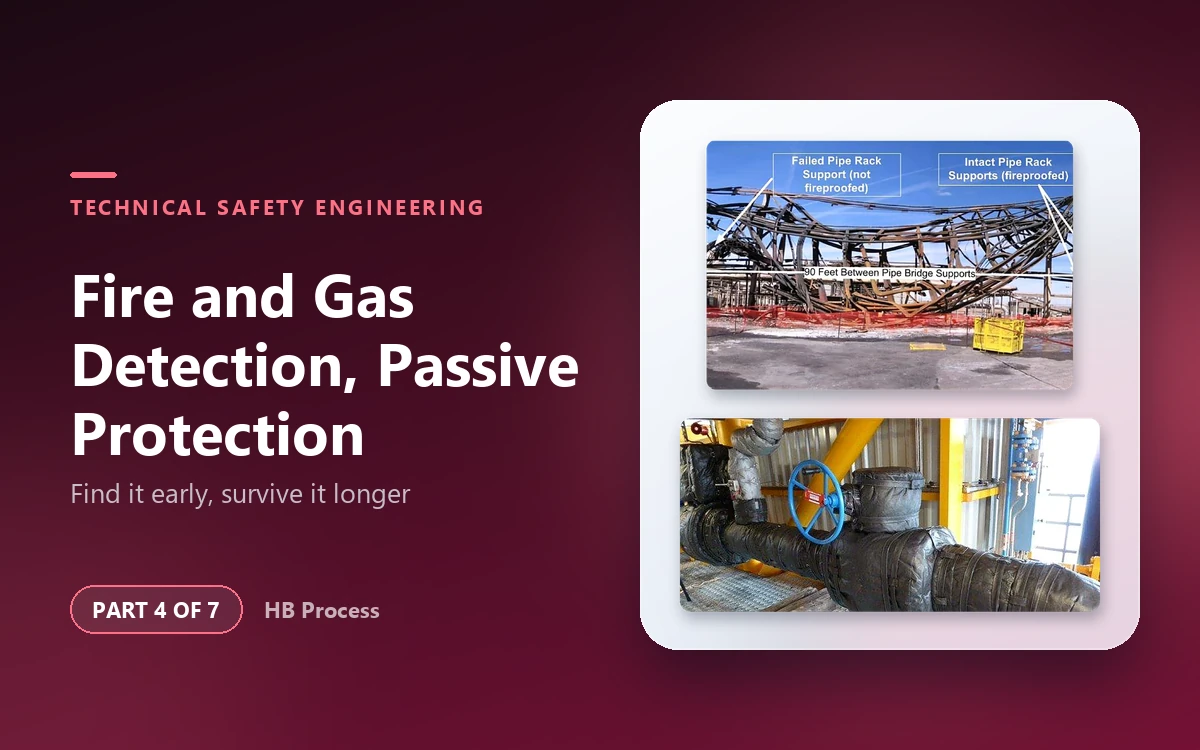
How fires and gas leaks are detected and what the system does about them (alarm levels, voting, executive actions), and how fireproofing keeps the plant standing: the goals of passive fire protection, fire curves and what a fire rating buys, the fire-exposed envelope, which equipment needs protection, and the materials used. Three interactive animations and photographs.
Sumit MathurFree · no sign-in· 16 min
Process Safety
Technical Safety Engineering · Part 5 of 7
Technical Safety Engineering, Part 5: HAZID and HAZOP
How hazards are found on paper before a plant is built: the difference between HAZID and HAZOP, the history of HAZOP, the three questions, guide words and deviations, a worked reactor example with a worksheet you can build, how to choose nodes, who is in the team and what each person does, ground rules, and when in a project each study is held. Four interactive animations.
Sumit MathurFree · no sign-in· 17 min
Process Safety
Technical Safety Engineering · Part 6 of 7
Technical Safety Engineering, Part 6: SIS, SIL, LOPA and ALARP
How many layers of protection are enough? Safety instrumented systems and safety integrity levels in simple terms, layers of protection and independent protection layers, how a LOPA calculation finds the SIL a safety function needs (with a calculator), and what ALARP and tolerable risk mean, with a cost-benefit tool. Three interactive animations.
Sumit MathurFree · no sign-in· 15 min
Process Safety
Technical Safety Engineering · Part 7 of 7
Technical Safety Engineering, Part 7: Quantitative Risk Assessment
How a plant's risk is turned into numbers: the five questions of a QRA, leak sizes, inventory and isolation time, release rates, wind and gas dispersion, jet fire, pool fire, flash fire, explosion, BLEVE and toxic effects, an event tree with real numbers, individual and societal risk (FN curve), risk criteria, and how risk is reduced. Five interactive animations.
Sumit MathurFree · no sign-in· 18 min
Fluid Flow & HydraulicsProcess Safety
Why Hot Pipes Need Expansion Loops: Thermal Expansion, U-Loops, Anchors and Guides in Industrial Piping
How much a hot pipe grows, what happens if it cannot, the stress and force it creates, and how plants deal with it: natural flexibility, U-loops, bellows, anchors, guides and spring supports. A U-loop designer you can drive, four animations, pipe-rack drawings and a worked steam-header example.
Sumit MathurFree · no sign-in· 22 min
Separation ProcessesProcess Safety
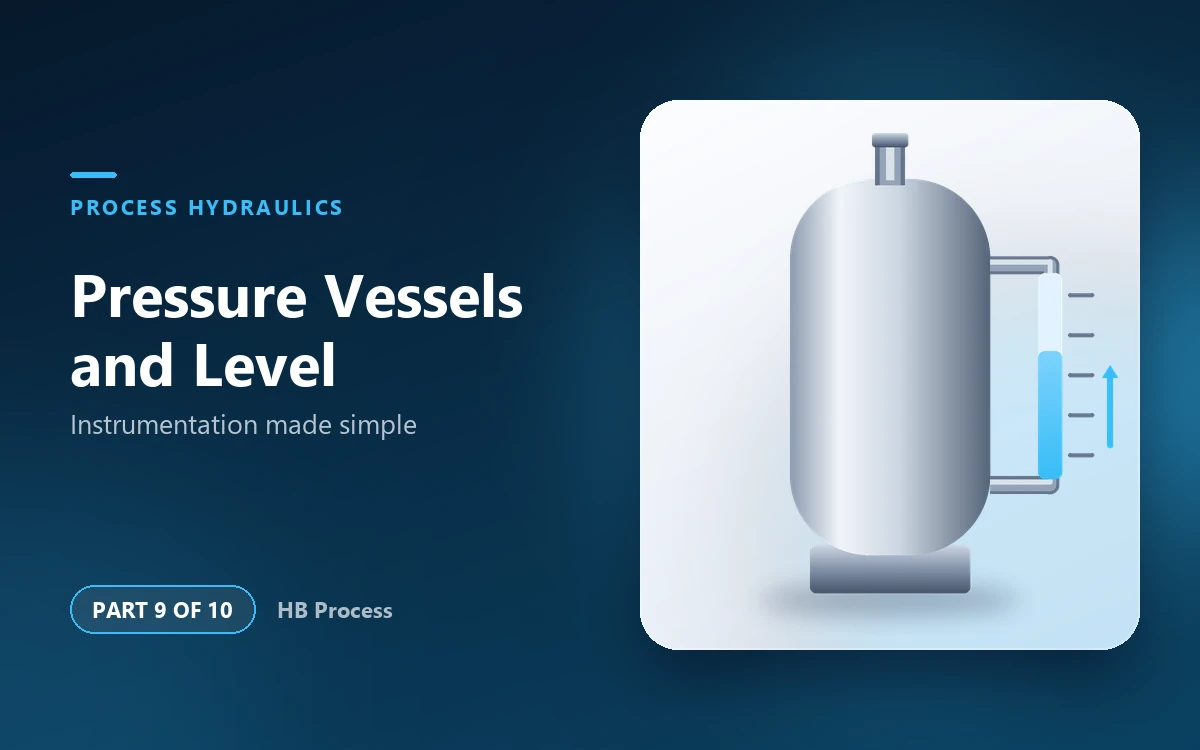
Process Hydraulics · Part 9 of 10
Process Hydraulics, Part 9: Pressure Vessels, Level Instrumentation and Surge Drum Sizing
What a process engineer specifies for a pressure vessel, vessel types, heads, nozzles and supports, orientation selection, codes and standards, protection (level, pressure, temperature and relief), and how to size a surge drum from residence time. Two animations: level alarms and a drum sizer.
Sumit MathurFree · no sign-in· 19 min
Heat Transfer & ExchangersProcess Safety
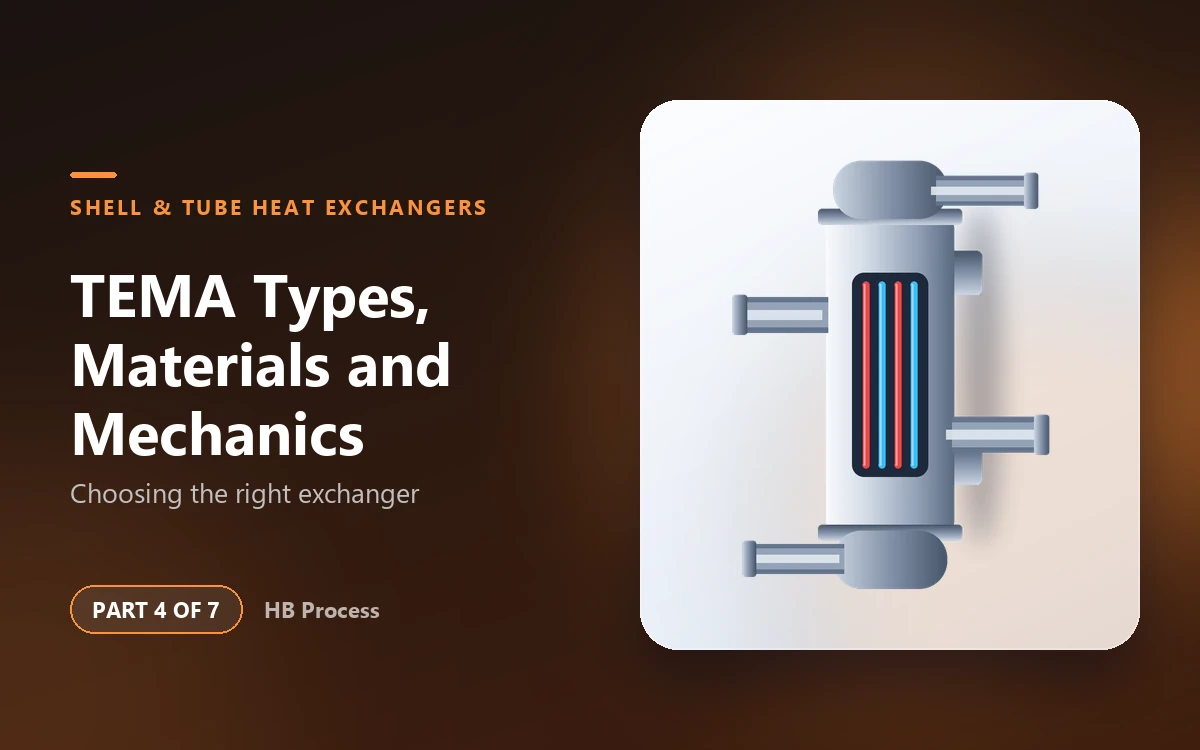
Shell & Tube Heat Exchangers · Part 4 of 7
Shell & Tube Heat Exchangers, Part 4: TEMA Types, Materials and Mechanical Design
Decode AES, BEM, BEU and AKT with an interactive TEMA builder, then learn fixed vs U-tube vs floating head, material selection, design pressure and temperature, the 10/13 rule, allowable pressure drop and the piping details that get forgotten.
Sumit MathurFree · no sign-in· 20 min
Fluid Flow & HydraulicsProcess Safety
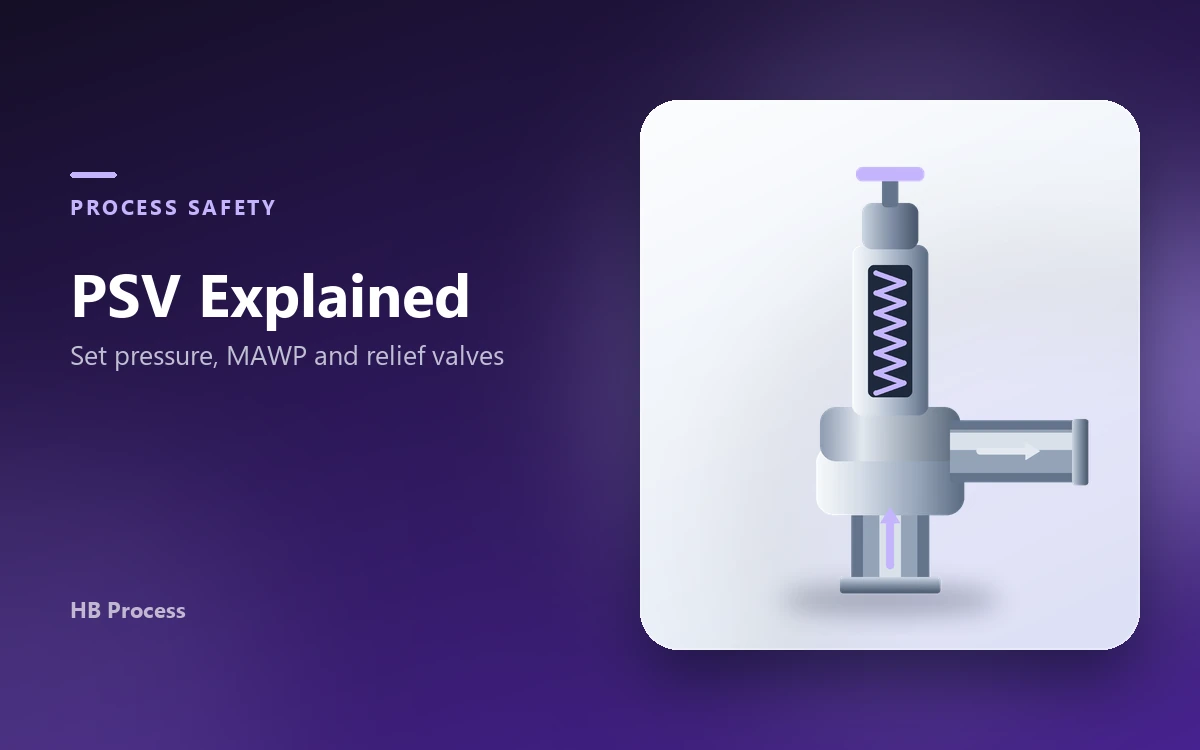
PSV Explained: Pressure Terms, Set Pressure, and Safety vs Relief Valves
Set pressure, MAWP, overpressure, accumulation, blowdown, back pressure. Every PSV term made visual with six animations, the sizing theory behind it, plus the real difference between a safety valve and a relief valve.
Sumit MathurFree · no sign-in· 22 min
Fluid Flow & HydraulicsProcess Safety
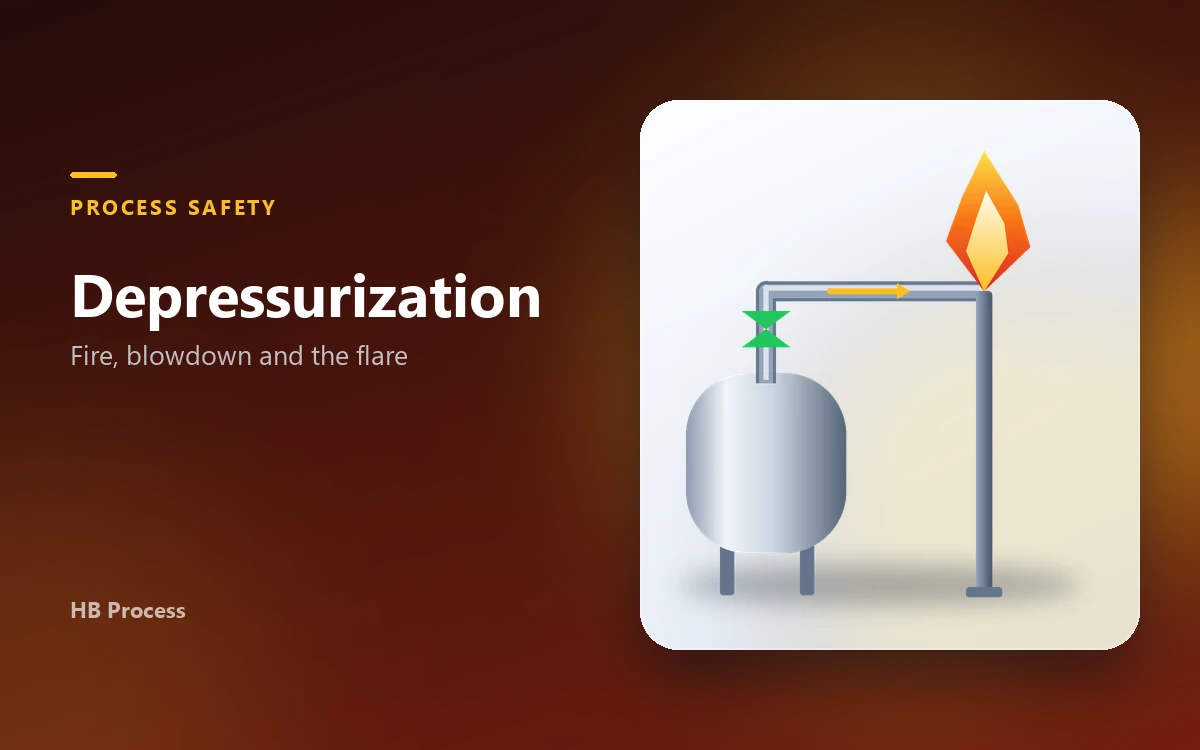
Depressurization of Process Vessels
Why a fire needs more than a relief valve, the scenarios that call for depressuring (fire, leak, reactor runaway, planned shutdown), how the system works from detector to flare, how to size the restriction orifice, how fast to blow down, how cold the metal gets, how to avoid overloading the flare, and the rules of thumb used in industry. Six interactive animations.
Sumit MathurSign in· 24 min