Process Hydraulics, Part 1: Line Sizing Fundamentals, Reynolds Number and the Friction Factor
Why we size lines, what the design basis and margins are, pipe schedules and standards, continuity and Bernoulli, Darcy–Weisbach, laminar vs turbulent flow, and how to get the friction factor from Moody, Colebrook or Swamee–Jain. Two animations.
Sumit Mathur
20 min read
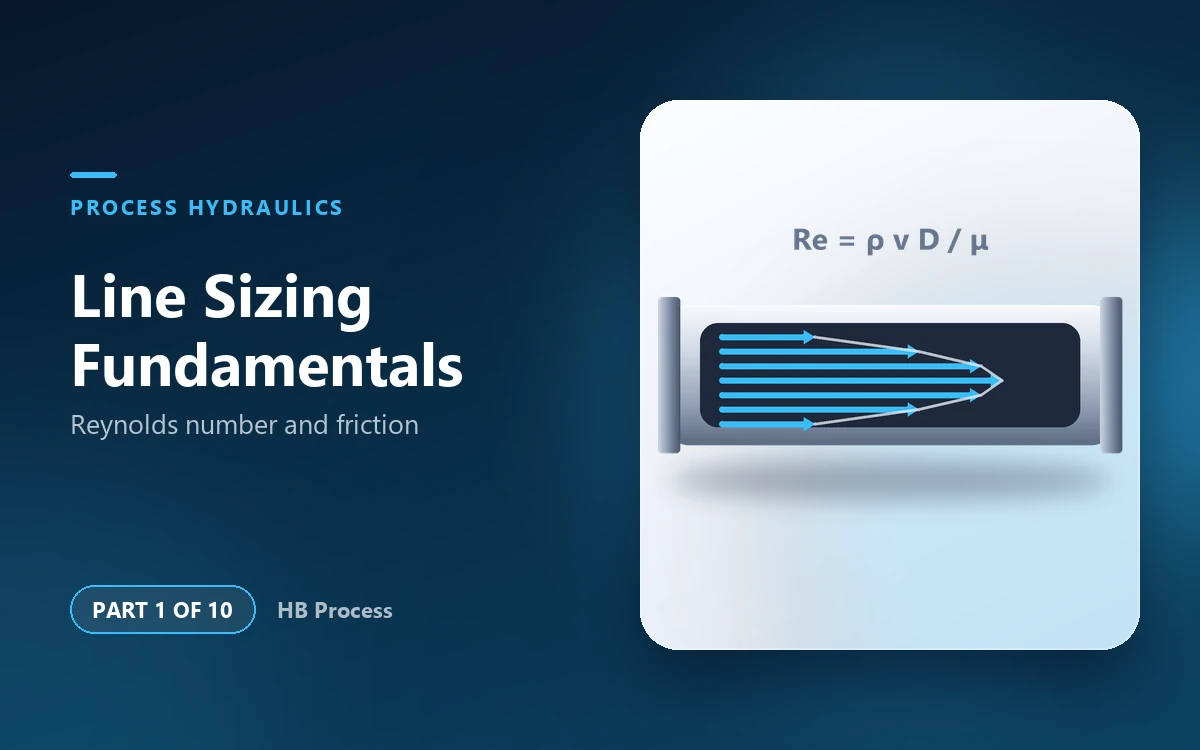
Every line in a plant is a compromise. A small pipe is cheap but costs pumping energy forever, wears out from erosion and shakes with noise. A large pipe is quiet and gentle on the pump, but costs steel, supports and insulation. Line sizing is the discipline of finding the size where the two costs balance and the fluid behaves.
This is Part 1 of a 10-part series on process hydraulics and equipment design: line sizing for liquids, gases and two-phase flow; system hydraulics; pumps; and pressure vessels and separators. It starts with the physics every later part relies on.
1. What line sizing is for
You size a line to do one of three jobs:
Sign in to keep reading
This is a premium article. Sign in or create a free account first; then you can unlock it with a plan.
← All articles