Process Hydraulics, Part 2: Fittings, Valves, Minor Losses and Equivalent Length
The K method, the equivalent-length (L/D) method and the Cv/Kv method, with loss coefficients for entrances, exits, enlargements, contractions and bends; early-stage equivalent length estimates; and a fully worked pump-head example. An interactive fittings explorer.
Sumit Mathur
19 min read
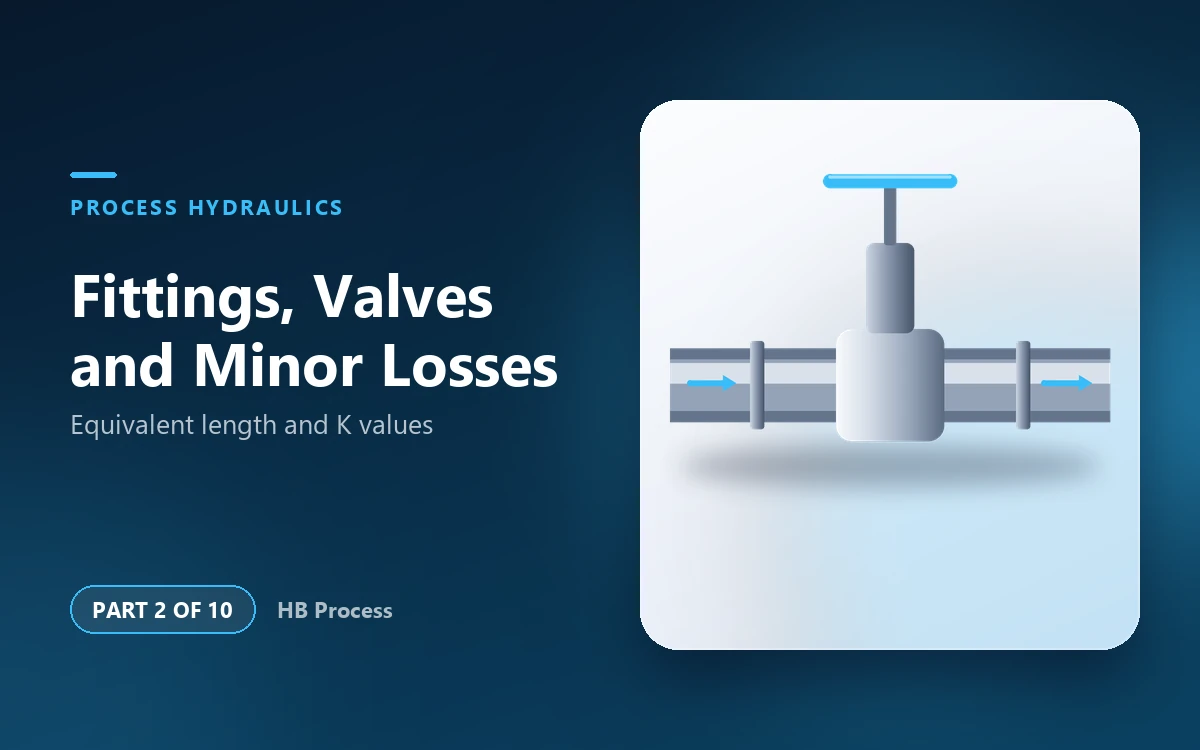
A real pipe run is not a straight tube. It has elbows, tees, valves, reducers, strainers, meters and nozzles, and each one converts some of the fluid's energy into heat. Engineers call these minor losses, which is a poor name: on a short line they can be more than half of the total.
This is Part 2 of 10. Part 1 covered friction in straight pipe.
1. Major and minor losses
Total head loss is the friction in the straight pipe plus the loss at every fitting:
Sign in to keep reading
This is a premium article. Sign in or create a free account first; then you can unlock it with a plan.
← All articles