Loading…
Latest
Heat Transfer & ExchangersFluid Flow & Hydraulics
Steam Traps
Everything about steam traps in simple language: why steam condenses and why the water, air and carbon dioxide must be removed, the three ways a trap tells steam from water, the main types (float and thermostatic, inverted bucket, thermodynamic disc, bimetallic, balanced pressure), how to select and size one, stall, drip legs and warm-up loads, installation rules, flash steam and condensate return, air in steam, how to test a trap, what a leak costs, and the rules of thumb. Ten interactive animations.
Sumit MathurFree · no sign-in· 24 min
Latest articles
38 total
Process Safety
Technical Safety Engineering · Part 1 of 7
Technical Safety Engineering, Part 1: Safety in Design, Hazard, Risk and Loss
What safety in design means and why it is cheap compared with an incident: process safety versus occupational safety, how every engineering discipline protects the same tank, hazard, exposure, risk and loss in simple terms, a risk matrix you can play with, and a real incident chain that design measures could have broken.
Sumit MathurFree · no sign-in· 14 min
Process Safety
Technical Safety Engineering · Part 2 of 7
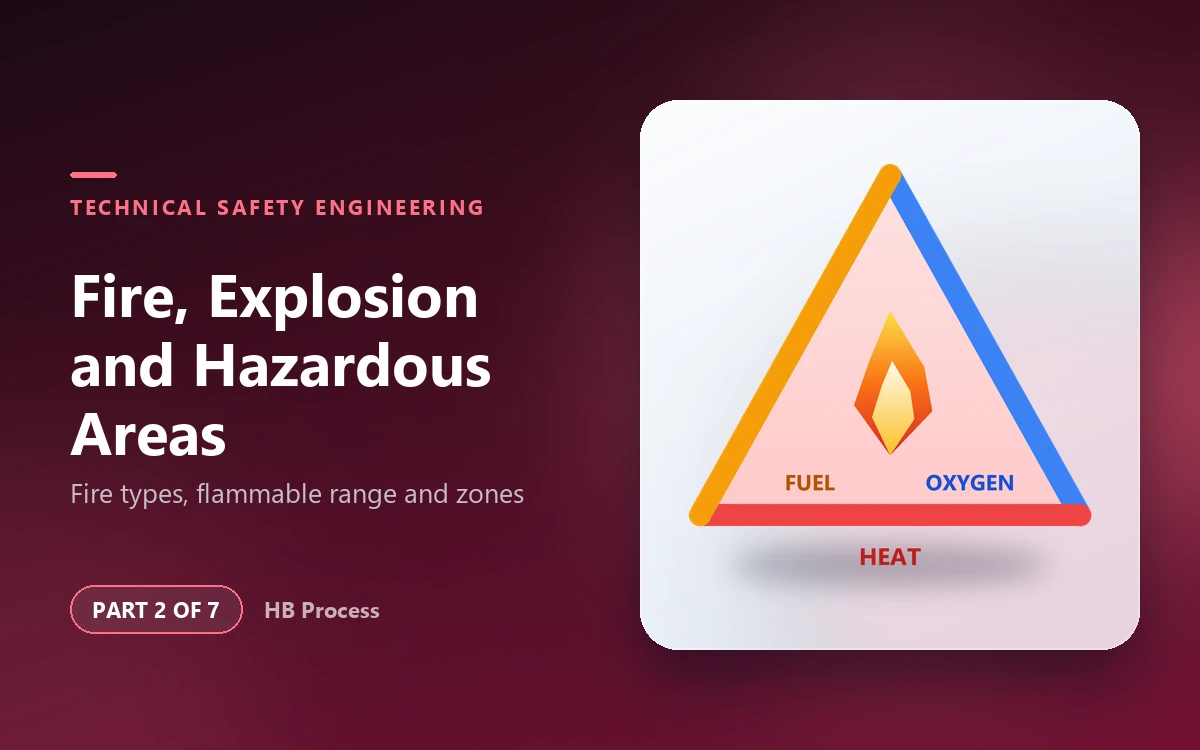
Technical Safety Engineering, Part 2: Fire, Explosion and Hazardous Area Classification
The fire triangle, the five kinds of fire (flash, pool, jet, fireball and solid), the classes of fire, the flammable range with oxygen and spark, flash point and the classes of petroleum liquids, and how hazardous areas are divided into Zone 0, 1 and 2 with gas groups and temperature classes. Five interactive animations and real photographs.
Sumit MathurFree · no sign-in· 15 min
Process Safety
Technical Safety Engineering · Part 3 of 7
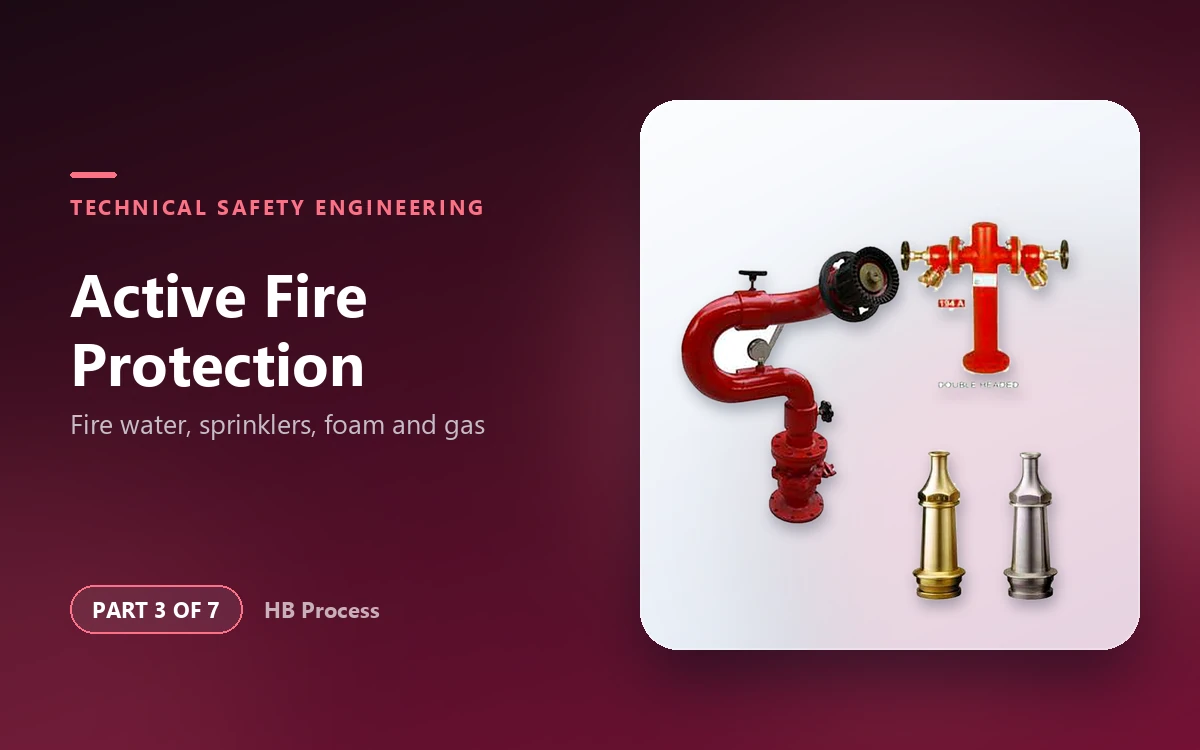
Technical Safety Engineering, Part 3: Active Fire Protection, Fire Water, Sprinklers, Spray, Foam and Gas Systems
How fire fighting systems are designed for a plant: active versus passive protection, the standards, the fire water network and its layout rules, how fire water demand and storage are calculated (with a calculator), hydrants and monitors, wet, dry and pre-action sprinklers, water spray, foam, extinguishing agents for each class of fire, and clean-agent gas flooding. Four interactive animations.
Sumit MathurFree · no sign-in· 17 min
Process Safety
Technical Safety Engineering · Part 4 of 7
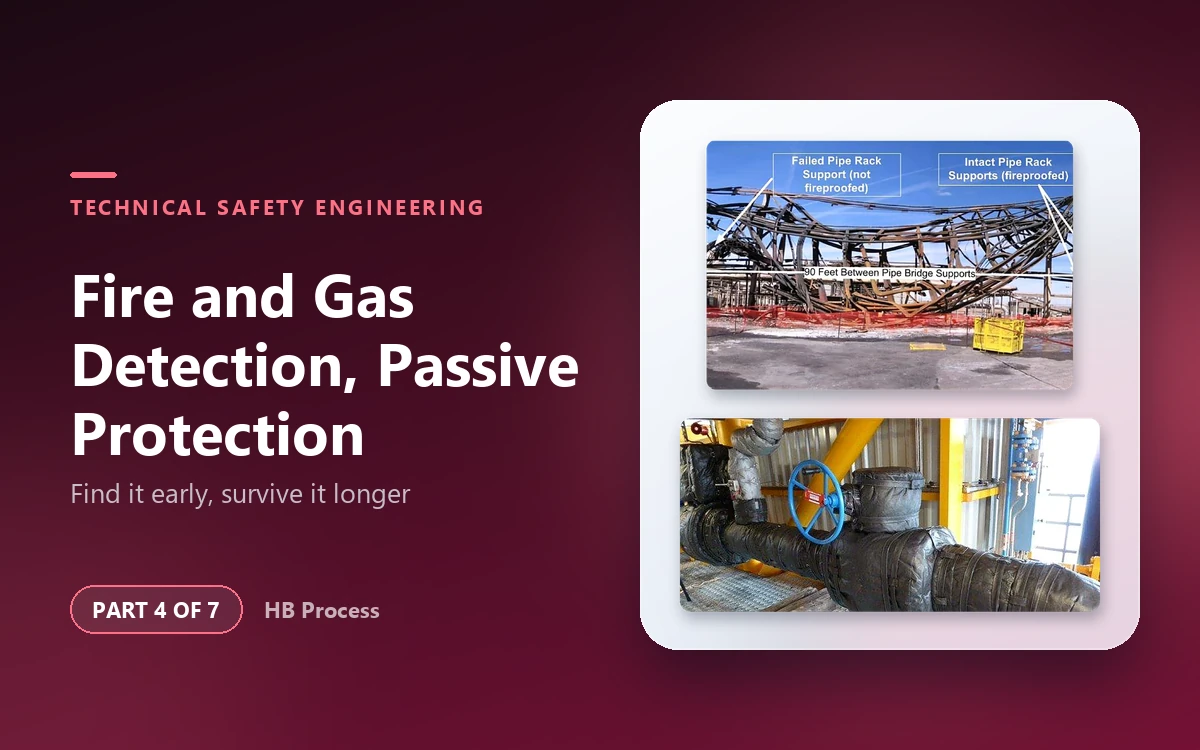
Technical Safety Engineering, Part 4: Fire and Gas Detection and Passive Fire Protection
How fires and gas leaks are detected and what the system does about them (alarm levels, voting, executive actions), and how fireproofing keeps the plant standing: the goals of passive fire protection, fire curves and what a fire rating buys, the fire-exposed envelope, which equipment needs protection, and the materials used. Three interactive animations and photographs.
Sumit MathurFree · no sign-in· 16 min
Process Safety
Technical Safety Engineering · Part 5 of 7
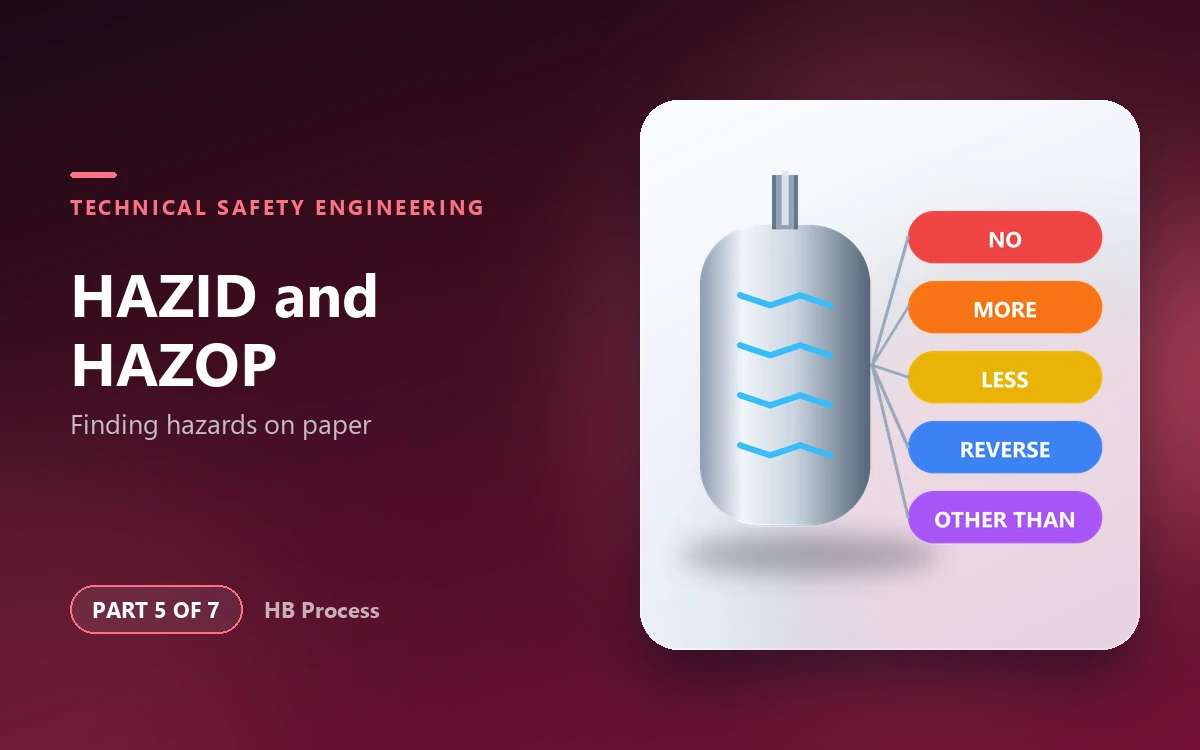
Technical Safety Engineering, Part 5: HAZID and HAZOP
How hazards are found on paper before a plant is built: the difference between HAZID and HAZOP, the history of HAZOP, the three questions, guide words and deviations, a worked reactor example with a worksheet you can build, how to choose nodes, who is in the team and what each person does, ground rules, and when in a project each study is held. Four interactive animations.
Sumit MathurFree · no sign-in· 17 min
Process Safety
Technical Safety Engineering · Part 6 of 7
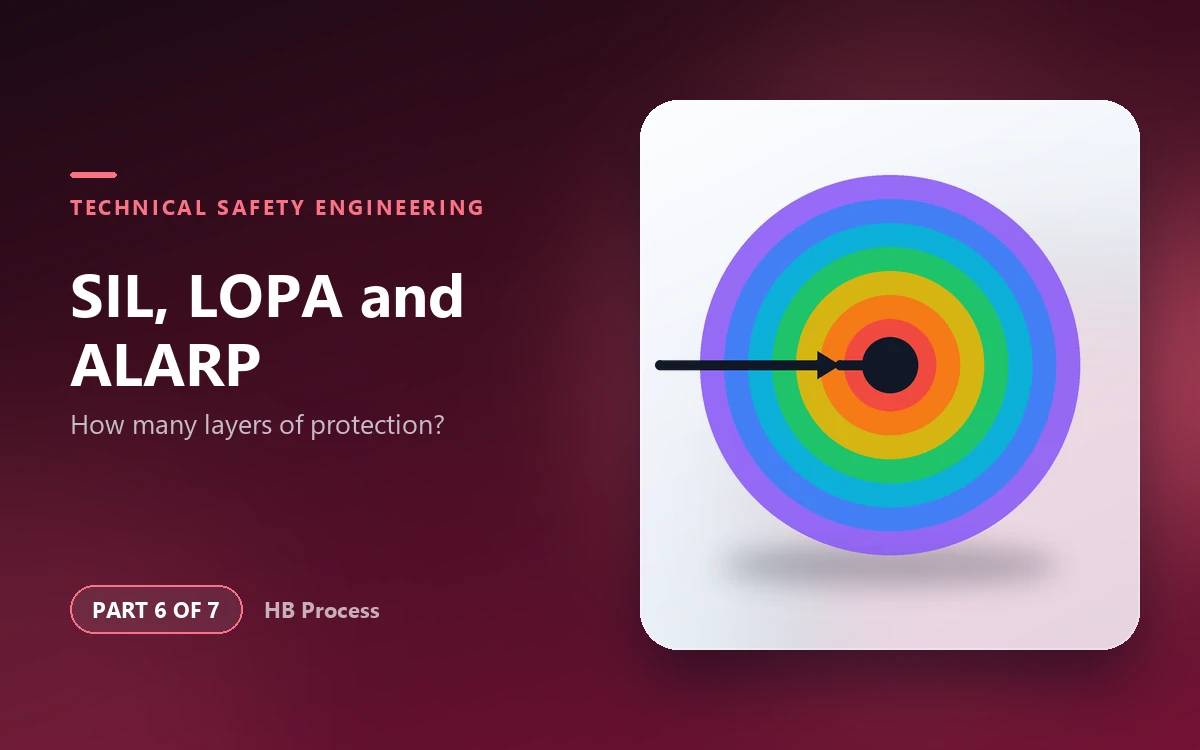
Technical Safety Engineering, Part 6: SIS, SIL, LOPA and ALARP
How many layers of protection are enough? Safety instrumented systems and safety integrity levels in simple terms, layers of protection and independent protection layers, how a LOPA calculation finds the SIL a safety function needs (with a calculator), and what ALARP and tolerable risk mean, with a cost-benefit tool. Three interactive animations.
Sumit MathurFree · no sign-in· 15 min
Process Safety
Technical Safety Engineering · Part 7 of 7
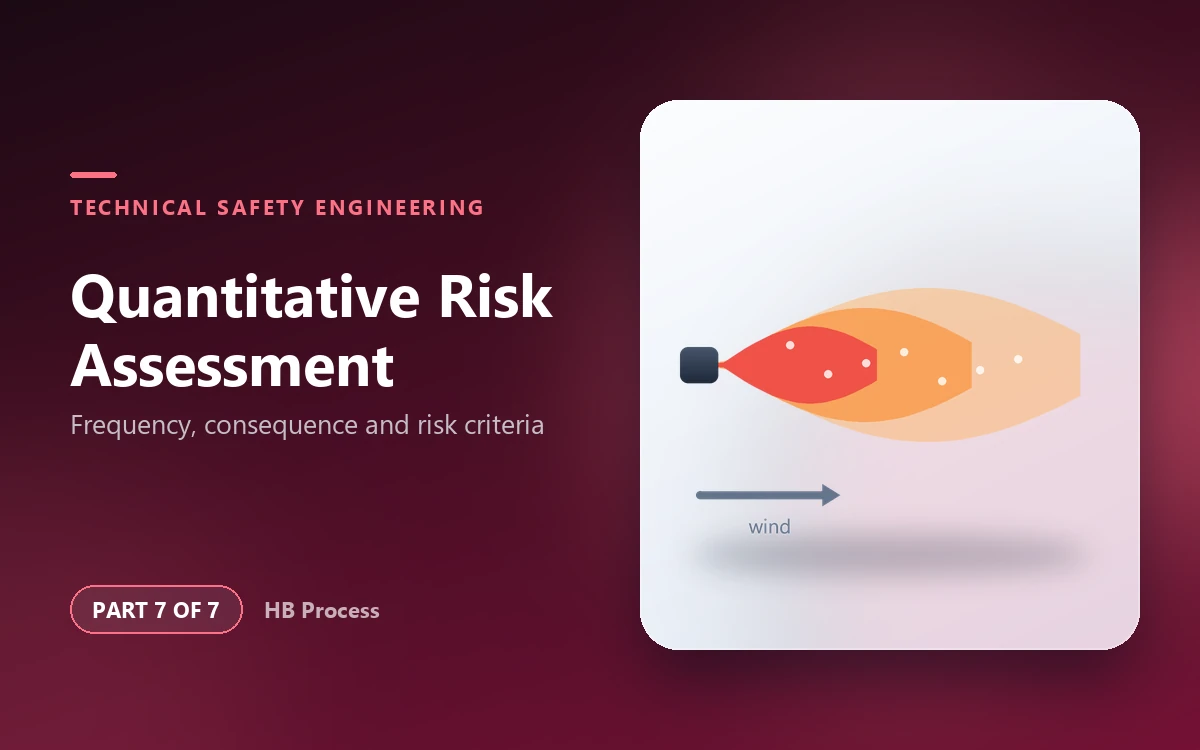
Technical Safety Engineering, Part 7: Quantitative Risk Assessment
How a plant's risk is turned into numbers: the five questions of a QRA, leak sizes, inventory and isolation time, release rates, wind and gas dispersion, jet fire, pool fire, flash fire, explosion, BLEVE and toxic effects, an event tree with real numbers, individual and societal risk (FN curve), risk criteria, and how risk is reduced. Five interactive animations.
Sumit MathurFree · no sign-in· 18 min
Separation Processes
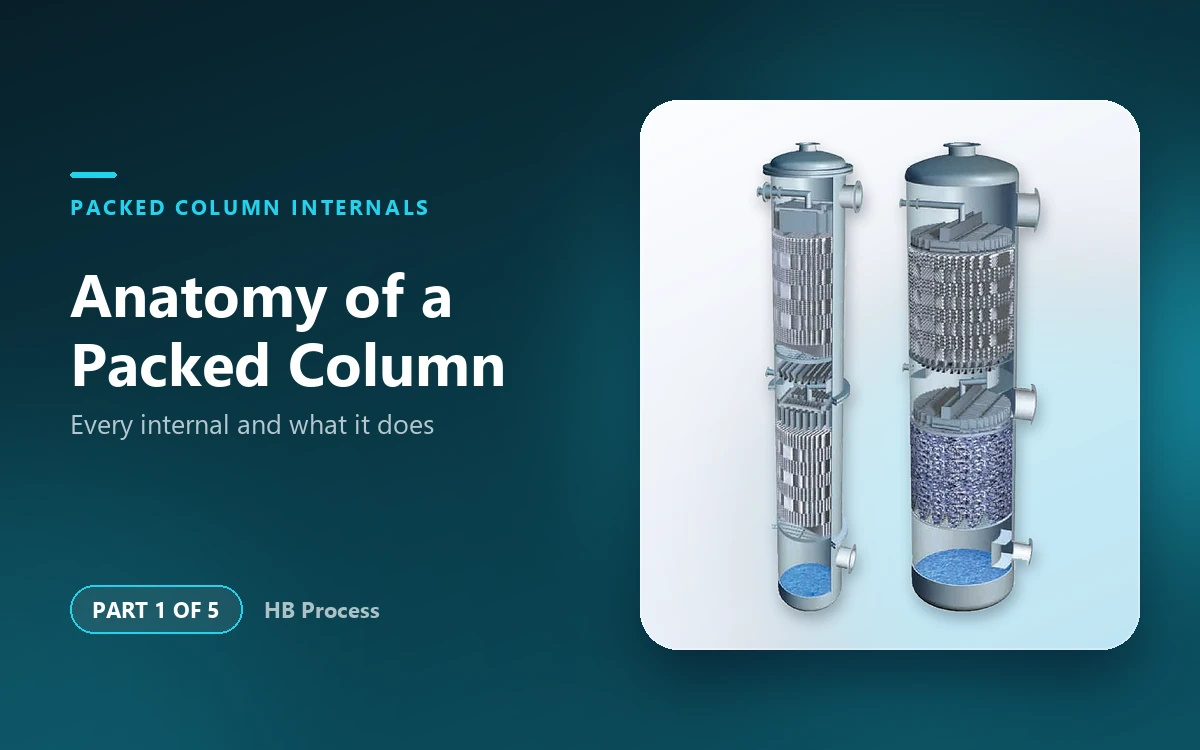
Packed Column Internals · Part 1 of 5
Packed Column Internals, Part 1: Anatomy of a Packed Column and What Every Internal Does
A simple tour of a packed column from top to bottom. What each internal part does, why the packing alone is not enough, how uneven liquid and gas ruin the separation, and what to tell a supplier. An interactive column and a simulator that shows how liquid spreads.
Sumit MathurFree · no sign-in· 13 min
Fluid Flow & HydraulicsProcess Safety
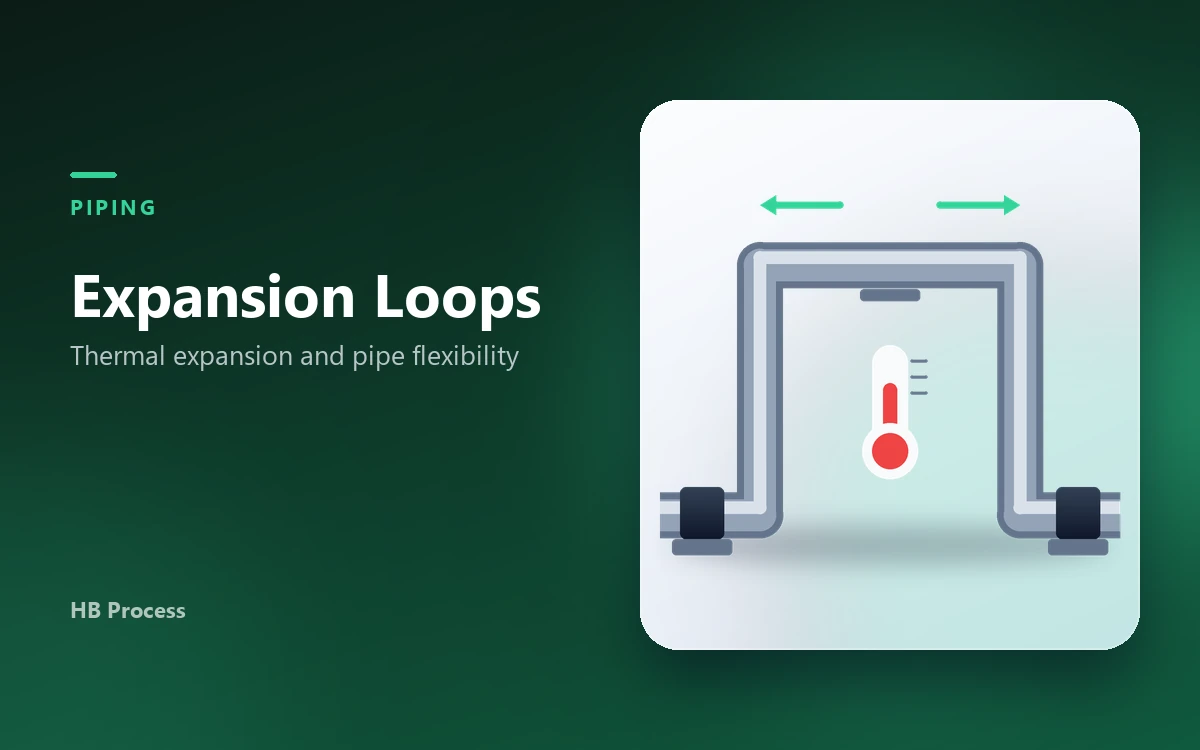
Why Hot Pipes Need Expansion Loops: Thermal Expansion, U-Loops, Anchors and Guides in Industrial Piping
How much a hot pipe grows, what happens if it cannot, the stress and force it creates, and how plants deal with it: natural flexibility, U-loops, bellows, anchors, guides and spring supports. A U-loop designer you can drive, four animations, pipe-rack drawings and a worked steam-header example.
Sumit MathurFree · no sign-in· 22 min
Fluid Flow & Hydraulics
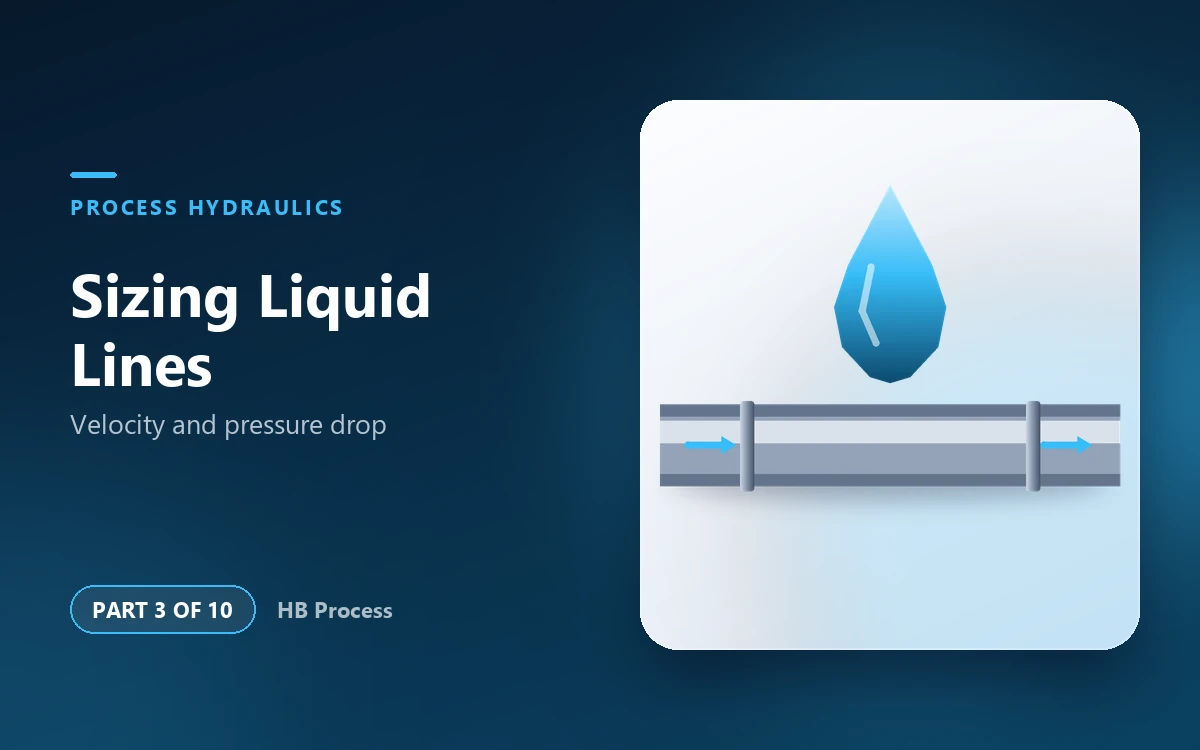
Process Hydraulics · Part 3 of 10
Process Hydraulics, Part 3: Sizing Liquid Lines, Velocity and Pressure-Drop Criteria by Service
Pump suction vs discharge limits, boiling and non-boiling liquids, reciprocating pump lines, cooling water, condensate, fire water, amine and caustic, gravity lines and slurries. An interactive liquid line sizer that checks every standard size against the limits.
Sumit MathurFree · no sign-in· 17 min
Fluid Flow & Hydraulics
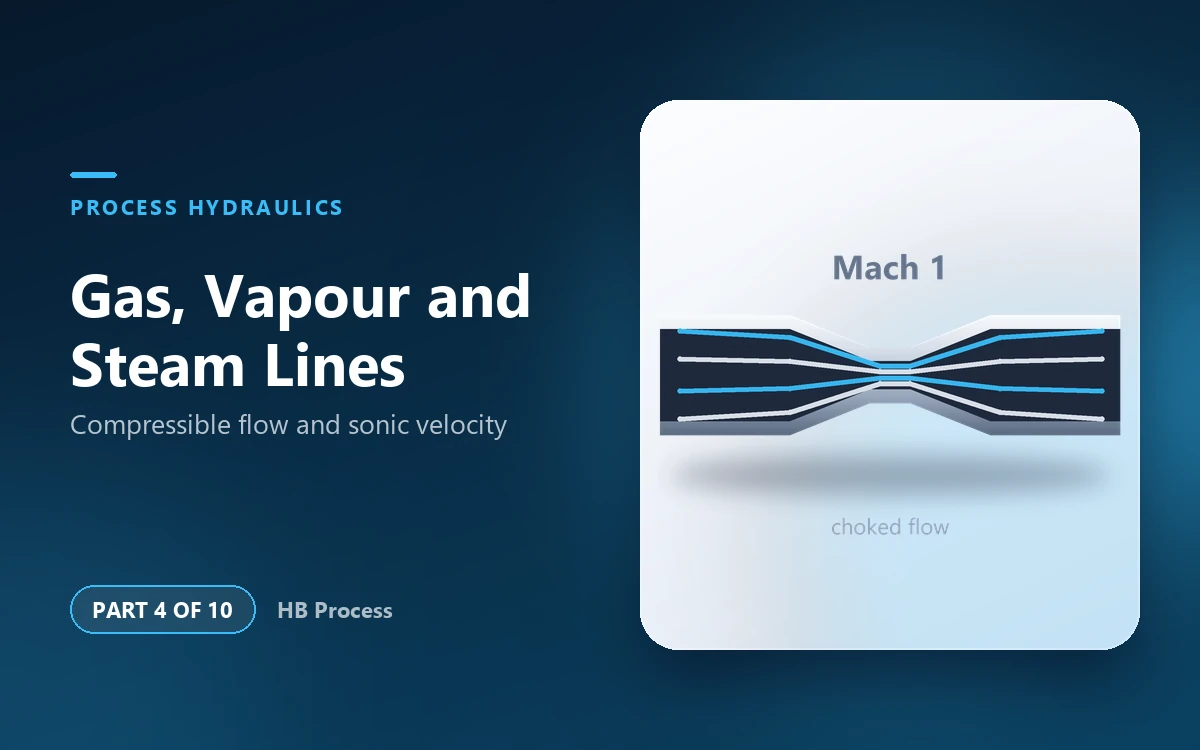
Process Hydraulics · Part 4 of 10
Process Hydraulics, Part 4: Gas, Vapour and Steam Lines, Compressible Flow and Sonic Velocity
Why gas lines are different, sonic (critical) velocity and choking, the 10 % / 40 % rule for density change, isothermal flow equations, steam and vapour velocity guidelines by pressure and size, compressor and vacuum lines. An animated gas-line simulator with Mach number.
Sumit MathurFree · no sign-in· 16 min
Fluid Flow & Hydraulics
Process Hydraulics · Part 5 of 10
Process Hydraulics, Part 5: Two-Phase Flow, Flow Regimes, Pressure Drop and Avoiding Slug Flow
Why two-phase lines are the hardest to size, horizontal and vertical flow patterns, the Baker map and superficial velocities, Lockhart–Martinelli pressure drop, erosional velocity (API RP 14E), and the design rules that keep slugs out of your piping. An interactive regime map with live pipe animation.
Sumit MathurFree · no sign-in· 19 min
Fluid Flow & Hydraulics
Process Hydraulics · Part 6 of 10
Process Hydraulics, Part 6: The Hydraulic Pressure Profile, Equipment Elevation and Control-Valve Pressure Drop
How to build a hydraulic calculation for a whole circuit: fixed pressure points, hydraulic flow diagrams, normal, design and turndown cases, setting column and receiver elevations from NPSH, equipment pressure drops, control-valve rules, and pro-rating friction. An animated pressure waterfall.
Sumit MathurFree · no sign-in· 21 min
Fluid Flow & Hydraulics
Process Hydraulics · Part 7 of 10
Process Hydraulics, Part 7: Centrifugal Pumps, Curves, NPSH, Cavitation and Flow Control
Pump classification and selection, head, power and efficiency, head–capacity and NPSH curves, cavitation, affinity laws and impeller trimming, system curves and operating points, throttling vs variable speed, and minimum flow. Two animations: curves with the operating point, and NPSH with live cavitation.
Sumit MathurFree · no sign-in· 23 min
Fluid Flow & Hydraulics
Process Hydraulics · Part 8 of 10
Process Hydraulics, Part 8: Parallel and Series Pumps, Displacement Pumps, Energy Cost and the Pump Datasheet
Running pumps in parallel and in series (and why unstable curves hunt), reciprocating and rotary pumps with their pulsation, power and slip, the energy cost of oversizing in rupees per year, and a complete walk through the process datasheet: flows and margins, pressures, design pressure, driver and materials.
Sumit MathurFree · no sign-in· 22 min
Separation ProcessesProcess Safety
Process Hydraulics · Part 9 of 10
Process Hydraulics, Part 9: Pressure Vessels, Level Instrumentation and Surge Drum Sizing
What a process engineer specifies for a pressure vessel, vessel types, heads, nozzles and supports, orientation selection, codes and standards, protection (level, pressure, temperature and relief), and how to size a surge drum from residence time. Two animations: level alarms and a drum sizer.
Sumit MathurFree · no sign-in· 19 min
Separation Processes
Process Hydraulics · Part 10 of 10
Process Hydraulics, Part 10: Gas–Liquid and Three-Phase Separator Sizing, Souders–Brown and Internals
Separator zones, gravity settling laws, Souders–Brown K, sizing vertical and horizontal two-phase separators with and without mist eliminators, inlet devices and mist extractors, nozzle momentum limits, three-phase separators with weir or boot, and the governing-diameter method. A droplet-settling animation and a three-phase separator simulator.
Sumit MathurFree · no sign-in· 22 min
Heat Transfer & Exchangers
Shell & Tube Heat Exchangers · Part 1 of 7
Shell & Tube Heat Exchangers, Part 1: U, LMTD, Approach and the Correction Factor
Where the overall heat transfer coefficient really comes from, why counter-current wins, what a temperature cross is, how Ft works, and which fluid goes on the shell side. Four animations you can drag.
Sumit MathurFree · no sign-in· 18 min
Heat Transfer & Exchangers
Shell & Tube Heat Exchangers · Part 2 of 7
Shell & Tube Heat Exchangers, Part 2: Designing the Tube Bundle
Triangular vs square pitch, tube diameter and wall thickness, tube length, number of passes, bundle diameter, tubesheet joints, tube inserts and ferrules. An animated tube-count explorer and the rules behind each choice.
Sumit MathurFree · no sign-in· 16 min
Heat Transfer & ExchangersFluid Flow & Hydraulics
Shell & Tube Heat Exchangers · Part 3 of 7
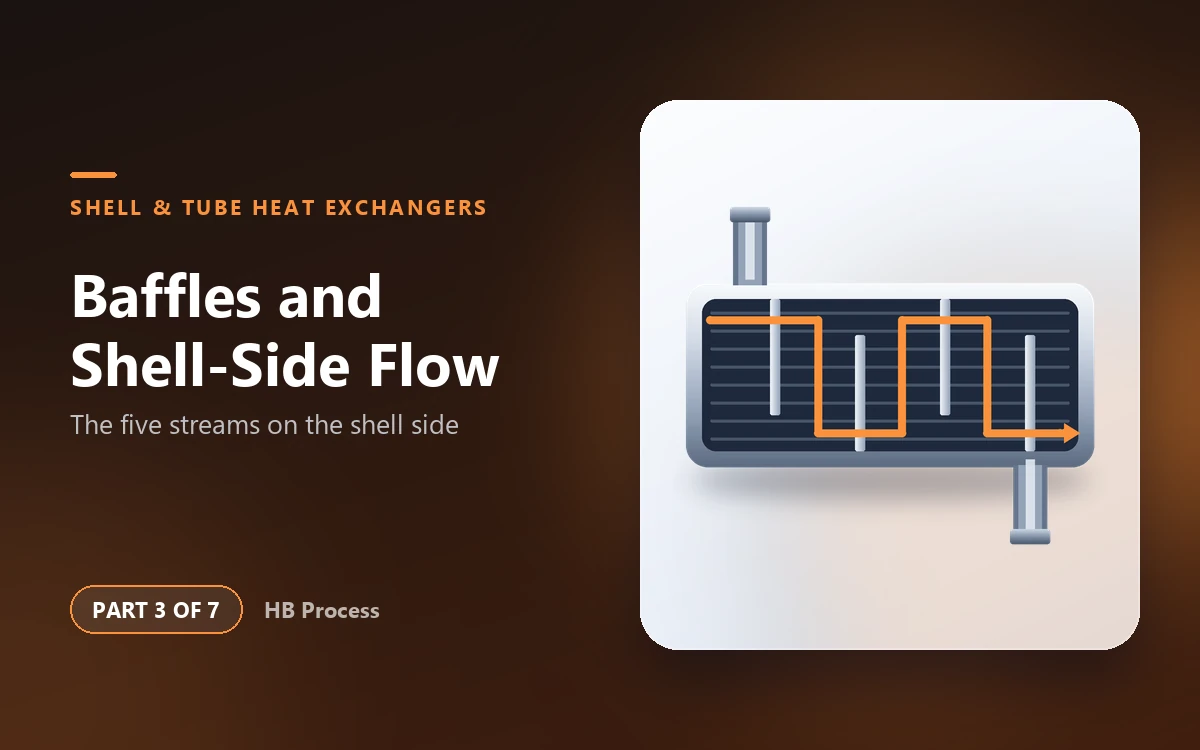
Shell & Tube Heat Exchangers, Part 3: Baffles and the Five Shell-Side Streams
Baffle types, cut, orientation and spacing; why window and cross-flow velocity must match; impingement plates; tie rods; and the A, B, C, E, F leakage streams that quietly steal your heat transfer. Two interactive animations.
Sumit MathurFree · no sign-in· 17 min
Heat Transfer & ExchangersProcess Safety
Shell & Tube Heat Exchangers · Part 4 of 7
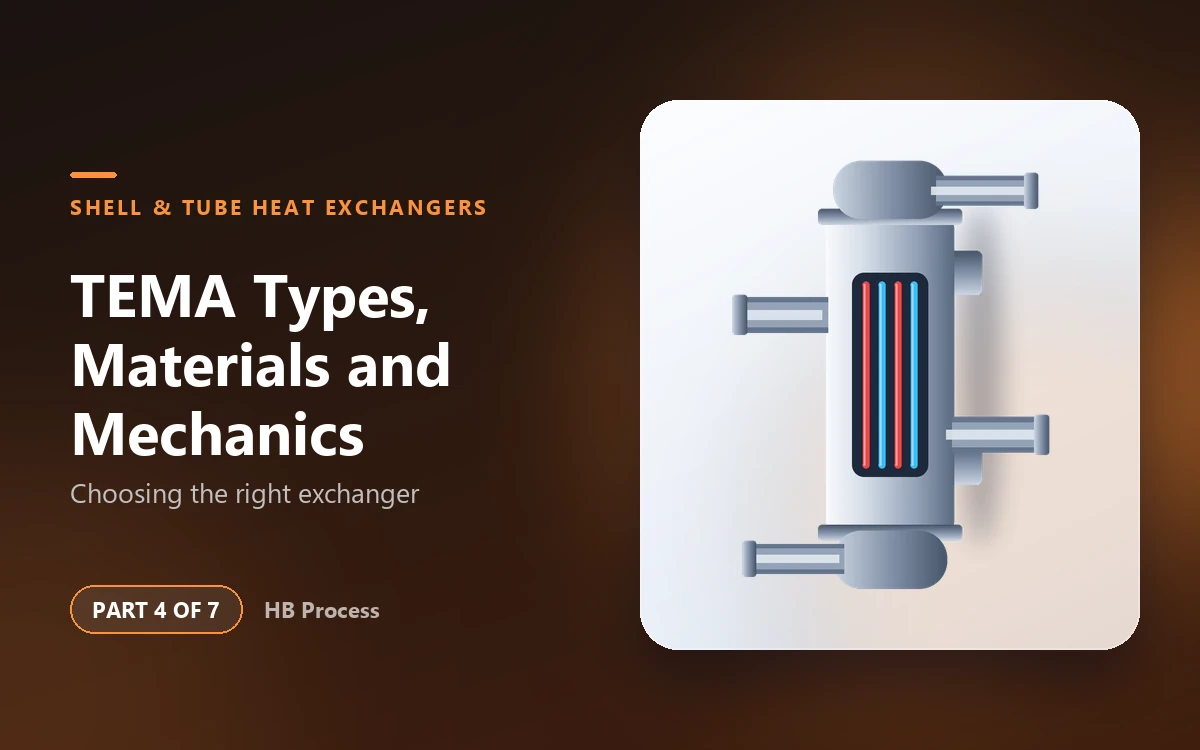
Shell & Tube Heat Exchangers, Part 4: TEMA Types, Materials and Mechanical Design
Decode AES, BEM, BEU and AKT with an interactive TEMA builder, then learn fixed vs U-tube vs floating head, material selection, design pressure and temperature, the 10/13 rule, allowable pressure drop and the piping details that get forgotten.
Sumit MathurFree · no sign-in· 20 min
Heat Transfer & ExchangersSeparation Processes
Shell & Tube Heat Exchangers · Part 6 of 7
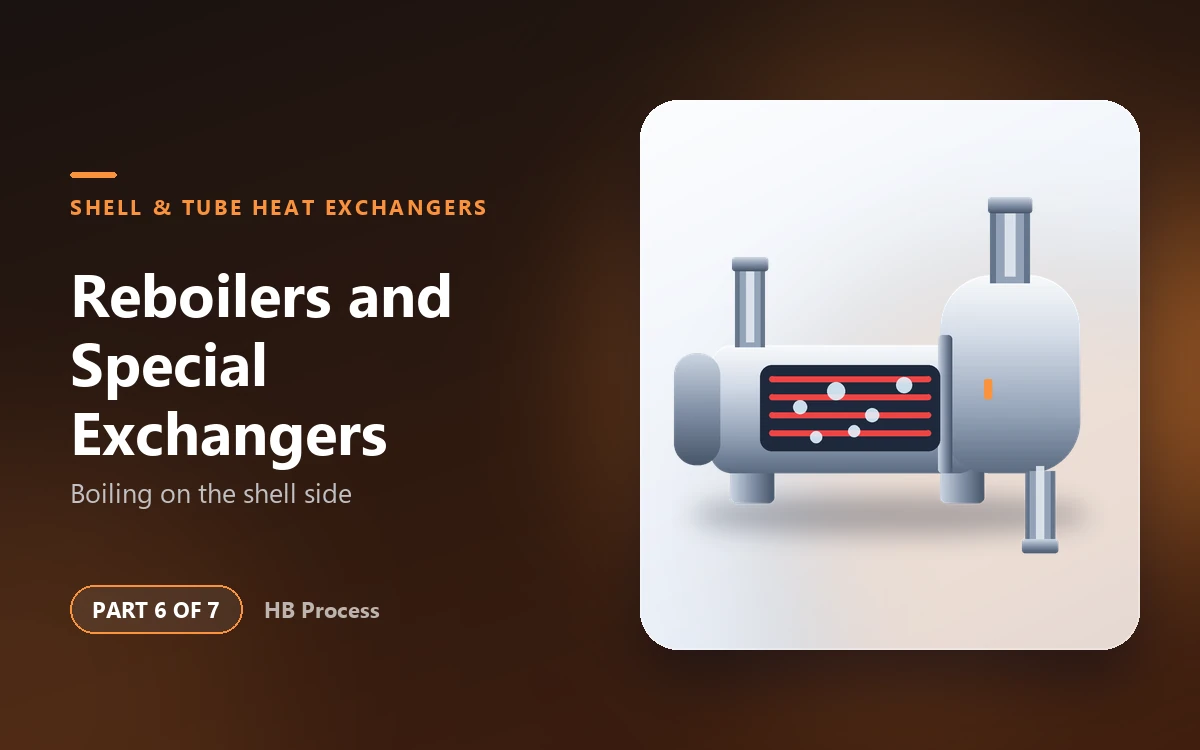
Shell & Tube Heat Exchangers, Part 6: Reboilers, Boiling and Special Exchangers
Kettle vs thermosiphon vs forced circulation, the pool-boiling curve and why heat flux has a ceiling, flow regimes in tube-side boiling, thermosiphon piping, plus waste heat boilers, hairpins, bayonet exchangers and IBR. A reboiler selector and a boiling-curve animation.
Sumit MathurFree · no sign-in· 19 min
Fluid Flow & HydraulicsProcess Safety
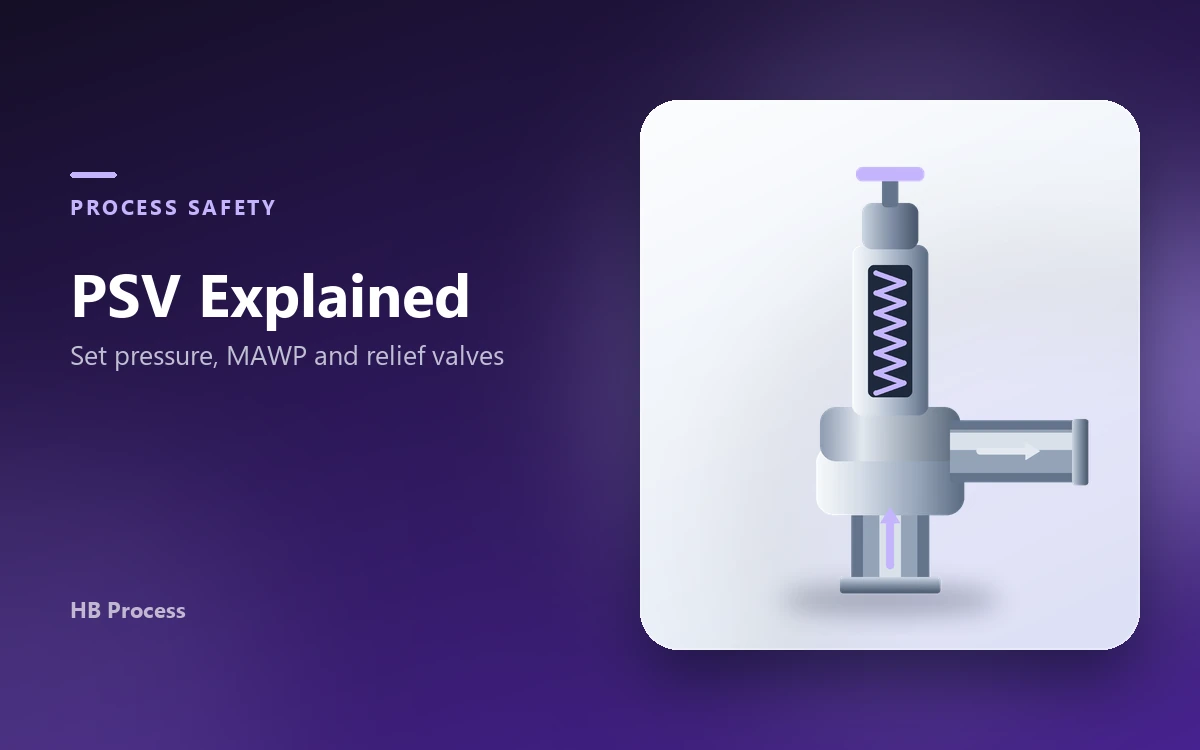
PSV Explained: Pressure Terms, Set Pressure, and Safety vs Relief Valves
Set pressure, MAWP, overpressure, accumulation, blowdown, back pressure. Every PSV term made visual with six animations, the sizing theory behind it, plus the real difference between a safety valve and a relief valve.
Sumit MathurFree · no sign-in· 22 min
Fluid Flow & HydraulicsProcess Safety
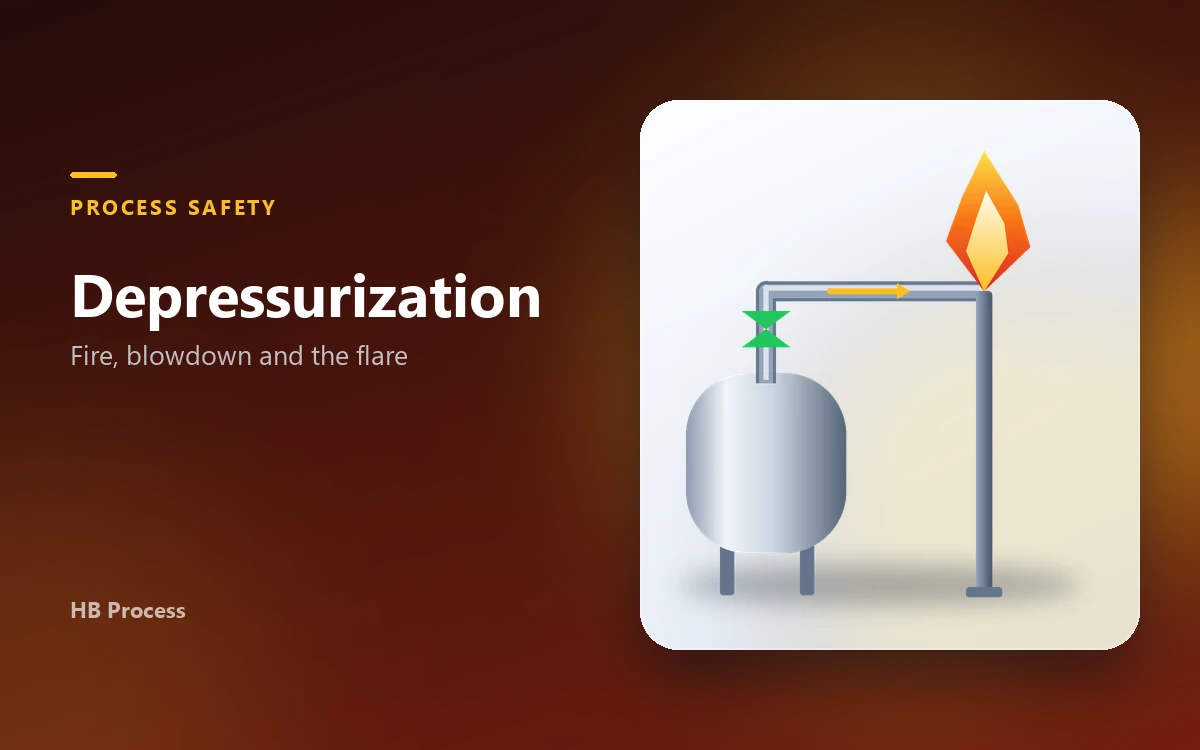
Depressurization of Process Vessels
Why a fire needs more than a relief valve, the scenarios that call for depressuring (fire, leak, reactor runaway, planned shutdown), how the system works from detector to flare, how to size the restriction orifice, how fast to blow down, how cold the metal gets, how to avoid overloading the flare, and the rules of thumb used in industry. Six interactive animations.
Sumit MathurSign in· 24 min
Separation Processes
Distillation Trays · Part 1 of 5
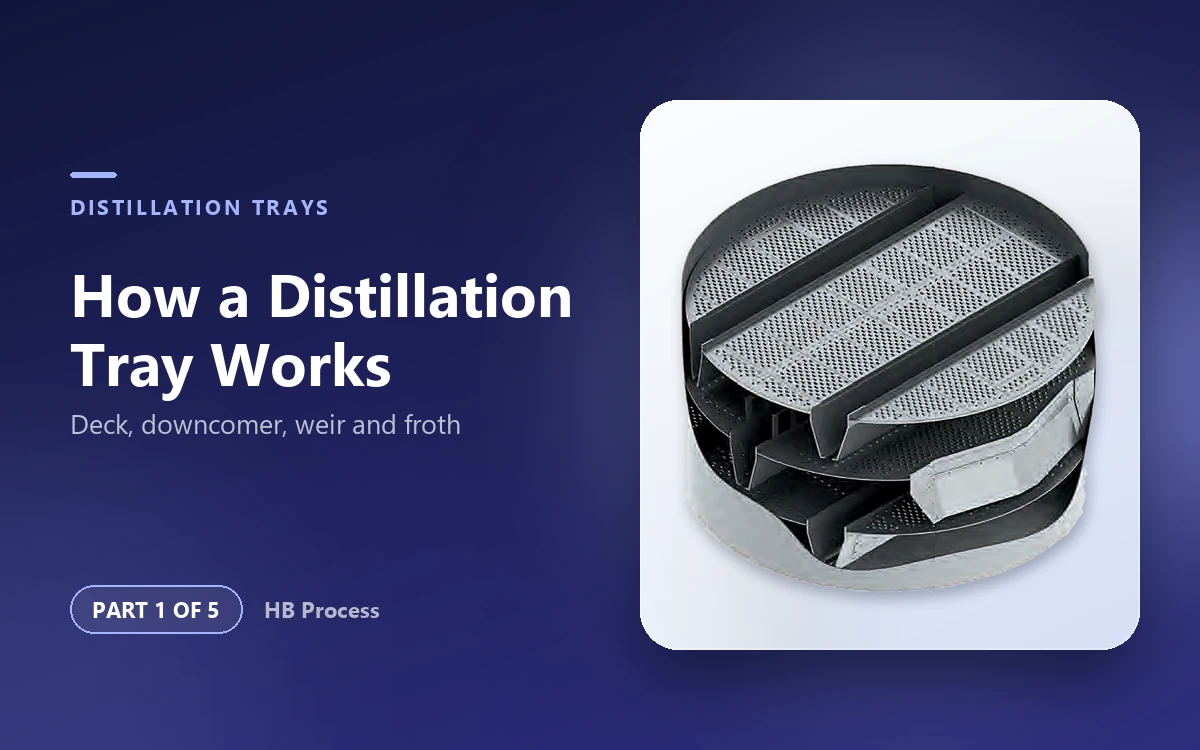
Distillation Trays, Part 1: How a Tray Works, Deck, Downcomer, Weir and Froth
A simple, illustrated guide to what happens on one distillation tray: how vapour and liquid meet, what each part (deck, weir, downcomer, seal gap, spacing) does, how trays add up to stages, and why real trays need more trays than ideal ones. An interactive tray and a stage-stepping animation.
Sumit Mathur Premium· 11 min
Separation Processes
Distillation Trays · Part 2 of 5
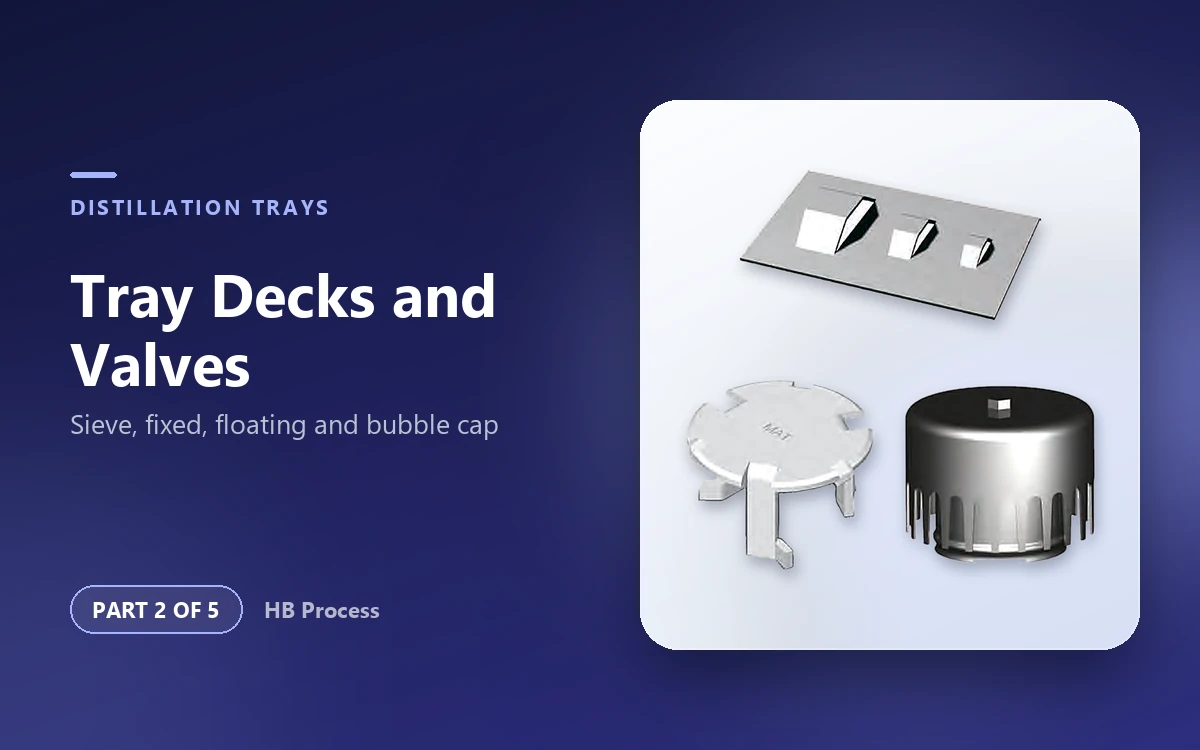
Distillation Trays, Part 2: Tray Decks, Sieve, Fixed Valve, Floating Valve and Bubble Cap
A simple guide to the floor of a tray: sieve holes, fixed valves, floating valves, bubble caps, dual-flow and cartridge trays. How each lets the vapour through, why a sieve tray weeps at low flow while a valve tray keeps working, and how to choose a deck for your job. Three interactive animations.
Sumit Mathur Premium· 14 min
Separation Processes
Distillation Trays · Part 3 of 5
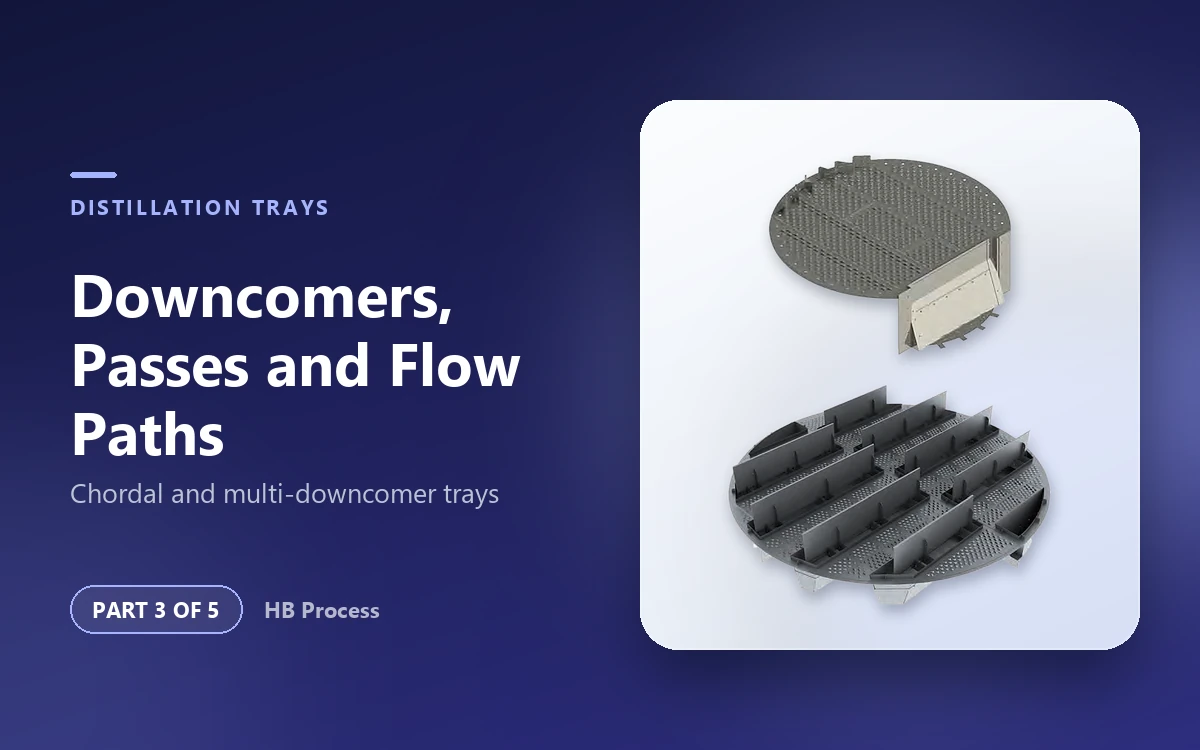
Distillation Trays, Part 3: Downcomers, Passes and Flow Paths, Chordal and Multi-Downcomer Trays
How liquid gets from tray to tray: what a downcomer must do, chordal, sloped, truncated and stepped shapes, one-pass to six-pass layouts, weir loading, multi-downcomer (box) trays, the hydraulic gradient, and the flow parameter that tells you when to use which family. Two interactive animations.
Sumit Mathur Premium· 14 min
Separation Processes
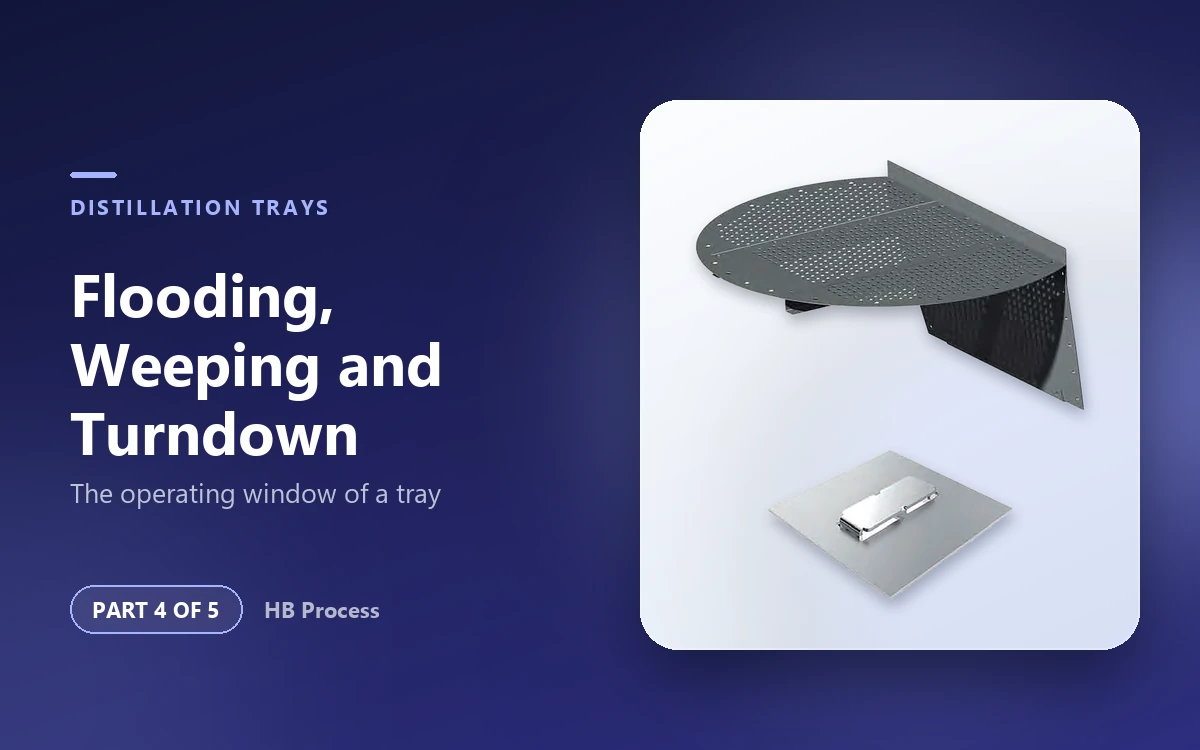
Distillation Trays · Part 4 of 5
Distillation Trays, Part 4: Flooding, Weeping, Entrainment and the Operating Window
What limits a tray: jet flooding, downcomer flooding, entrainment, spray and emulsion regimes, weeping, dry pressure loss and the stability factor, vibration cracking, turndown, and the effect of tray pressure loss in vacuum columns. A side-view animation of every regime and an interactive operating-window map.
Sumit Mathur Premium· 14 min
Separation Processes
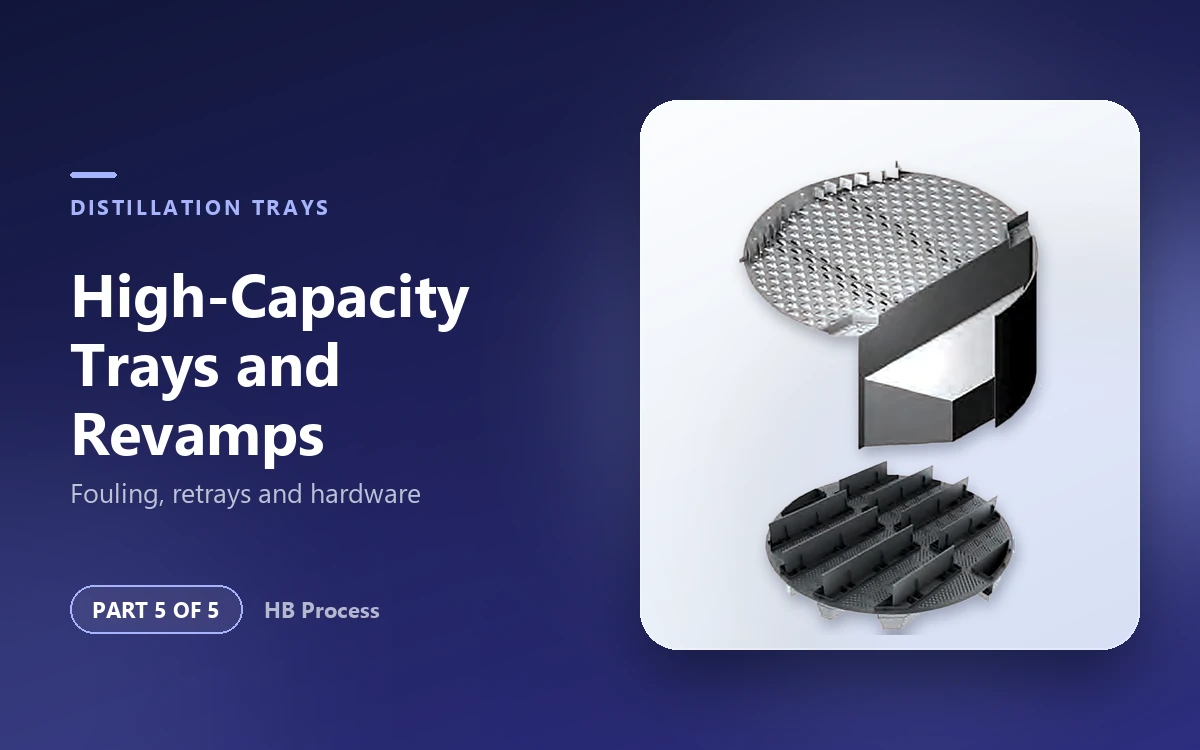
Distillation Trays · Part 5 of 5
Distillation Trays, Part 5: High-Capacity Trays, Fouling, Retrays, Hardware and Good Practice
How high-performance and ultra-high-capacity trays get 30 to 80 percent more capacity, how to fight fouling, how a 3-for-2 retray gives more stages in the same column, example revamp results, support hardware, two-phase feed inlets, materials of construction and an installation checklist. Two interactive animations.
Sumit Mathur Premium· 16 min
Separation Processes
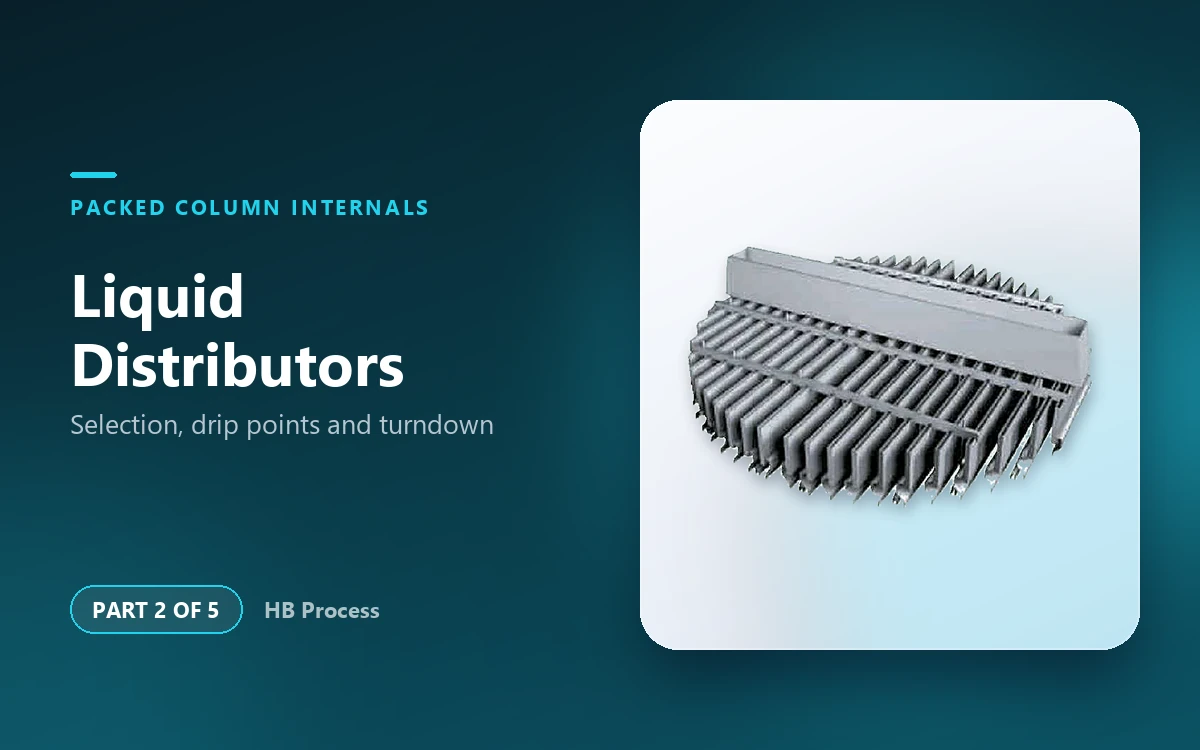
Packed Column Internals · Part 2 of 5
Packed Column Internals, Part 2: Liquid Distributors, Selection, Drip Points, Hole Sizing and Turndown
What a liquid distributor must do, how to pick one from the liquid flow and the column size, how many drip points to use, how to work out the hole size, and why a single row of holes handles only about a 3 : 1 flow range while a two-stage channel reaches 10 : 1. Three interactive animations.
Sumit Mathur Premium· 15 min
Separation Processes
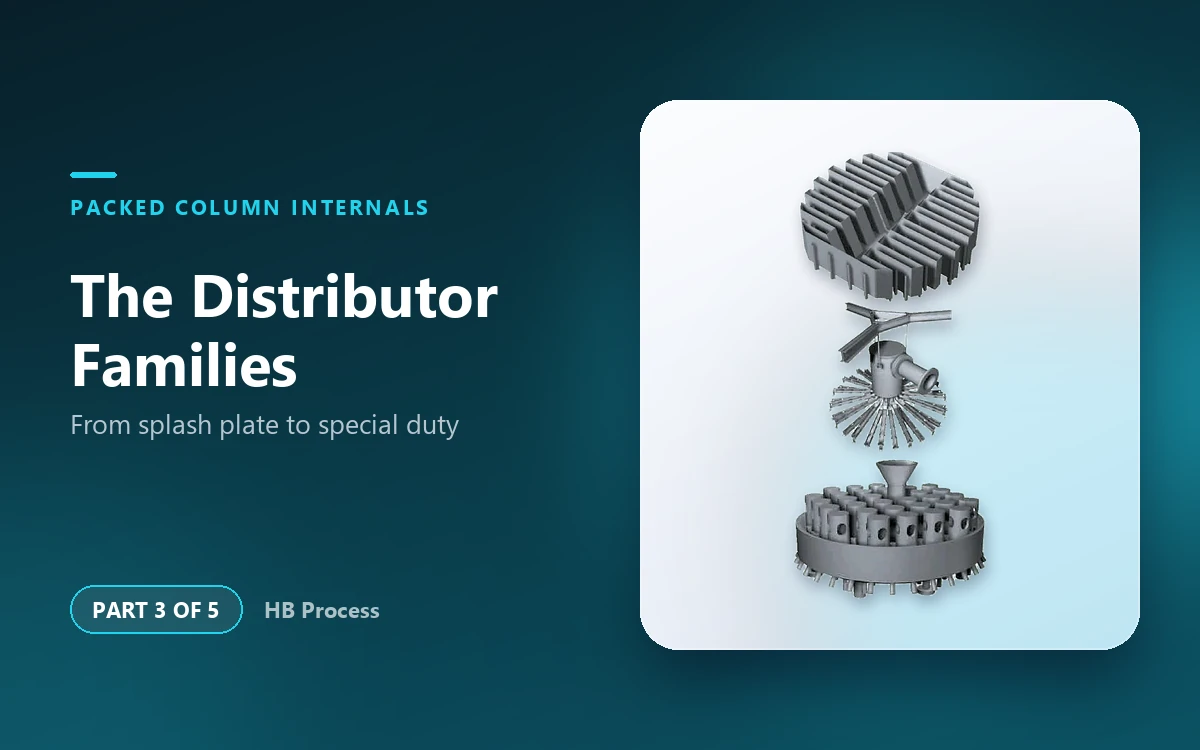
Packed Column Internals · Part 3 of 5
Packed Column Internals, Part 3: The Distributor Families, Splash-Plate, Channel, Tube, Spray and Special-Duty Designs
A simple tour of the liquid distributors used in packed columns: splash-plate, channel types with holes or side tubes, designs for very low and very high flow, tube and spray types, special designs for dirty liquids and extraction, and plastic, graphite and glass for corrosive liquids. With a shortlist tool and a comparison table.
Sumit Mathur Premium· 14 min
Separation Processes
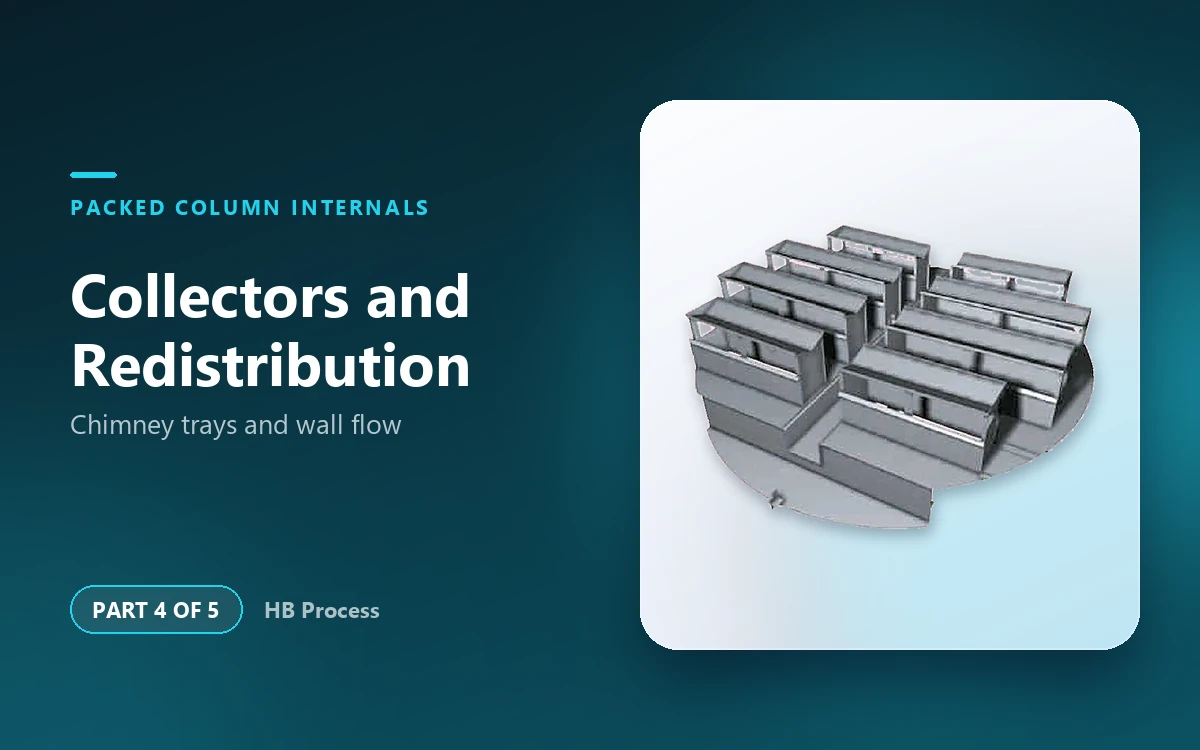
Packed Column Internals · Part 4 of 5
Packed Column Internals, Part 4: Liquid Collectors, Chimney Trays and Redistribution
Why liquid drifts to the wall in a tall bed and when to spread it again, the different collectors (vane, support-grid, flange-mounted and chimney tray), how a chimney tray balances liquid depth against gas pressure loss, and how collectors and redistributors work together. Two interactive animations.
Sumit Mathur Premium· 14 min
Separation Processes
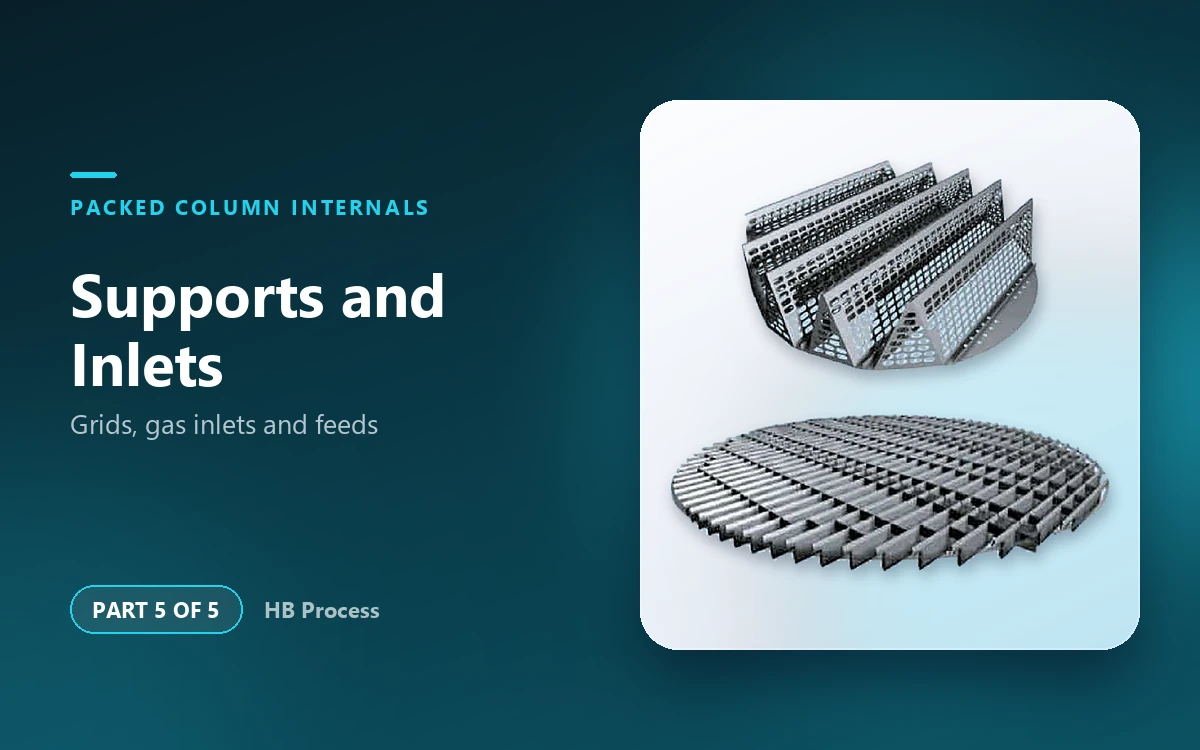
Packed Column Internals · Part 5 of 5
Packed Column Internals, Part 5: Packing Supports, Retaining Grids, Gas Inlets and Liquid Feeds
What holds the packing up and what holds it down, the different gas inlet devices from a plain pipe to a ring inlet, how computer simulation (CFD) is used, the liquid feed devices for plain, hot and gas-carrying feeds, and the flash calculation that shows why a hot feed is special. A gas-inlet simulation and a hot-feed calculator.
Sumit Mathur Premium· 15 min
Fluid Flow & Hydraulics
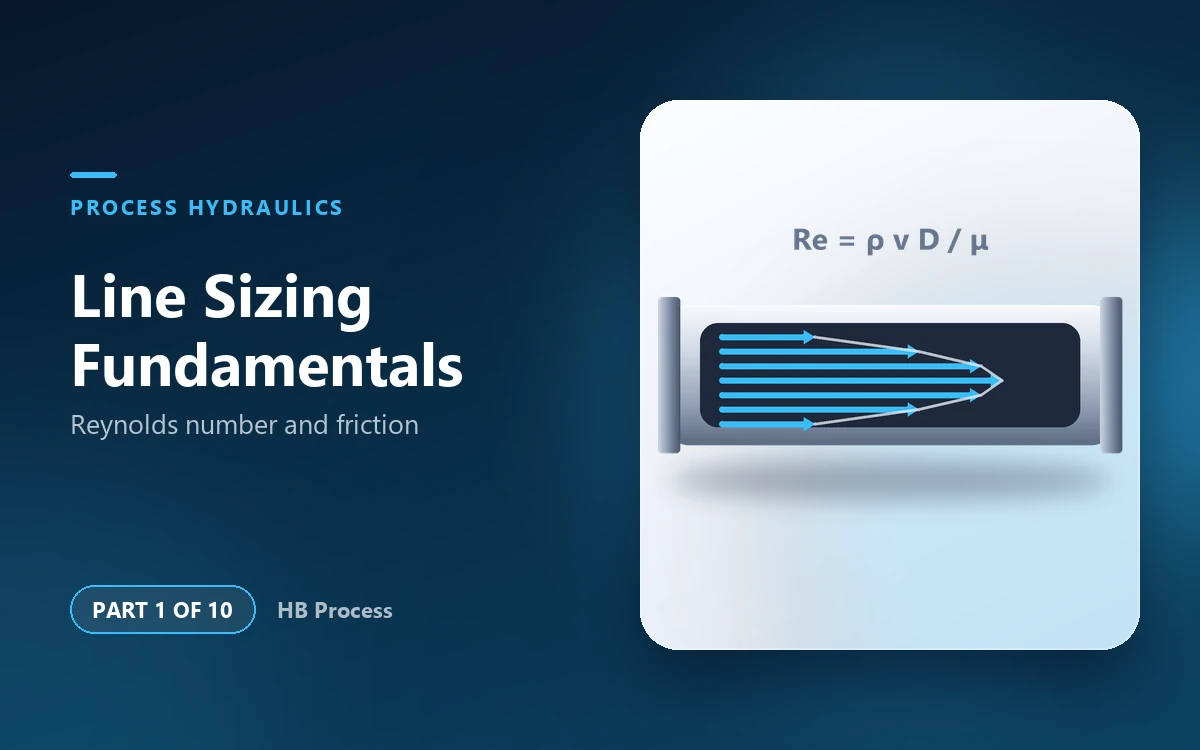
Process Hydraulics · Part 1 of 10
Process Hydraulics, Part 1: Line Sizing Fundamentals, Reynolds Number and the Friction Factor
Why we size lines, what the design basis and margins are, pipe schedules and standards, continuity and Bernoulli, Darcy–Weisbach, laminar vs turbulent flow, and how to get the friction factor from Moody, Colebrook or Swamee–Jain. Two animations.
Sumit Mathur Premium· 20 min
Fluid Flow & Hydraulics
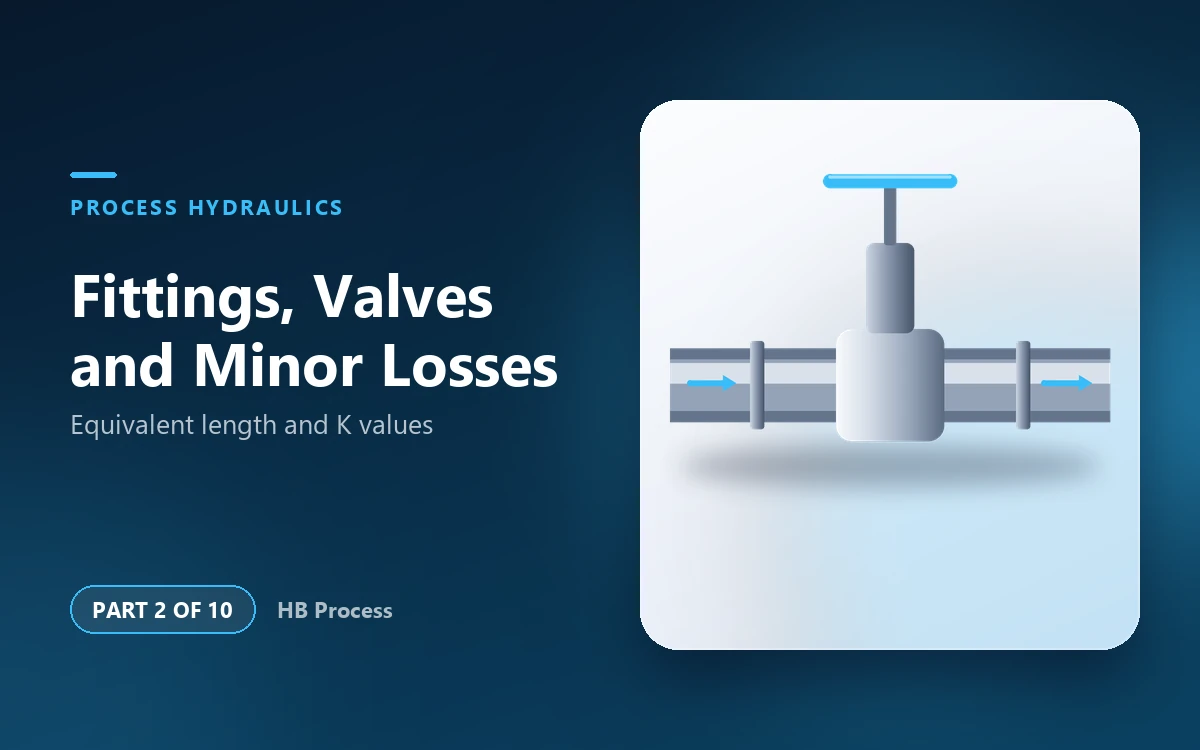
Process Hydraulics · Part 2 of 10
Process Hydraulics, Part 2: Fittings, Valves, Minor Losses and Equivalent Length
The K method, the equivalent-length (L/D) method and the Cv/Kv method, with loss coefficients for entrances, exits, enlargements, contractions and bends; early-stage equivalent length estimates; and a fully worked pump-head example. An interactive fittings explorer.
Sumit Mathur Premium· 19 min
Heat Transfer & ExchangersFluid Flow & Hydraulics
Shell & Tube Heat Exchangers · Part 5 of 7
Shell & Tube Heat Exchangers, Part 5: Optimising Heat Transfer, Pressure Drop and Vibration
Shells in series and in parallel, which knobs raise h on each side, the ladder for cutting shell-side pressure drop, and why a tube that is fine at one baffle spacing wrecks itself at another. Two animations: shells in series and tube vibration.
Sumit Mathur Premium· 15 min
Heat Transfer & Exchangers
Shell & Tube Heat Exchangers · Part 7 of 7
Shell & Tube Heat Exchangers, Part 7: Sizing by Hand, Step by Step, and the Effectiveness–NTU Method
The complete single-phase sizing procedure from heat balance to shell diameter, tube- and shell-side film coefficients, pressure drop, and a worked effectiveness–NTU example, with an interactive sizing lab and a kerosene/gas-oil NTU simulator. Plus the rules-of-thumb cheat sheet for the whole series.
Sumit Mathur Premium· 24 min