Packed Column Internals, Part 5: Packing Supports, Retaining Grids, Gas Inlets and Liquid Feeds
What holds the packing up and what holds it down, the different gas inlet devices from a plain pipe to a ring inlet, how computer simulation (CFD) is used, the liquid feed devices for plain, hot and gas-carrying feeds, and the flash calculation that shows why a hot feed is special. A gas-inlet simulation and a hot-feed calculator.
Sumit Mathur
15 min read
The last jobs in a packed column are the least exciting, but they often go wrong. Something has to carry the weight of the packing and its liquid. Something has to stop the top layer from being blown around. And gas and liquid must get into the column without ruining the even spreading that everything else works so hard to create.
This is Part 5, the last part, of a 5-part series on packed-column internals. It finishes the tour from Part 1: supports and retaining grids, gas inlets and liquid inlets.
1. Support grids and retaining grids
Support grids and retaining grids
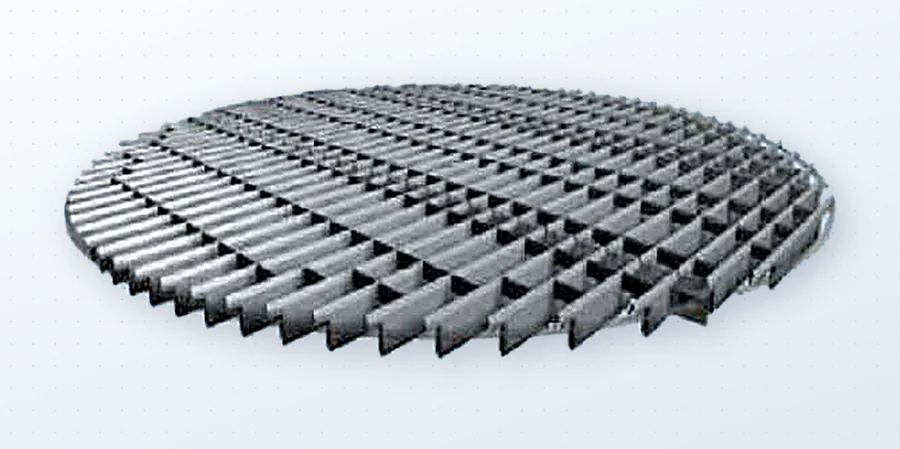
Support grid for structured packing (no welding)
Made in segments that pass through a manhole. A good choice when the metal is expensive.
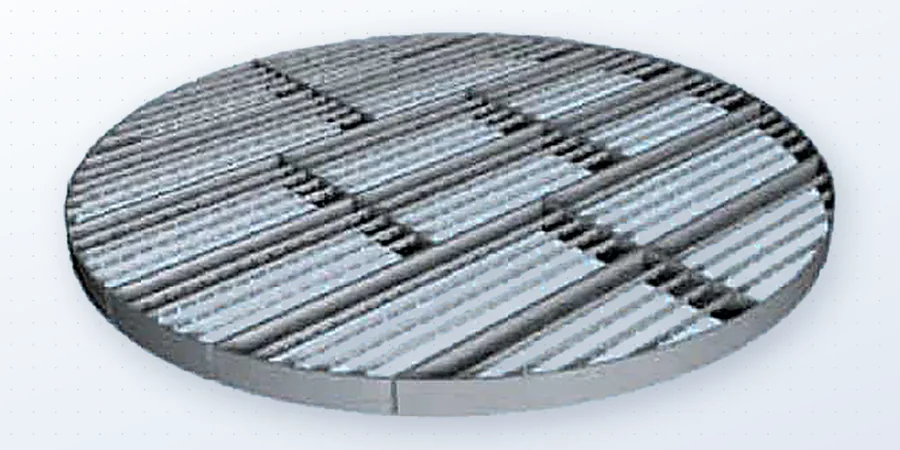
Grid with drip plates
For fine structured packing (over 350 m²/m³). The drip plates stop the packing from flooding too early.
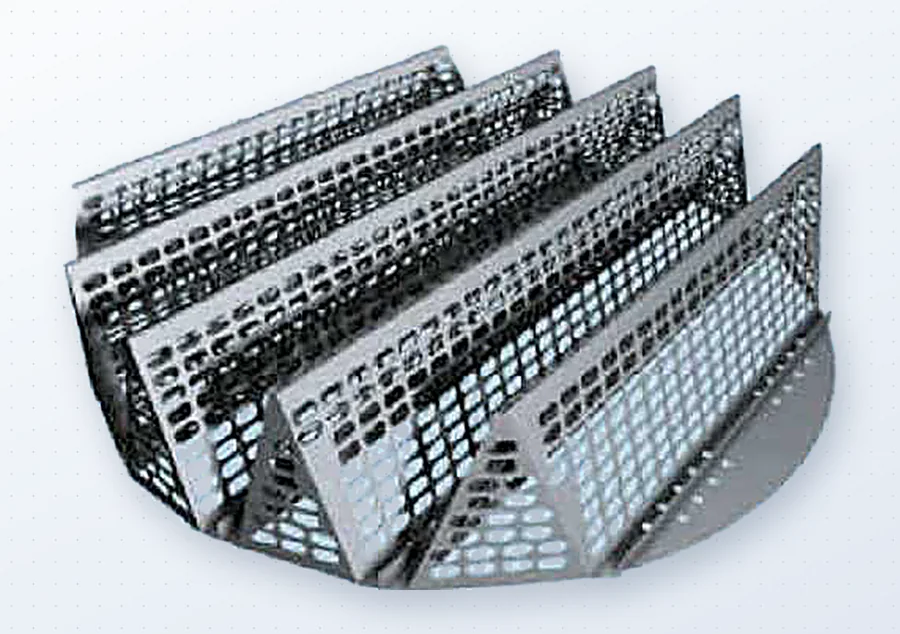
Gas-injection support for loose packing
Holes in the sloping sides let the gas into the bottom layers of the packing.
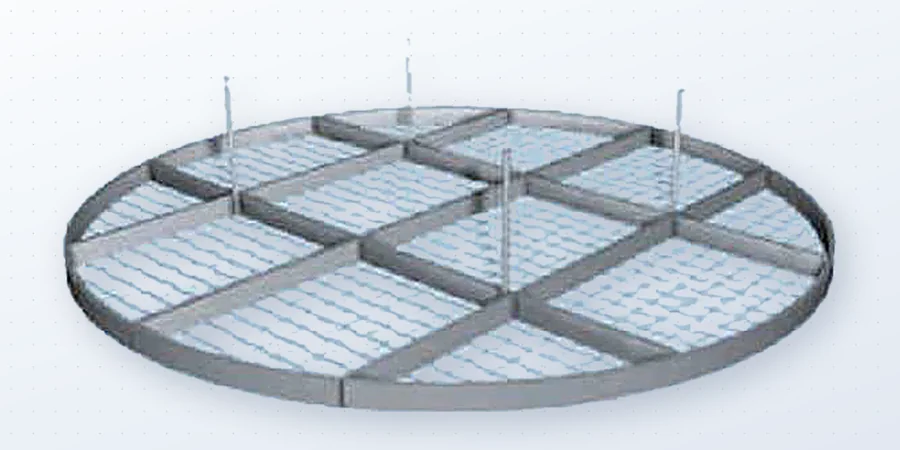
Retaining grid for loose packing
Wire mesh welded under frames. It sits on top of the bed, hanging from the distributor or bolted to a ring.
A carries the packing and the liquid it holds. It must be strong. It must be open enough to let gas in and liquid out with very little resistance, or the bottom of the bed floods. And it must suit the way the column is built.
Sign in to keep reading
This is a premium article. Sign in or create a free account first; then you can unlock it with a plan.
← All articles