Loading…
Separation Processes
Distillation, absorption, extraction, and column design.
13 articles
13 articles
Separation Processes
Packed Column Internals · Part 1 of 5
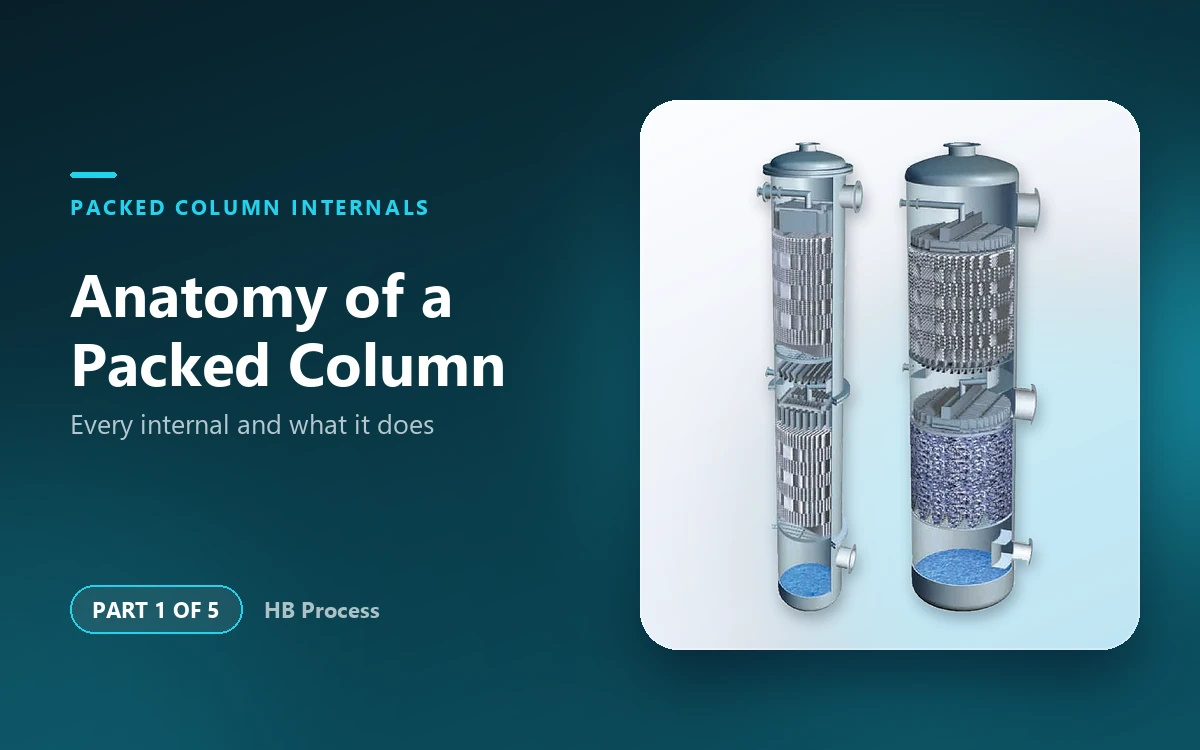
Packed Column Internals, Part 1: Anatomy of a Packed Column and What Every Internal Does
A simple tour of a packed column from top to bottom. What each internal part does, why the packing alone is not enough, how uneven liquid and gas ruin the separation, and what to tell a supplier. An interactive column and a simulator that shows how liquid spreads.
Sumit MathurFree · no sign-in· 13 min
Separation ProcessesProcess Safety
Process Hydraulics · Part 9 of 10
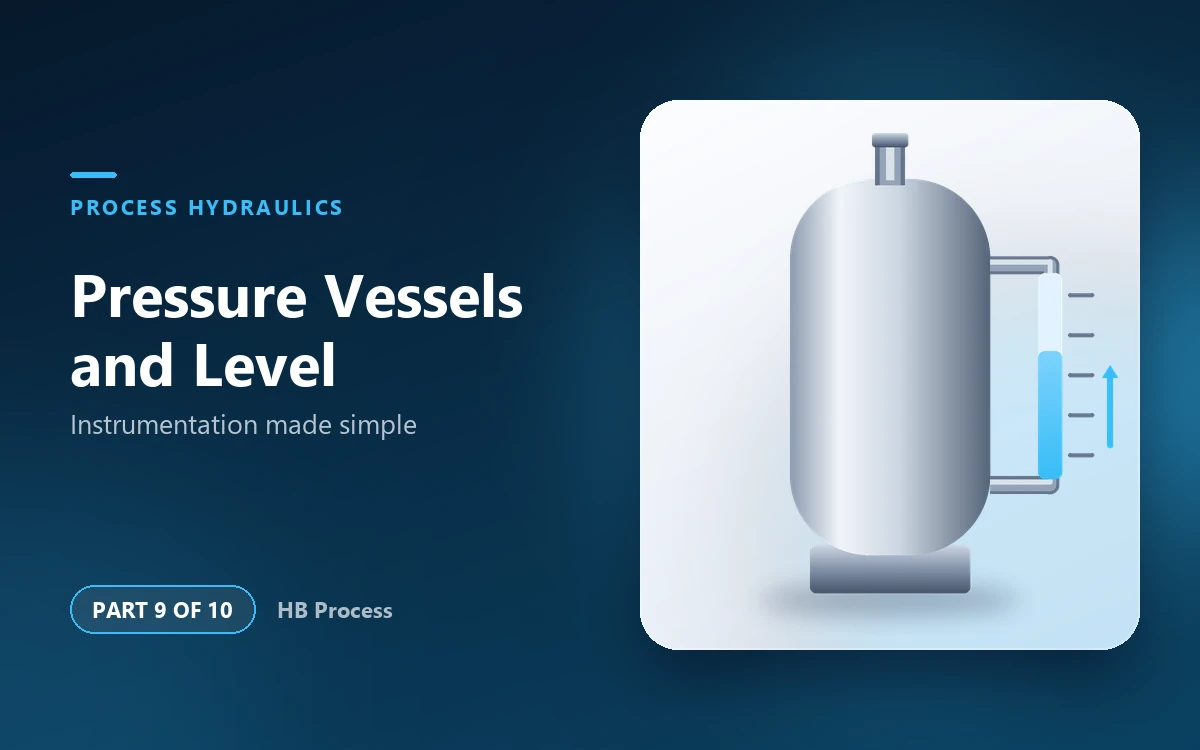
Process Hydraulics, Part 9: Pressure Vessels, Level Instrumentation and Surge Drum Sizing
What a process engineer specifies for a pressure vessel, vessel types, heads, nozzles and supports, orientation selection, codes and standards, protection (level, pressure, temperature and relief), and how to size a surge drum from residence time. Two animations: level alarms and a drum sizer.
Sumit MathurFree · no sign-in· 19 min
Separation Processes
Process Hydraulics · Part 10 of 10
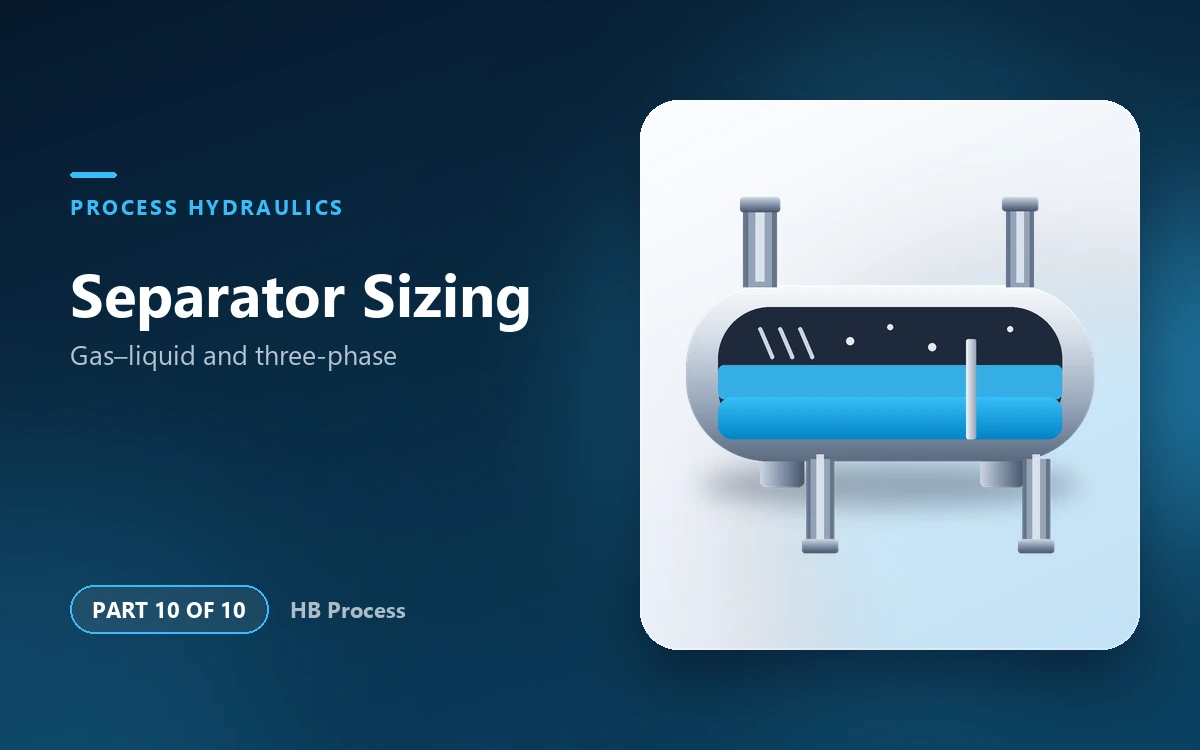
Process Hydraulics, Part 10: Gas–Liquid and Three-Phase Separator Sizing, Souders–Brown and Internals
Separator zones, gravity settling laws, Souders–Brown K, sizing vertical and horizontal two-phase separators with and without mist eliminators, inlet devices and mist extractors, nozzle momentum limits, three-phase separators with weir or boot, and the governing-diameter method. A droplet-settling animation and a three-phase separator simulator.
Sumit MathurFree · no sign-in· 22 min

Heat Transfer & ExchangersSeparation Processes
Shell & Tube Heat Exchangers · Part 6 of 7
Shell & Tube Heat Exchangers, Part 6: Reboilers, Boiling and Special Exchangers
Kettle vs thermosiphon vs forced circulation, the pool-boiling curve and why heat flux has a ceiling, flow regimes in tube-side boiling, thermosiphon piping, plus waste heat boilers, hairpins, bayonet exchangers and IBR. A reboiler selector and a boiling-curve animation.
Sumit MathurFree · no sign-in· 19 min
Separation Processes
Distillation Trays · Part 1 of 5
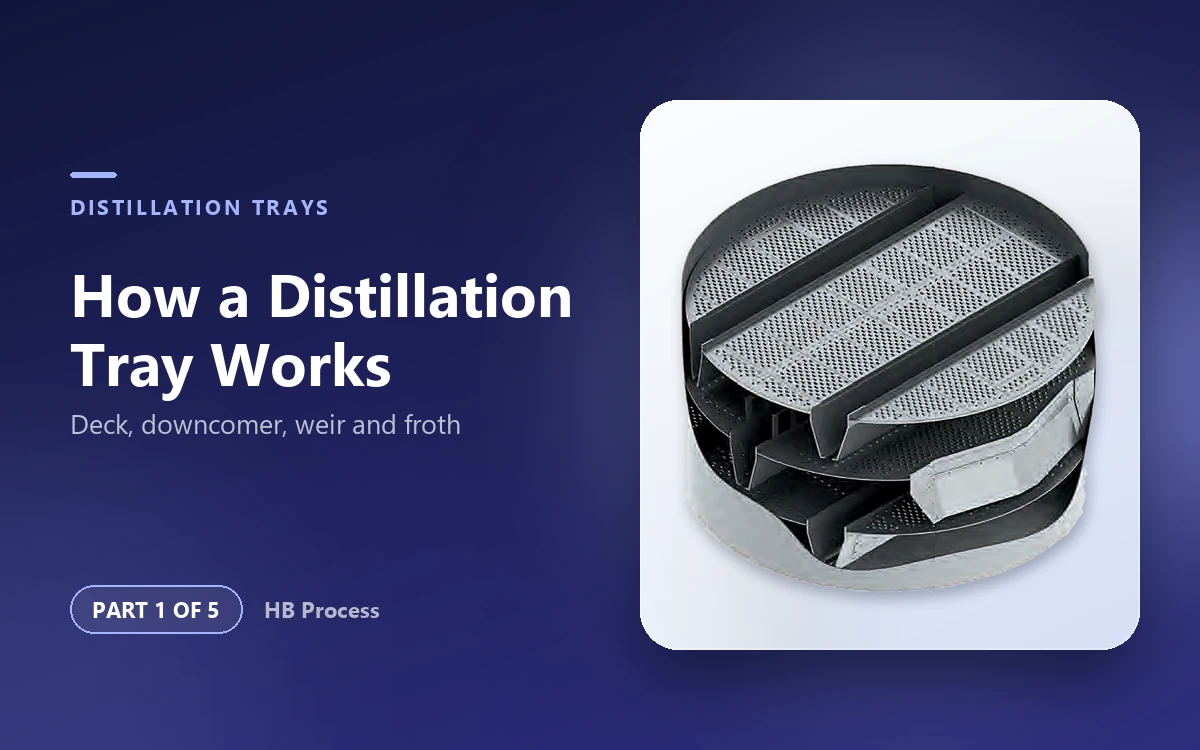
Distillation Trays, Part 1: How a Tray Works, Deck, Downcomer, Weir and Froth
A simple, illustrated guide to what happens on one distillation tray: how vapour and liquid meet, what each part (deck, weir, downcomer, seal gap, spacing) does, how trays add up to stages, and why real trays need more trays than ideal ones. An interactive tray and a stage-stepping animation.
Sumit Mathur Premium· 11 min
Separation Processes
Distillation Trays · Part 2 of 5
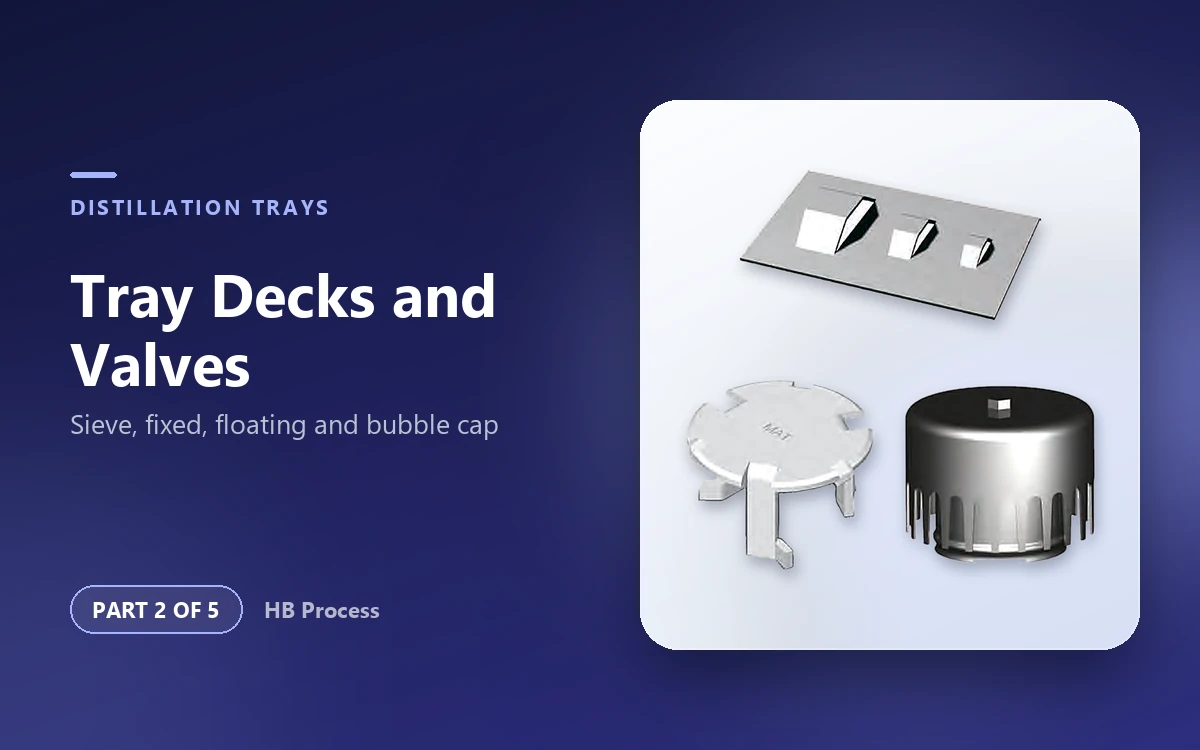
Distillation Trays, Part 2: Tray Decks, Sieve, Fixed Valve, Floating Valve and Bubble Cap
A simple guide to the floor of a tray: sieve holes, fixed valves, floating valves, bubble caps, dual-flow and cartridge trays. How each lets the vapour through, why a sieve tray weeps at low flow while a valve tray keeps working, and how to choose a deck for your job. Three interactive animations.
Sumit Mathur Premium· 14 min
Separation Processes
Distillation Trays · Part 3 of 5
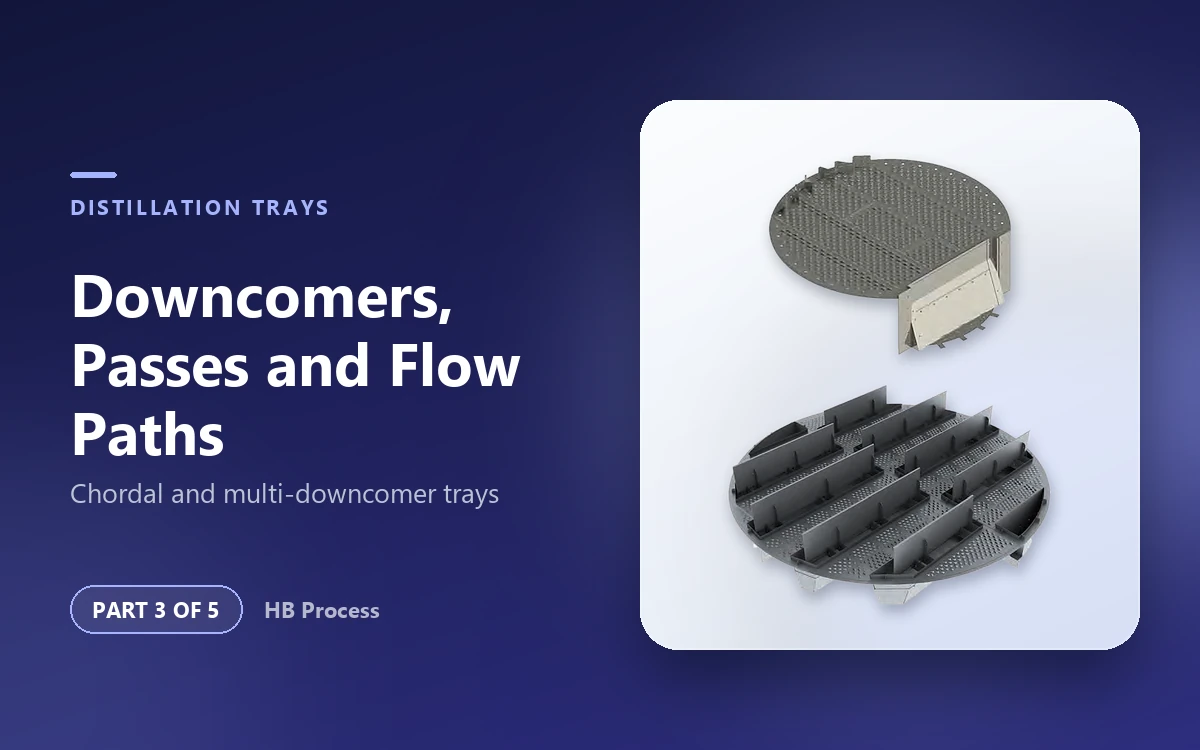
Distillation Trays, Part 3: Downcomers, Passes and Flow Paths, Chordal and Multi-Downcomer Trays
How liquid gets from tray to tray: what a downcomer must do, chordal, sloped, truncated and stepped shapes, one-pass to six-pass layouts, weir loading, multi-downcomer (box) trays, the hydraulic gradient, and the flow parameter that tells you when to use which family. Two interactive animations.
Sumit Mathur Premium· 14 min
Separation Processes
Distillation Trays · Part 4 of 5
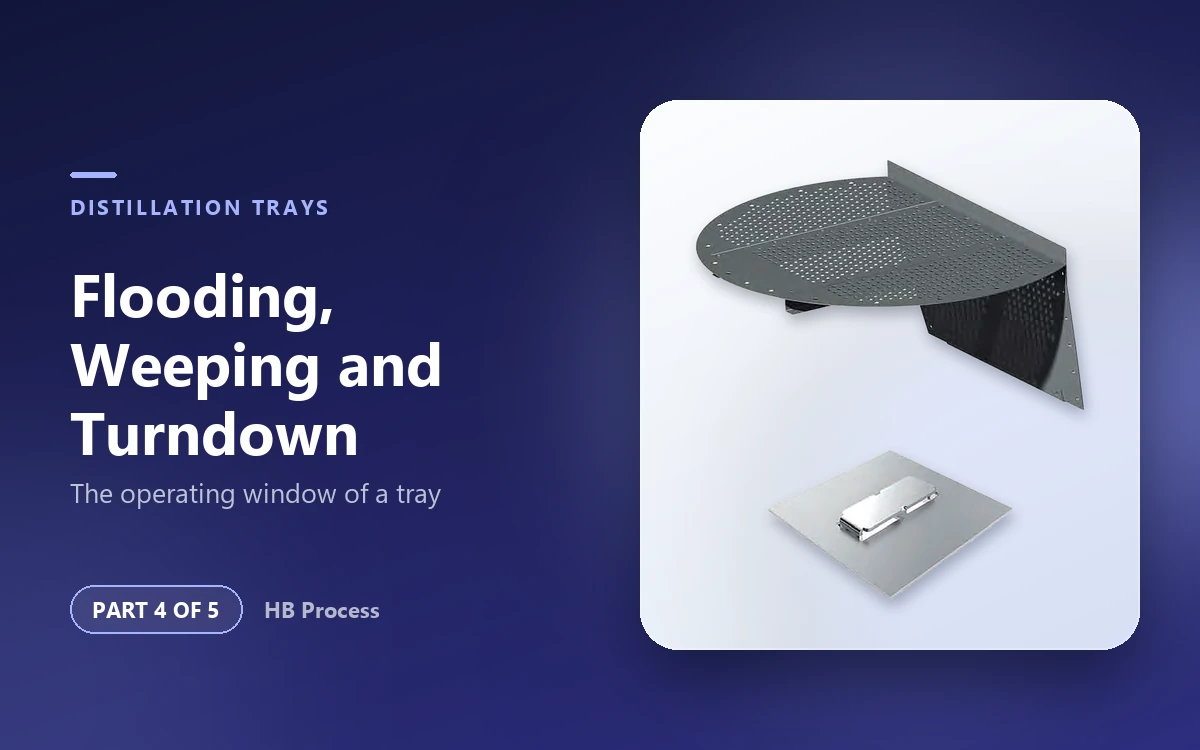
Distillation Trays, Part 4: Flooding, Weeping, Entrainment and the Operating Window
What limits a tray: jet flooding, downcomer flooding, entrainment, spray and emulsion regimes, weeping, dry pressure loss and the stability factor, vibration cracking, turndown, and the effect of tray pressure loss in vacuum columns. A side-view animation of every regime and an interactive operating-window map.
Sumit Mathur Premium· 14 min
Separation Processes
Distillation Trays · Part 5 of 5
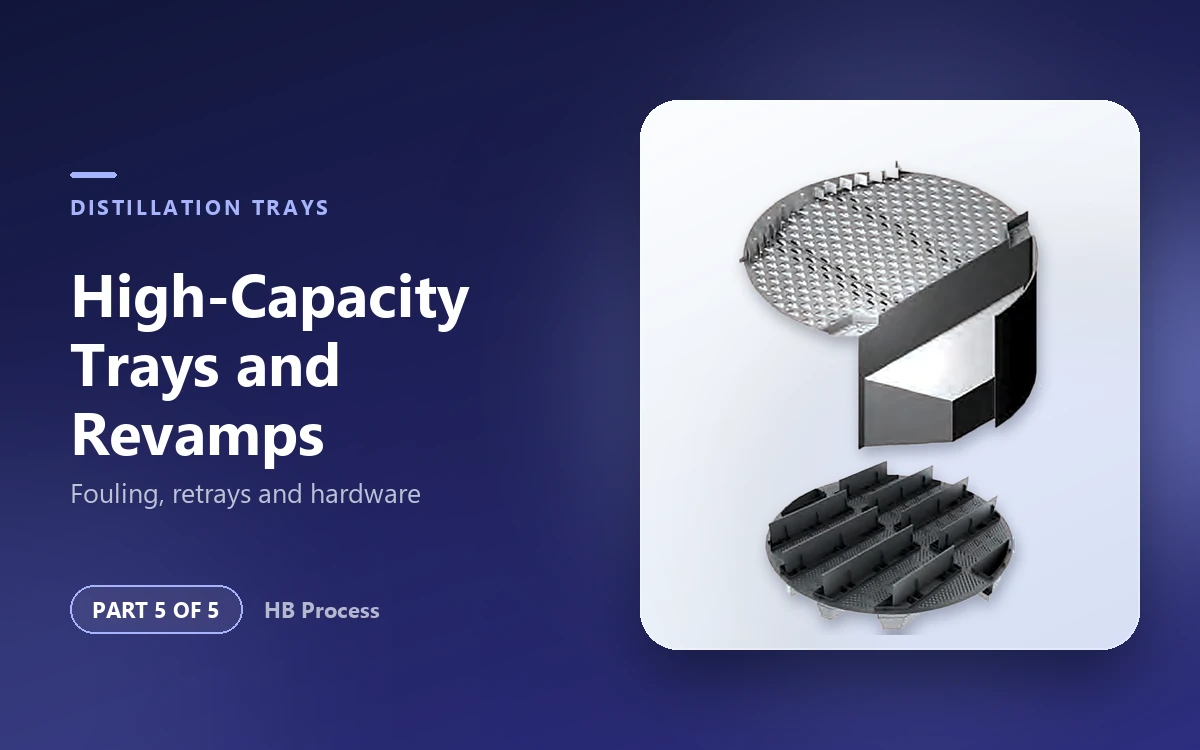
Distillation Trays, Part 5: High-Capacity Trays, Fouling, Retrays, Hardware and Good Practice
How high-performance and ultra-high-capacity trays get 30 to 80 percent more capacity, how to fight fouling, how a 3-for-2 retray gives more stages in the same column, example revamp results, support hardware, two-phase feed inlets, materials of construction and an installation checklist. Two interactive animations.
Sumit Mathur Premium· 16 min
Separation Processes
Packed Column Internals · Part 2 of 5
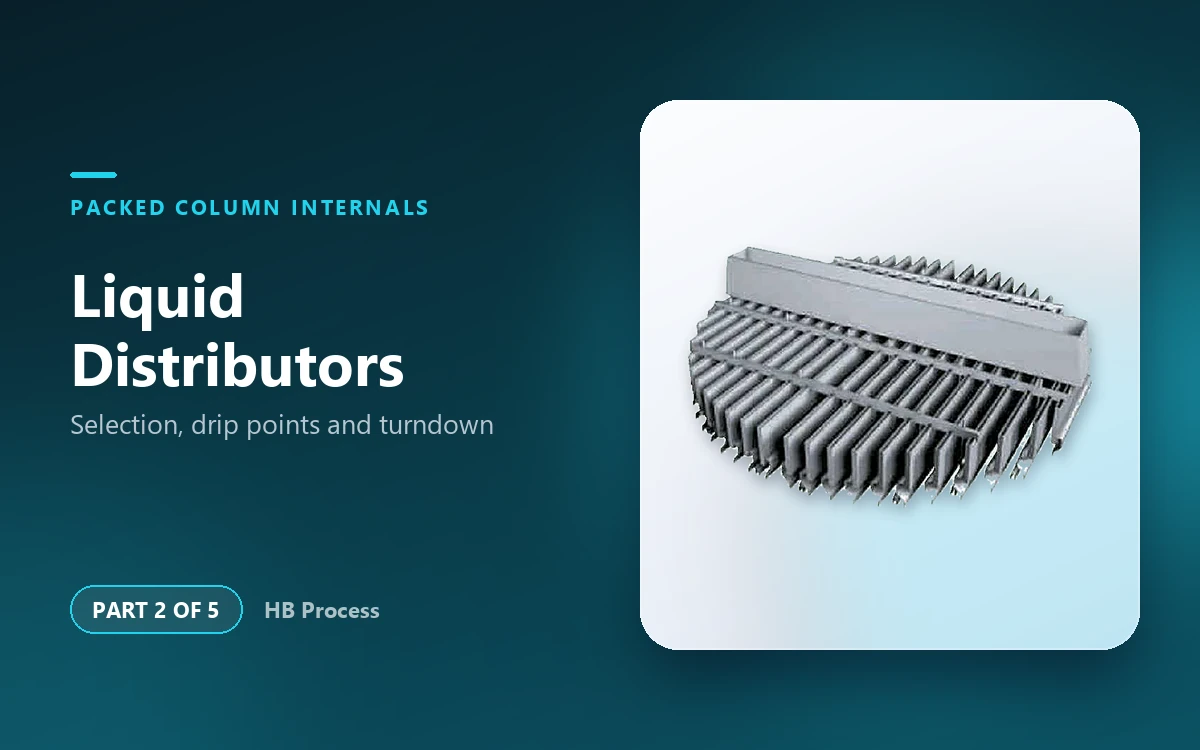
Packed Column Internals, Part 2: Liquid Distributors, Selection, Drip Points, Hole Sizing and Turndown
What a liquid distributor must do, how to pick one from the liquid flow and the column size, how many drip points to use, how to work out the hole size, and why a single row of holes handles only about a 3 : 1 flow range while a two-stage channel reaches 10 : 1. Three interactive animations.
Sumit Mathur Premium· 15 min

Separation Processes
Packed Column Internals · Part 3 of 5
Packed Column Internals, Part 3: The Distributor Families, Splash-Plate, Channel, Tube, Spray and Special-Duty Designs
A simple tour of the liquid distributors used in packed columns: splash-plate, channel types with holes or side tubes, designs for very low and very high flow, tube and spray types, special designs for dirty liquids and extraction, and plastic, graphite and glass for corrosive liquids. With a shortlist tool and a comparison table.
Sumit Mathur Premium· 14 min
Separation Processes
Packed Column Internals · Part 4 of 5
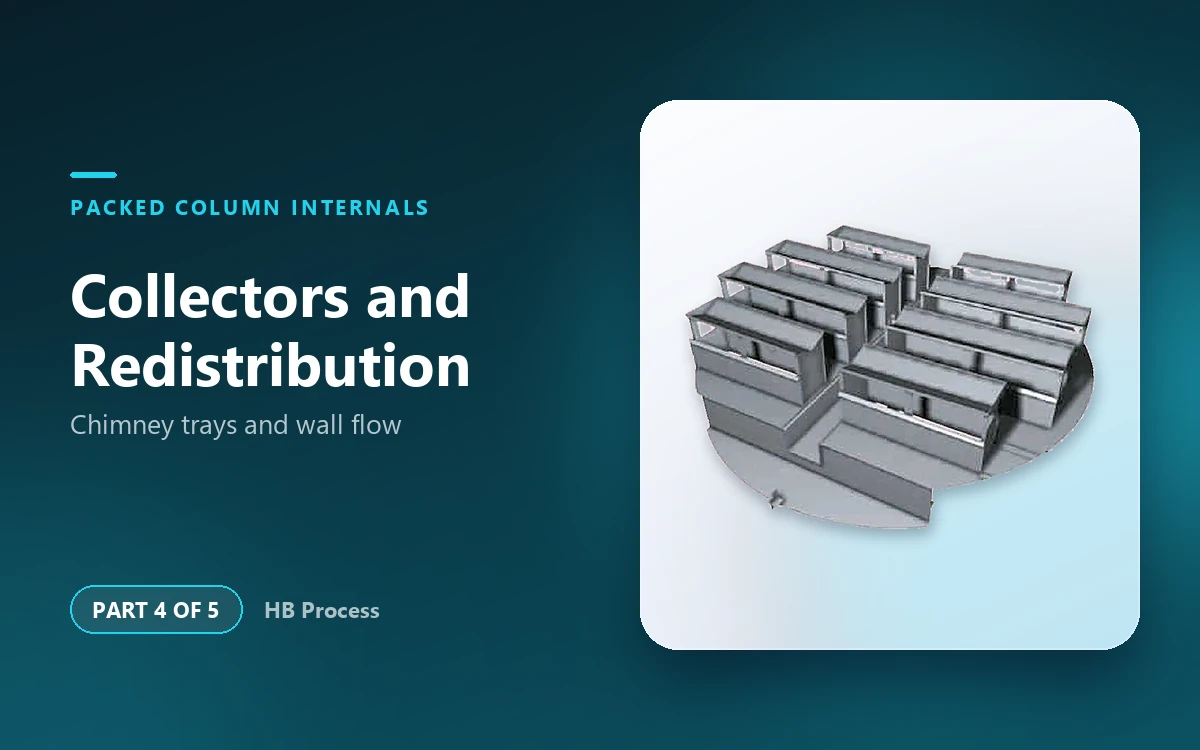
Packed Column Internals, Part 4: Liquid Collectors, Chimney Trays and Redistribution
Why liquid drifts to the wall in a tall bed and when to spread it again, the different collectors (vane, support-grid, flange-mounted and chimney tray), how a chimney tray balances liquid depth against gas pressure loss, and how collectors and redistributors work together. Two interactive animations.
Sumit Mathur Premium· 14 min
Separation Processes
Packed Column Internals · Part 5 of 5
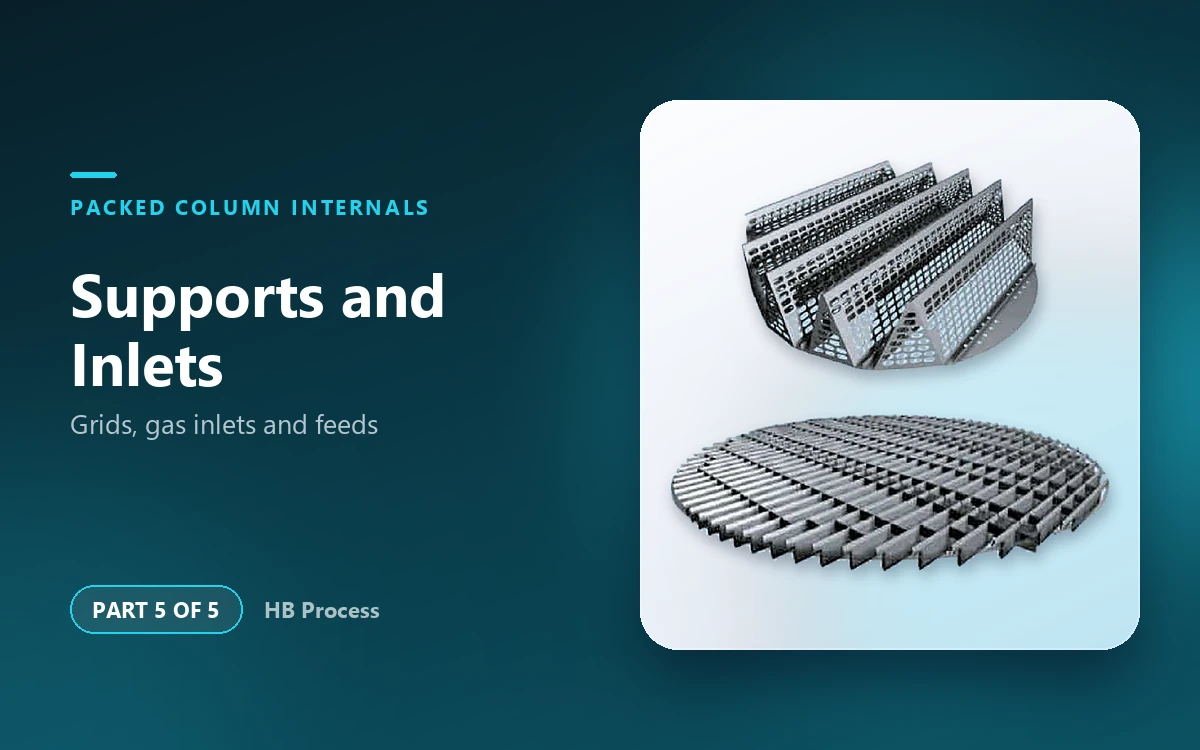
Packed Column Internals, Part 5: Packing Supports, Retaining Grids, Gas Inlets and Liquid Feeds
What holds the packing up and what holds it down, the different gas inlet devices from a plain pipe to a ring inlet, how computer simulation (CFD) is used, the liquid feed devices for plain, hot and gas-carrying feeds, and the flash calculation that shows why a hot feed is special. A gas-inlet simulation and a hot-feed calculator.
Sumit Mathur Premium· 15 min