Distillation Trays, Part 2: Tray Decks, Sieve, Fixed Valve, Floating Valve and Bubble Cap
A simple guide to the floor of a tray: sieve holes, fixed valves, floating valves, bubble caps, dual-flow and cartridge trays. How each lets the vapour through, why a sieve tray weeps at low flow while a valve tray keeps working, and how to choose a deck for your job. Three interactive animations.
Sumit Mathur
14 min read
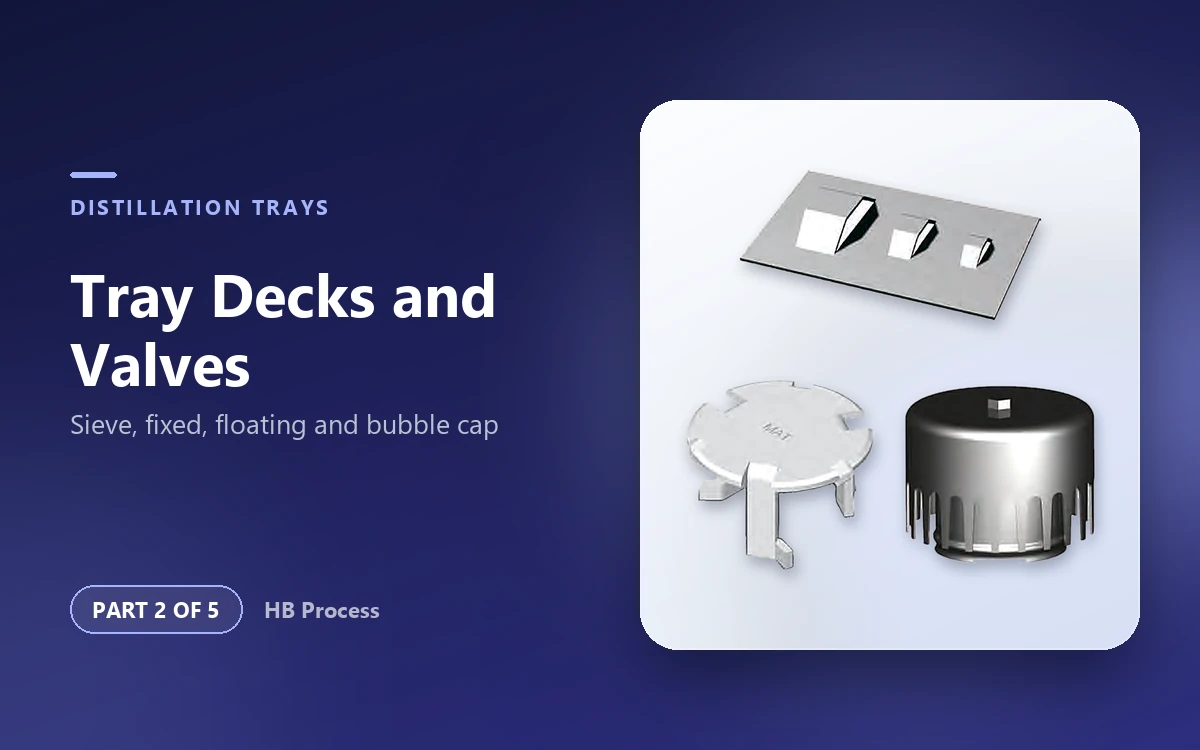
The deck of a tray is its perforated floor. It looks like a simple plate with holes, but it controls three things at once: how much vapour the tray can take (its capacity), how well it works when the flow drops (its flow range, or turndown), and how well it copes with dirt.
This is Part 2 of a 5-part series on distillation trays. In Part 1 you met the whole tray. Here we look closely at the deck.
1. The job of a deck
Sign in to keep reading
This is a premium article. Sign in or create a free account first; then you can unlock it with a plan.
← All articles