Process SafetyProcess SafetyFire and Gas DetectionPassive Fire ProtectionFireproofingGas DetectorVotingFire Exposed EnvelopeAnimatedTechnical Safety Engineering Series
Technical Safety Engineering, Part 4: Fire and Gas Detection and Passive Fire Protection
How fires and gas leaks are detected and what the system does about them (alarm levels, voting, executive actions), and how fireproofing keeps the plant standing: the goals of passive fire protection, fire curves and what a fire rating buys, the fire-exposed envelope, which equipment needs protection, and the materials used. Three interactive animations and photographs.
SM
Sumit Mathur
16 min read
Two things decide how a fire ends: how fast it is found, and how long the plant can survive it. The first is the job of fire and gas detection. The second is the job of passive fire protection (PFP).
This is Part 4 of a 7-part series on technical safety engineering. Part 3 described the systems that fight the fire. Now we look at the systems that find it, and the fireproofing that keeps the steel standing while they work.
There are two kinds of fire detection and alarm system.
Conventional: the detectors are grouped in zones, usually all the initiating devices on one floor or area. An alarm says which zone it came from.
Addressable: every device has its own digital address. The control panel can say exactly which device raised the alarm, and where it is.
Types of detector
Smoke detectors give early warning of a fire in its early stage. They are used indoors only, because outdoors the smoke is dispersed before it reaches a detector.
Heat detectors respond to the temperature of the surrounding air. They should combine fixed temperature and rate-of-rise (rate-compensated) types. They are point detectors that respond to a fire close by.
Flame detectors see the light (infrared, ultraviolet) given off by a flame. They are used in open process areas and fuel areas.
Flammable gas detectors find leaks before they ignite.
Toxic gas detectors protect people from poisonous or suffocating gases.
Manual alarm call points (MAC) let any person raise the alarm. They are placed at the exits of buildings and along escape routes.
Alarms are audible (horns) and visible (beacons), so that people can escape or take action.
2. What a fire and gas system does
A fire and gas (F&G) system has to detect a threatening hazard and respond with an alarm and with the activation of final elements, to stop harm to people or damage to equipment. It is provided wherever a fire or a loss of containment could cause a risk to people, assets or the environment.
Its jobs:
Detect the hazard: fire, smoke or an early fire, a flammable gas release, a toxic or asphyxiating gas.
Alert people, so they can escape or act.
Activate the fixed fire protection systems (water spray, foam, gas).
Shut down equipment or processes, so that the fire protection can be more effective and the amount of fuel is limited.
The link between what is detected and what is done is written in a cause and effect chart.
Voting and alarm levels
Gas is measured as a percentage of the lower flammable limit (LFL). A typical arrangement is:
Low alarm at about 20 % LFL on one detector: alarm, beacon, more ventilation.
High alarm at about 60 % LFL on two detectors (2 out of 3): automatic shutdown, isolation, and start of water spray.
Voting stops a single faulty detector from shutting down the plant, and it also stops a single failed detector from blinding the system. The levels are set by the project.
Gas detection: alarms and voting
Alarm horn and beaconACTIVATED
Ventilation to fullACTIVATED
Shut down ignition sources2 of 3 detectors at 60 %
Emergency shutdown and isolation2 of 3 at 60 %
Start fixed water spray2 of 3 at 60 %
Detectors above 20 % LFL
2 of 3
Detectors above 60 % LFL
1 of 3
Low alarm
ON
High alarm and trip
not tripped
Gas detectors measure gas as a percentage of its lower flammable limit (LFL). A low alarm (about 20 % LFL) warns people. A high alarm (about 60 % LFL) starts the automatic actions. To avoid trips from a single faulty detector, high-alarm actions need two out of three detectors to agree (2oo3 voting). Change the strength of the leak, then fail a detector and see what is lost. The set points here are typical, not fixed rules.
3. Passive fire protection (PFP)
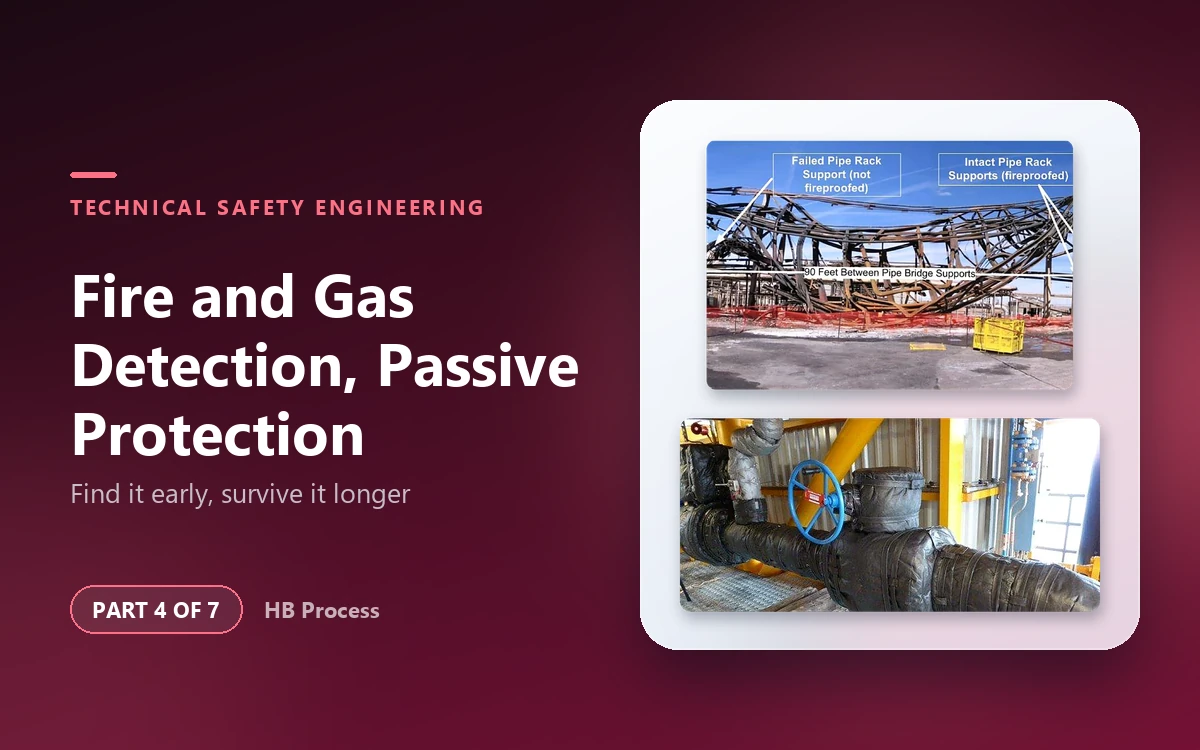
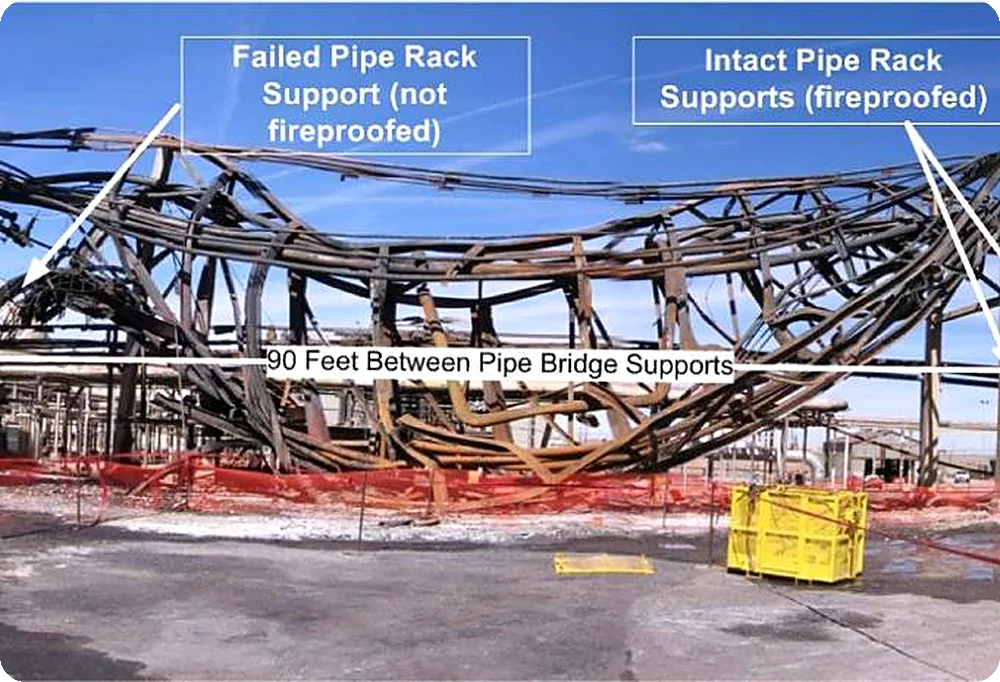
PFP is designed to limit the extent of fire-related loss of property. It works without being switched on, and is used where immediate protection is needed. It can protect against intense, long heat exposure which would otherwise cause unprotected equipment to collapse, spilling burning liquids and spreading the fire.
PFP also helps life safety and the environment by slowing escalation.
What is the goal?
Fireproofing keeps the structure and the supports of equipment standing so that:
any people present can escape,
the fire does not escalate,
there is time to bring fire fighting and cooling into action,
there is time to isolate and depressure (blow down) the equipment (see Depressurization),
toxic substances are not released.
Fireproofing can also insulate equipment against the heat radiation of a nearby pool or jet fire.
An important honesty: fireproofing does not extinguish a fire. If the fire lasts much longer than the PFP rating, it may make little difference to the final damage. Cooling with fire water can extend the protection time, if the force of the water does not knock off the coating.
How long does it buy?
Test fires follow standard curves. An oil and gas fire (hydrocarbon fire) heats much faster than a building fire. Structural steel keeps most of its strength up to about 550 °C.
Fire curves and how long fireproofing buys
firebare steelfireproofed steel
Bare steel reaches 550 °C in
6 min
Fireproofed steel reaches 550 °C in
60 min
Time bought
55 min
Fireproofing does not put out a fire. It gives people time to escape, fire-fighting to start, and the plant to isolate and depressure. If the fire lasts longer than the rating, the steel will still fail.
Test fires follow standard time-temperature curves. A hydrocarbon fire (the curve used for oil and gas plants) reaches about 1 000 °C within minutes. A building (cellulosic) fire curve climbs much more slowly. Structural steel keeps most of its strength up to about 550 °C. Bare steel reaches that in a few minutes in a hydrocarbon fire. Fireproofing slows the heating. Choose a rating to see what it does. The steel heating is a simple one-lump model.
Things to try:
With no fireproofing, in a hydrocarbon fire the steel reaches 550 °C in just a few minutes.
Choose 1 hour and see how much time it buys.
Switch to the building fire curve. The same steel lasts much longer, which shows why you must use the right fire curve.
4. Deciding what to fireproof: a three-step method
Identify the fire hazard equipment.
Decide the location and size of the fire-exposed envelope (FEE).
Choose the type and rating of the fireproofing.
The need may be decided by a quantitative assessment of fire consequences, a quantitative assessment of fire frequency and risk, experience-based design rules, or by a scenario approach based on IS, OISD or API standards.
Step 1: which equipment can cause a fire?
High fire potential
Fired heaters that process liquid or mixed-phase hydrocarbons, where coking, large spills or corrosive fluids are possible.
Pumps that handle flammable liquids at or above their flash point or autoignition temperature, or at high pressure or flow. The seals are hard to keep tight.
Reactors at high pressure, or that could run away.
Compressors with their lube-oil systems (little liquid fire potential, but a long gas release near important supports can cause a fire-exposed envelope).
Heat exchangers with hot fluids at high pressure.
Pressure vessels with light hydrocarbons (C2, C3, C4).
Medium fire potential
Accumulators, feed drums and vessels that may leak through broken instruments or gaskets.
Towers that may leak at gauge columns, connected piping or reboilers.
Low fire potential
Pumps with fluids below their flash point, piping with a concentration of valves and flanges, and exchangers that may have flange leaks.
Step 2: the fire-exposed envelope
A commonly used reference for the envelope is a zone that extends 6.1 to 9.1 m sideways and 9.1 to 12.2 m upward from a source of liquid fuel. The real size depends on:
the source and volume of the leak,
the pressure and the leak rate,
the drainage area and its capacity,
the burning rate of the fuel,
its heat of combustion.
The fire-exposed envelope: what needs fireproofing?
Items above the envelope are normally not fireproofed, unless they carry something dangerous, such as a heavy air-fin cooler above a vessel, where its supports are protected as well.
Around a source of liquid fuel, a fire can reach a zone of roughly 6 to 9 m sideways and 9 to 12 m upward. Everything load-bearing or critical inside this envelope is a candidate for fireproofing. The real size depends on how big a leak is possible, the pressure, the drainage, and the fuel. Move the two sliders and watch which items are captured.
Step 3: what gets protected
Typical practice (check your own standard):
Multi-level structures: the vertical and horizontal steel supports of equipment, from grade up to the highest level where the equipment is supported, and the load-bearing bracing, lugs and skirts. For equipment that has no fire potential, protection up to the level nearest to 9.1 m.
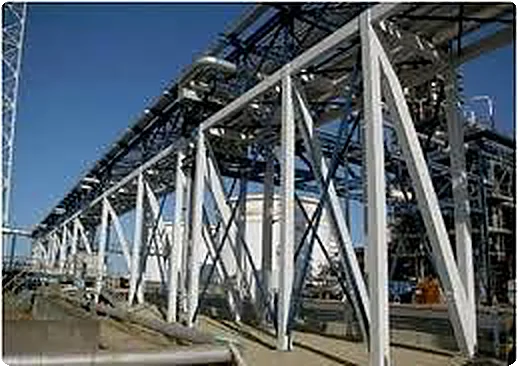
Pipe racks: protection up to the first level. If a rack carries hydrocarbon piping bigger than 6 inches, protection up to the level nearest to 9.1 m. If air-fin coolers are on the top level, the entire rack height including their supports.
Air-fin coolers on structures, if they handle flammable liquids above their autoignition temperature or above 315 °C (whichever is lower), and any supports above vessels with flammable liquid.
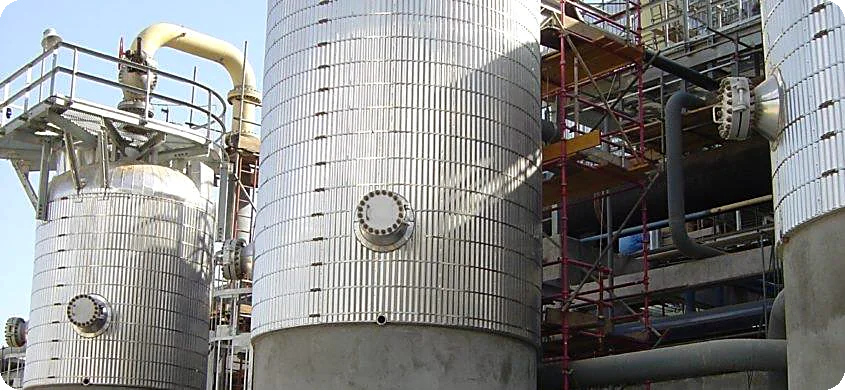
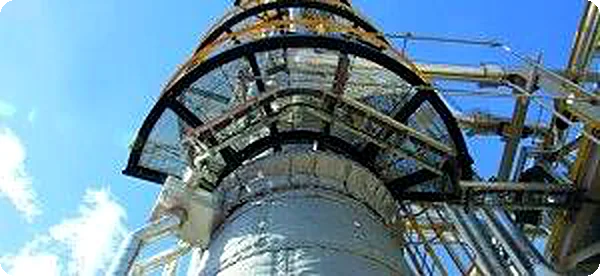
Towers and vessels: skirt (outside and inside), brackets and lugs, load-bearing legs of elevated vessels, and steel saddles of horizontal vessels with a diameter above 760 mm when the gap between the pier and shell is more than 460 mm. A skirt with only one manway of 600 mm or less may be closed with a steel plate (at least 6.44 mm thick) instead.
Fired heaters: all supports in hydrocarbon service.
LPG storage vessels: PFP is needed for pool fire if not protected by spray, and for support steel exposed more than 300 mm.
Flare line supports inside the envelope or close to open drains likely to receive large spills.
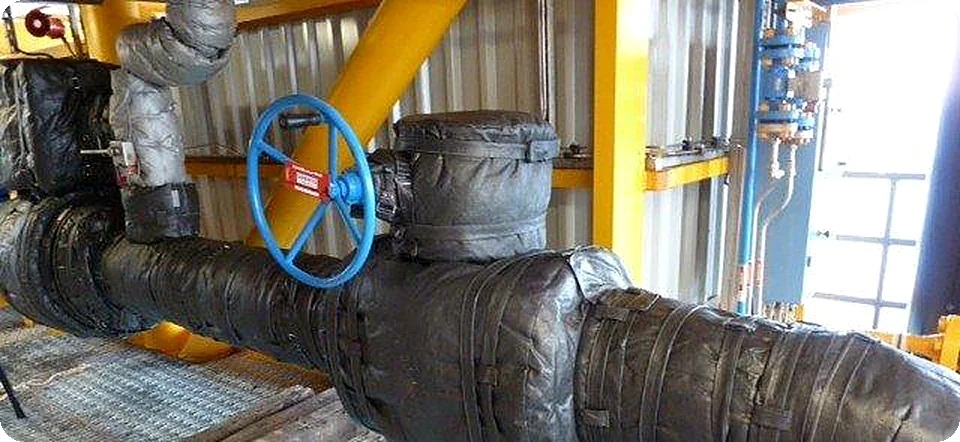
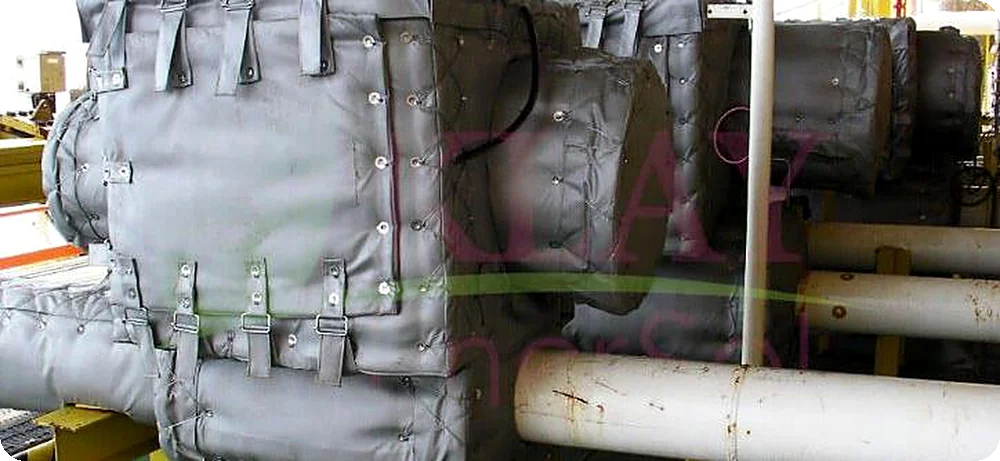
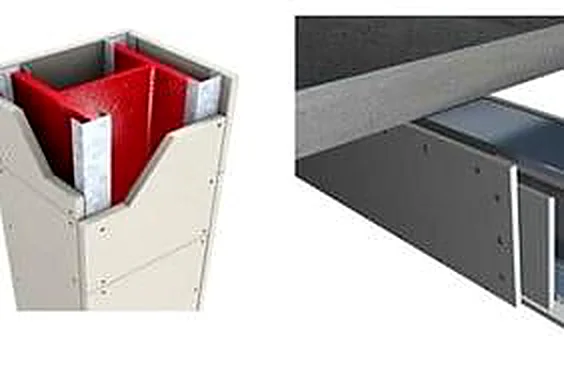
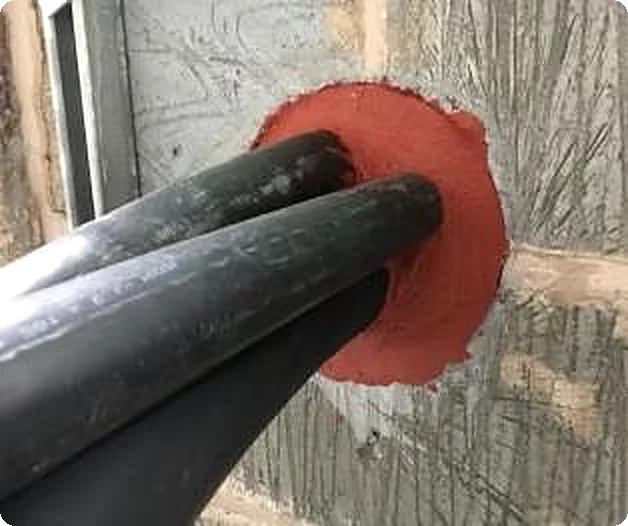
Coatings, jackets, boards and mortar slow down heat. They work all the time, with no one needing to act.
Protecting the safety systems themselves
If the shutdown systems fail in a fire, everything else is lost. So:
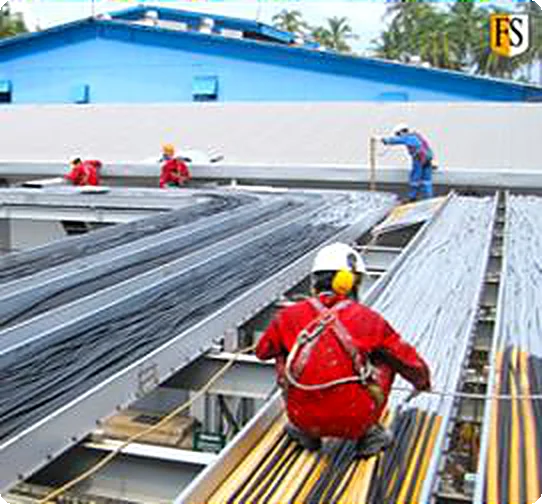
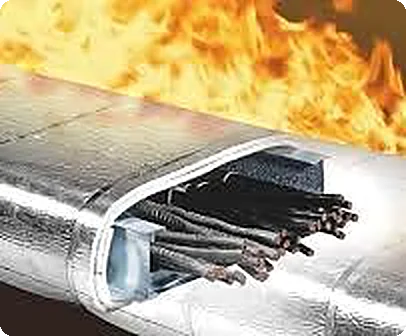
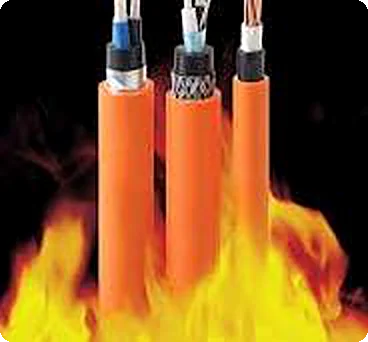
Power and instrument cables are protected unless they are fire-resistant cables (a rated 16 to 30 minutes under the UL 1709 hydrocarbon fire test, or equivalent) such as mineral-insulated stainless-steel jacketed cable with intumescent coating.
Instrument tubing for emergency shutdown and depressuring valves is protected unless the system is designed fail-safe.
Emergency valves and actuators that must shut down the unit, depressure equipment or isolate fuel are protected, unless they are designed to go to the safe position on failure.